The best electric scooters for daily use
Five days a week for three years is a different question from a weekend ride. These five are ranked on the things that wear out — brakes, tires, sealing — and on whether you can get parts.
By Ryder M. · Published November 10, 2026
Kick & Volt earns a commission when you buy through our Amazon links, at no extra cost to you. It never changes what we recommend or how we rank it — read the full disclosure.
The short answer
For riding every day the pick is the Segway Ninebot Max G3: dual disc brakes, 11-inch self-healing tubeless tires, a published IPX6 rating and dual adjustable hydraulic suspension, with 24.9 measured miles and a 286 lb payload (eRideHero, Sep 2026). Daily use is a wear problem, and Segway has the best parts and service coverage in this category. The budget pick is the NIU KQi 300X — dual discs, 10.5-inch sealed tires and 26.8 measured miles at the lowest price on this page (eRideHero, Sep 2026). Live prices as of November 14, 2026.
What daily use actually tests
Not top speed, and not peak range. A scooter ridden five days a week gets its brake pads worked several hundred times a week, its tires punctured eventually, its bearings soaked whenever it rains, and its battery cycled roughly 250 times a year. A machine that is excellent on a spec sheet and unserviceable in year two is a bad daily scooter.
That reframes the specification list. Sealed tires beat fast tires. A brake you can adjust beats a brake with a better one-off stopping figure. A published IP rating beats an unpublished one. And a brand with a parts bin beats a brand with a better claimed figure — repairs, parts and service is the page that covers the last one properly.
How these were ranked
Four axes, in order: brake hardware and its serviceability, tire construction, published sealing, and parts availability. Measured range is a tie-breaker, because everything here cleared 17 miles and a daily commute is rarely the limiting factor (eRideHero, Sep 2026). Claimed figures are not used at all — the twelve-model study behind this site put advertised range at an average of 71% of the printed number (Rider Guide, Sep 2026).
| # | Product | Best for | Score | Price |
|---|---|---|---|---|
| 1 | 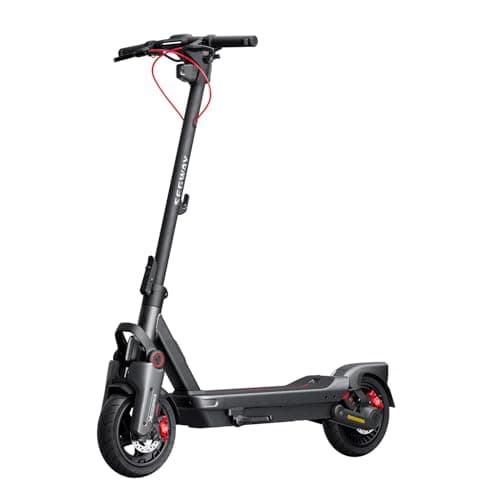 Segway Ninebot Max G3The pick: dual disc brakes, 11-inch self-healing tubeless tires, IPX6 sealing, adjustable hydraulic suspension — and the largest parts network in the category behind all of it. | Best ride quality | 6.1 | $999.00 · View on Amazon #ad How we are funded · Price as of November 14, 2026 |
| 2 | 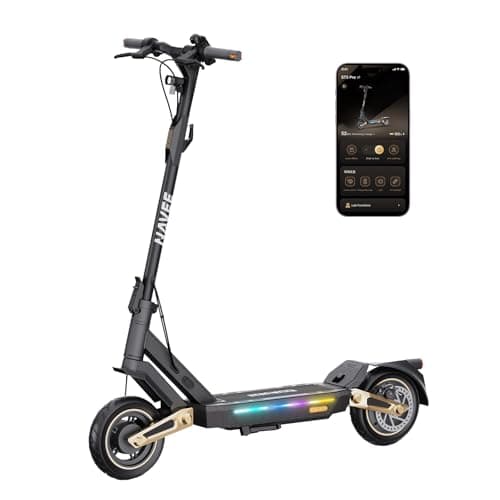 NAVEE ST3 ProThe lowest-maintenance brake set here. An enclosed front drum goes longer between services than any disc and does not care about grit. | Value commuter | 5.3 | $709.99 · View on Amazon #ad How we are funded · Price as of November 14, 2026 |
| 3 | 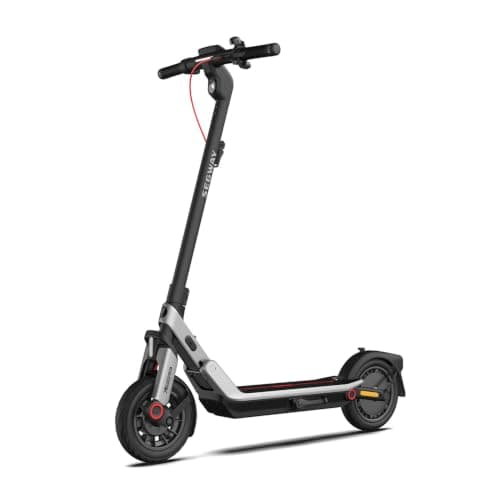 Segway Ninebot E3 ProThe low-stress daily machine: 40.1 lb, IPX5, 19.3 measured mph, and parts you can actually find. | Budget buyers who want support | 5.1 | $549.99 · View on Amazon #ad How we are funded · Price as of November 14, 2026 |
| 4 | 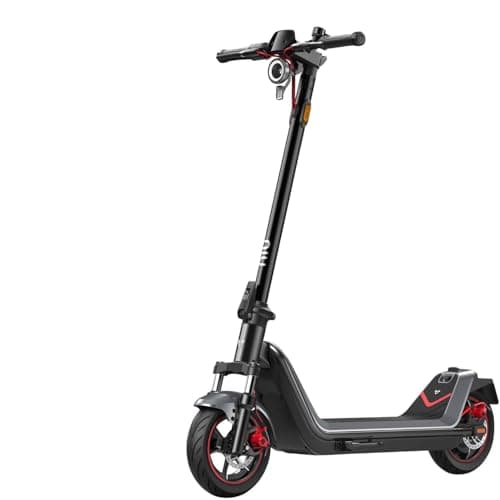 NIU KQi 300XThe budget pick: dual discs and 10.5-inch self-healing tubeless tires with 26.8 measured miles, at the lowest price here. | Best all-round commuter | 5.2 | $369.99 · View on Amazon #ad How we are funded · Price as of November 14, 2026 |
| 5 | 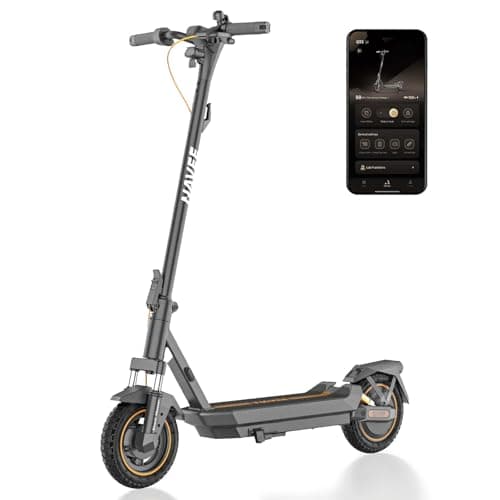 NAVEE GT3 ProIPX5 with suspension at both ends for a flat daily route — and a 400 W motor that will not enjoy hills. | Best budget overall | 5.2 | $489.99 · View on Amazon #ad How we are funded · Price as of November 14, 2026 |
Scores are computed from published specifications using the rubric on our research methodology page. Tap any row to jump to the full write-up.
Every pick in full
Each model below lists what the maker publishes, what an independent tester measured, and the trade-off you accept by choosing it. Nothing here is perfect.
Segway Ninebot Max G3
The pick: dual disc brakes, 11-inch self-healing tubeless tires, IPX6 sealing, adjustable hydraulic suspension — and the largest parts network in the category behind all of it.
- Range:
- 24.9 milesMeasured (eRideHero, Sep 2026)
- Top speed:
- 28 mphMeasured (eRideHero, Sep 2026)
- Weight:
- 54.2 lbMeasured (eRideHero, Sep 2026)
- Max rider:
- 286 lbMeasured (eRideHero, Sep 2026)
What is good
- IPX6 is the highest weather rating in our mainstream commuter set
- 850 W handles 10%+ grades with an average adult aboard
- 286 lb payload gives genuine headroom over the usual 265 lb ceiling
What you give up
- 54.2 lb — folding it is easy, lifting it is not
- 24.9 measured miles is mid-pack despite the hardware
- 28 mph is more speed than most brake setups at this weight want
#ad How we are funded · Price as of November 14, 2026
NAVEE ST3 Pro
The lowest-maintenance brake set here. An enclosed front drum goes longer between services than any disc and does not care about grit.
- Range:
- 24.9 milesMeasured (eRideHero, Sep 2026)
- Top speed:
- 24.8 mphMeasured (eRideHero, Sep 2026)
- Weight:
- 55 lbMeasured (eRideHero, Sep 2026)
- Max rider:
- 265 lbMeasured (eRideHero, Sep 2026)
What is good
- Drum front and disc rear — the drum keeps working when the road is soaked
- 600 W clears the threshold for 8-10% grades with a typical adult aboard
- Range and speed both measured near 25, which is a rare balance
What you give up
- 55 lb rules out regular stair carries
- 265 lb payload, the same ceiling as far cheaper scooters
- Brake feel on a drum is duller than a hydraulic disc
#ad How we are funded · Price as of November 14, 2026
Segway Ninebot E3 Pro
The low-stress daily machine: 40.1 lb, IPX5, 19.3 measured mph, and parts you can actually find.
- Range:
- 17.2 milesMeasured (eRideHero, Sep 2026)
- Top speed:
- 19.3 mphMeasured (eRideHero, Sep 2026)
- Weight:
- 40.1 lbMeasured (eRideHero, Sep 2026)
- Max rider:
- 265 lbMeasured (eRideHero, Sep 2026)
What is good
- IPX5 at a budget price — most scooters this cheap publish no rating at all
- 17.2 measured miles covers a 7-mile each-way commute with margin
- Parts and service are easier to find than for any other brand here
What you give up
- 19.3 mph is slow if your route includes a stretch of open road
- 400 W is mid-pack at best on hills
- Nothing about it is exciting — that is rather the point
#ad How we are funded · Price as of November 14, 2026
NIU KQi 300X
The budget pick: dual discs and 10.5-inch self-healing tubeless tires with 26.8 measured miles, at the lowest price here.
- Range:
- 26.8 milesMeasured (eRideHero, Sep 2026)
- Top speed:
- 23.6 mphMeasured (eRideHero, Sep 2026)
- Weight:
- 48.7 lbMeasured (eRideHero, Sep 2026)
- Max rider:
- 265 lbMeasured (eRideHero, Sep 2026)
What is good
- 26.8 measured miles is more real range than most scooters twice its weight
- Dual disc brakes front and rear rather than a disc-plus-regen compromise
- 500 W is the threshold where 8-10% grades stop being a problem
What you give up
- 48.7 lb is a two-hands-and-a-pause lift, not a one-hand carry
- No IP rating published in the test data we found
- 265 lb payload ceiling rules it out for heavier riders
#ad How we are funded · Price as of November 14, 2026
NAVEE GT3 Pro
IPX5 with suspension at both ends for a flat daily route — and a 400 W motor that will not enjoy hills.
- Range:
- 23.3 milesMeasured (eRideHero, Sep 2026)
- Top speed:
- 20.6 mphMeasured (eRideHero, Sep 2026)
- Weight:
- 48.5 lbMeasured (eRideHero, Sep 2026)
- Max rider:
- 265 lbMeasured (eRideHero, Sep 2026)
What is good
- 23.3 measured miles at a budget price is the standout number in the set
- IPX5 means real rain and road spray, not just a light shower
- 20.6 mph is enough to hold a bike lane without drama
What you give up
- 48.5 lb for a budget scooter — you are not carrying this far
- 400 W limits it on sustained climbs
- No brake type published in the test data we found
#ad How we are funded · Price as of November 14, 2026
Side by side
| Model | Range | Top speed | Weight | Max rider | Motor | Brakes | IP | Price |
|---|---|---|---|---|---|---|---|---|
| Segway Ninebot Max G3 | 24.9 milesMeasured | 28 mphMeasured | 54.2 lbMeasured | 286 lbMeasured | 850 WMeasured | Dual discMeasured | IPX6Claim | $999.00 · View on Amazon #ad How we are funded · Price as of November 14, 2026 |
| NAVEE ST3 Pro | 24.9 milesMeasured | 24.8 mphMeasured | 55 lbMeasured | 265 lbMeasured | 600 WMeasured | Drum + discMeasured | IPX5Claim | $709.99 · View on Amazon #ad How we are funded · Price as of November 14, 2026 |
| Segway Ninebot E3 Pro | 17.2 milesMeasured | 19.3 mphMeasured | 40.1 lbMeasured | 265 lbMeasured | 400 WMeasured | Not published | IPX5Claim | $549.99 · View on Amazon #ad How we are funded · Price as of November 14, 2026 |
| NIU KQi 300X | 26.8 milesMeasured | 23.6 mphMeasured | 48.7 lbMeasured | 265 lbMeasured | 500 WMeasured | Dual discMeasured | Not published | $369.99 · View on Amazon #ad How we are funded · Price as of November 14, 2026 |
| NAVEE GT3 Pro | 23.3 milesMeasured | 20.6 mphMeasured | 48.5 lbMeasured | 265 lbMeasured | 400 WMeasured | Not published | IPX5Claim | $489.99 · View on Amazon #ad How we are funded · Price as of November 14, 2026 |
Measured figures come from a named third-party test; Claim figures come from the manufacturer. Sources are listed under each model below. Price links are paid affiliate links. Empty specifications read “Not published” rather than being estimated.
Read the brakes and IP columns. For a daily machine those two decide more than the range column does, and the two rows with a published brake type are the two we would ride every day without thinking about it.
The four things that wear out
Brake pads and cables. A mechanical disc needs pad changes and cable tension; an enclosed drum needs neither as often. The NAVEE ST3 Pro’s front drum is the lowest-maintenance brake on this page (eRideHero, Sep 2026), and how to fix scooter brakes covers the adjustment either way.
Tires. Self-healing tubeless construction seals the small punctures that make up most flats, which on a daily machine is the difference between one roadside repair a year and five. Three picks here run it (eRideHero, Sep 2026) — tires explained has the detail, and solid-tire scooters is the zero-flat option with a harsher ride.
Bearings and electronics. This is what an IP rating is about. IPX6 is rated for powerful water jets, IPX5 for spray, and an unpublished rating means you are guessing — IP ratings and wet weather sets out the tiers. Daily riding means riding in rain you did not plan for.
The battery. Covered in its own section below, and the one component you cannot adjust your way out of.
Parts availability is a specification
It just is not a published one. Two of the five picks here are Segways, and the practical reason is that a Segway pad set, tube, controller or charger is findable years after purchase, from more than one seller. That matters more for a daily scooter than any figure on the table, and it is the reason the E3 Pro earns a slot despite having the weakest performance numbers on this page (eRideHero, Sep 2026).
The counter-argument is honest too: direct-sale brands often have better hardware for the money, and their support is frequently better precisely because it is centralized. What they do not have is a second source if the company changes its catalog. Electric scooter brands, ranked reads each manufacturer through its measured data, and the reliability page is explicit about what we can and cannot know about long-term failure rates.
What daily charging does to the battery
Roughly 250 charge cycles a year is the realistic number for a five-day commute, and cycle count is what degrades a lithium pack rather than calendar age alone. Battery life and replacement covers the arithmetic and the replacement question, and how many hours a battery lasts covers the per-charge side.
Two practical consequences for the buying decision. First, buy more measured range than your commute needs: a 10-mile round trip on a 24-mile machine is a shallower discharge than on a 12-mile machine, and shallower cycles age a pack more slowly. Second, prefer a scooter whose battery or charger can actually be replaced — see removable-battery scooters, which is a short page for the honest reason that testers rarely report which models have one.
What we do not know
Frequently asked questions
▸What is the best electric scooter for everyday use?
The Segway Ninebot Max G3: dual discs, 11-inch self-healing tubeless tires, IPX6 sealing, adjustable hydraulic suspension and the widest parts availability in the category. Daily use is a wear problem before it is a performance one.
▸How long does an electric scooter last with daily use?
We have no measured failure data, so we will not put a number on it. What we can say is what wears: brake pads and cables, tires, bearings and electronics behind the IP rating, and the battery at roughly 250 cycles a year on a five-day commute.
▸Is it bad to charge an electric scooter every day?
Cycle count is what ages a lithium pack, so the useful move is to buy more measured range than your route needs — a shallow daily discharge is gentler than a deep one. Our battery page covers the detail.
▸Which brand is easiest to get parts for?
Segway, in our experience of what is listed and stocked — which is why two of the five picks here are Segways. That is a catalog observation rather than a reliability measurement, and we are explicit about the difference.
Read next
Kick & Volt does not ride or bench-test scooters. Every real-world figure on this page is attributed to the third party that measured it — how we research this.