
The most reliable electric scooter, honestly
No publication in this category measures failure rates, so any site naming the most reliable scooter is guessing. Four things that ARE published predict durability — and only a handful of models clear all four.
By Ryder M. · Published October 17, 2026
Kick & Volt earns a commission when you buy through our Amazon links, at no extra cost to you. It never changes what we recommend or how we rank it — read the full disclosure.
The short answer
Nobody measures electric scooter reliability, so nobody can honestly name the most reliable one — including us. What you can do is buy the four things that are published and that correlate with lasting: a real IP rating, two friction brakes, payload headroom over your loaded weight, and a complete spec sheet. On all four, the Segway Ninebot Max G3 is the only mainstream commuter in our registry with no missing cells — IPX6, dual discs, 286 lb and 24.9 measured miles (eRideHero, Sep 2026).
Why there is no reliability ranking
Reliability means failures per unit over time, and measuring it requires a fleet, a reporting channel and years. In cars that is what J.D. Power and Consumer Reports surveys do. In electric scooters, none of it exists: eRideHero, Rider Guide, Electric Scooter Insider and Electric Scooter Guide all buy and test scooters, and none of them publishes failure rates, warranty-claim rates or long-term durability data for any model.
So when a site tells you which scooter is the most reliable, one of three things is happening: it is reporting Amazon review sentiment as if it were durability data, it is repeating a brand’s own marketing, or it is guessing. We will not do any of those — our methodology sets out what we will and will not assert, and reliability is explicitly on the will-not list.
That is a less satisfying answer than a ranked list, and it is the true one. What follows is the next best thing: the published specifications that make a scooter more likely to survive ownership, each of which you can check on any listing in two minutes.
Four proxies that are published
- A real IP rating. Water in the controller or the battery management board is the failure that ends a scooter rather than inconveniencing it, and sealing is the one durability-relevant number manufacturers do publish. IPX5 is the practical threshold for riding on wet roads; IPX6 is better; no published rating means nothing is guaranteed. IP ratings and wet weather explains the digits, and the IP66 round-up lists the best-sealed models.
- Two friction brakes, not one plus regen. A single friction brake has no redundancy, and regenerative braking is an assist that depends on the controller and the battery working. Two mechanical brakes mean a cable failure or a soaked pad leaves you with a way to stop. Our brake ranking covers the hardware types.
- Payload headroom. The single biggest controllable load on a frame, a deck and a wheel bearing is the weight they carry. A 265 lb-rated scooter under a 250 lb rider with a backpack is working at its limit every ride. Buy headroom, not a rating you are about to sit on — what a payload rating actually means is the page on this.
- A complete spec sheet. This one is indirect and it is the most predictive of the four. A manufacturer that publishes its IP rating, payload, brake type, motor wattage and tire construction is a manufacturer willing to be held to them. A listing with four blanks is not being coy about good news. More than half our registry has gaps somewhere, and the gaps cluster in the cheapest and the most direct-sold brands.
Models that clear all four
Four scooters whose published data satisfies every proxy above — a stated IP rating, two friction brakes, payload above the 265 lb default where the figure exists, and a spec sheet with no blanks in it. This is a shortlist built on disclosure, not on a reliability measurement, because no reliability measurement exists.
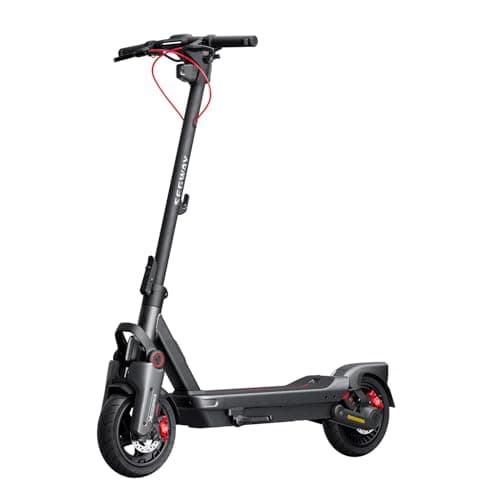
28 mph measured, IPX6, dual disc brakes and 286 lb of payload — the most complete mainstream commuter in the data.
#ad How we are funded · Price as of November 14, 2026
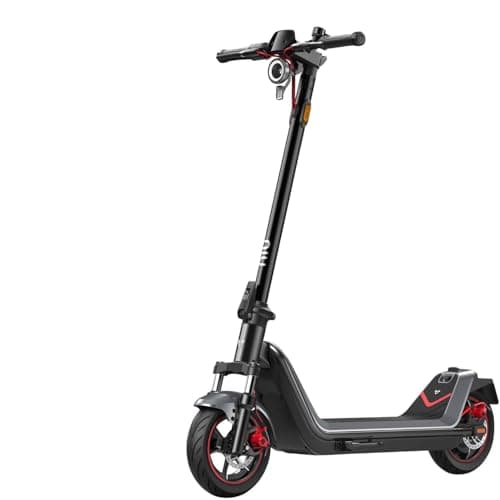
The balanced answer: 26.8 measured miles, 23.6 mph and dual disc brakes at a weight you can still fold into a trunk.
#ad How we are funded · Price as of November 14, 2026
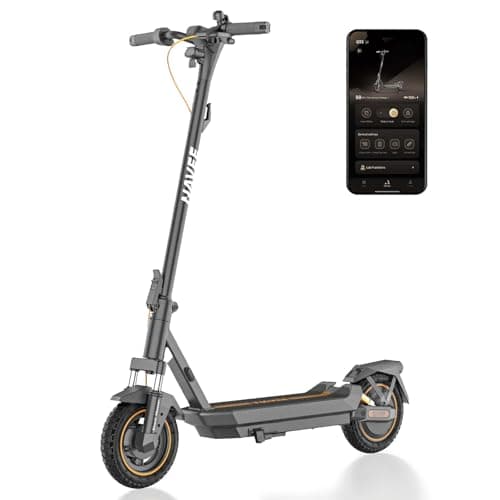
23.3 measured miles and an IPX5 rating from a scooter positioned at the budget end — the best value in the measured data.
#ad How we are funded · Price as of November 14, 2026
352 lb of payload and 46.3 measured miles with XTECH hydraulics — the heavy-rider scooter with nothing missing.
Parts and service
Reliability is half the question. The other half is what happens after something breaks, and there the market splits cleanly in two.
Segway, NIU, NAVEE and GoTrax sell through Amazon and conventional retail, which means parts and replacements move through normal channels. VMAX, EMOVE, Varla, Kaabo, Nami, Solar, JackRabbit, Hiley and INMOTION sell direct — more than half our registry — which means a single support relationship, often a better-engineered scooter, and a parts supply that depends entirely on that one company still being there.
The widely observable fact is that Segway runs the largest service and parts network in this category, and we report it as an observation rather than a measurement on the Segway brand page. Repairs, parts and service works through what each buying channel means when something goes wrong, and where to buy one covers the channels themselves.
The half you control
Two riders can get very different lifespans out of identical scooters, and most of the difference is behavior rather than build quality.
- Charging habits. Lithium packs last longest cycled in the middle of their range rather than run flat and charged to full every time, and stored at partial charge rather than empty. Battery life and replacement has the detail.
- Riding wet, and what you do after. An IP rating is a design envelope, not a promise. Drying the scooter and not charging it wet is most of the difference. The wet-weather round-up is the page for a rainy climate.
- Tire pressure and brake adjustment. An under-inflated tire pinch-flats and wrecks range; an unadjusted brake wears unevenly and glazes. The maintenance checklist is ten minutes a month.
- Cold storage. Charging a near-freezing pack is one of the few things that can do permanent damage in a single action — riding in cold weather and snow covers it.
Worth knowing too: range loss over time is normal and not a fault. Across the twelve-model claimed-versus-tested study this site is built on, scooters delivered an average of 71% of their advertised range when new (Rider Guide, Sep 2026). If your two-year-old scooter does not hit the number on the box, the box was always the problem.
Four listing red flags
| Brake type | Strength | Trade-off |
|---|---|---|
| Full hydraulic | Strongest and most consistent, least lever force | Hardest to service yourself |
| Semi-hydraulic | Better than mechanical, short of full hydraulic | A sensible middle |
| Mechanical disc | Strong and consistent; the most common type at every price | Cables stretch and need adjusting |
| Drum | Durable, low maintenance, reliable wet because it is enclosed | Less outright stopping force than a disc |
| Electronic / regenerative | No maintenance at all, adds bite alongside a friction brake | Not strong enough to be a primary brake |
| Foot brake | Simple | Inconsistent, limited stopping power |
Characteristics per an independent brake reference (eRideHero, Sep 2026). No stopping distances are quoted here because that source publishes none, and we have measured none ourselves.
With that ranking in mind, four things in a listing should make you pause — none of which is a judgment about the brand, and all of which are facts about disclosure.
- No IP rating anywhere. Treat the scooter as fair-weather only.
- “Dual braking system” with only one friction brake named. That phrasing almost always means one brake plus regen.
- A peak wattage quoted without a continuous figure. The larger number without the one that matters. See how to read a spec sheet.
- A payload rating with no frame or brake specification behind it. The number is cheap to print and expensive to engineer for — frame and brake checks is the page on verifying it.
What we do not know
Frequently asked questions
▸What is the most reliable electric scooter brand?
No publication in this category measures failure rates, so there is no honest answer. What is observable is that Segway publishes the most complete spec sheets of any manufacturer in our registry and runs the largest parts and service network — which is about disclosure and support rather than reliability.
▸How long should an electric scooter last?
The battery is the limiting component, and it degrades gradually over hundreds of charge cycles rather than failing suddenly. Nobody publishes expected lifespans per model, so treat any specific year figure you read with suspicion.
▸Are expensive electric scooters more reliable?
Unknown, and not demonstrable from any published data. What more money reliably buys is better-specified hardware — hydraulic brakes, higher IP ratings, more payload headroom — all of which are the proxies on this page rather than reliability itself.
▸Does an IP rating mean a scooter is waterproof?
No. It means specific parts passed a specific test. IPX5 is the practical threshold for wet roads and IPX6 is a step above, but no scooter is waterproof and no rating covers a scooter left in standing water.
Read next
Kick & Volt does not ride or bench-test scooters. Every real-world figure on this page is attributed to the third party that measured it — how we research this.