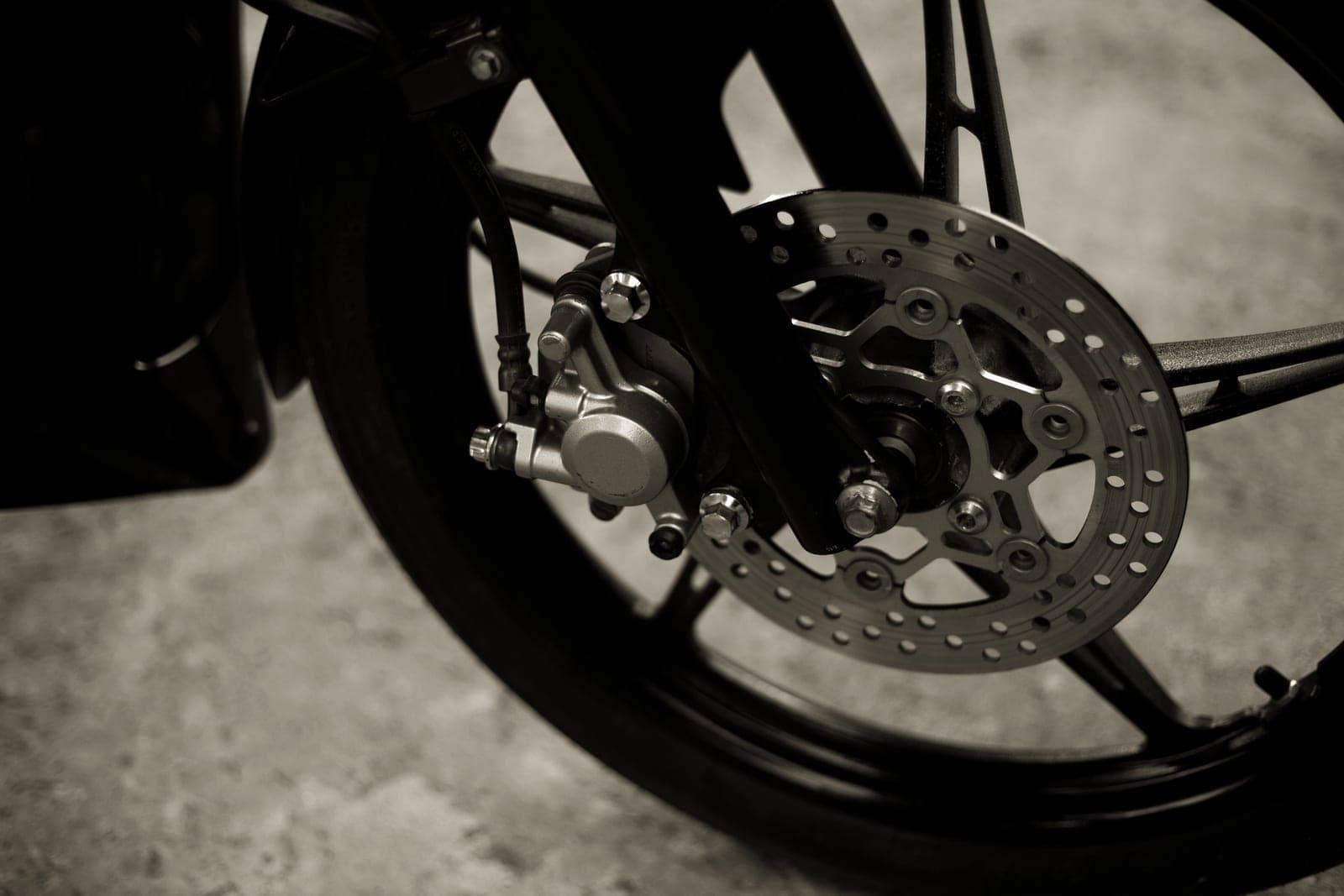
Frame and brake checks for heavy riders
A scooter ridden near its rating wears differently. Five checks, a sensible schedule, and the three symptoms that mean stop riding now.
By Ryder M. · Published September 27, 2026
The short answer
Check the folding joint for play, the stem for movement, the brake lever for travel, the pads for wear and the tires for pressure and damage. Monthly is enough for most riders; every two weeks if you are near the payload limit or ride bad surfaces.
Why this matters more at weight
Frame rigidity under load is one of the things a payload rating is meant to guarantee, and it is explicitly one of the factors buyers are told to consider alongside the raw number (NAVEE, Sep 2026). Riding at or near the rating does not break anything on day one — it accelerates the ordinary wear that every scooter has, in the specific places that carry load.
Braking is the other half. More mass means more energy to dissipate, so pads wear faster and cables stretch sooner. A mechanical disc that was perfectly adjusted in March may have noticeably more lever travel by June under a heavier rider.
The five checks
1. The folding joint
With the scooter unfolded and locked, grip the handlebars and try to rock the stem fore-and-aft. There should be no perceptible movement at the hinge. Any knock or click is the earliest warning sign there is, and it gets worse rather than better.
2. The stem and headset
Hold the front brake on and push the scooter forward. A knock felt through the bars usually means the headset bearing has loosened. On most scooters this is a simple adjustment; left alone it wears the bearing race.
3. Brake lever travel
A lever that pulls closer to the grip than it used to means a stretched cable (mechanical) or worn pads (either type). On a mechanical disc, cable adjusters at the lever usually take it up. Hydraulic systems are harder to service yourself and are the type to take to a shop (eRideHero, Sep 2026).
4. Pad wear
Look through the caliper at the pad material. On a drum brake you cannot, which is one of the trade-offs of the enclosed design — go by lever feel instead. Grinding noise means metal on metal and means stop.
5. Tires
Check pressure with a gauge, not a thumb. Under-inflation increases rolling resistance and costs range (Hiboy, Sep 2026), and a soft tire under a heavy rider is also far more likely to pinch-flat on a curb. Look for sidewall cuts and tread depth while you are down there.
A sensible schedule
- Before every ride, 10 seconds: squeeze both brake levers, glance at the tires.
- Monthly: all five checks above, plus tire pressure with a gauge.
- Every two weeks if you are within about 30 lb of the payload rating, or if your route is rough.
- After any significant impact: curb strike, pothole at speed, drop. Check the folding joint and the headset specifically.
The general version of this routine, for any rider, is on the maintenance checklist.
Symptoms that mean stop riding
- Any play in the folding joint or stem that was not there before. This is a structural warning and not something to ride out.
- A brake lever that reaches the grip. You have no reserve braking left.
- Grinding from a brake. The pad material is gone.
A fourth, less obvious one: a scooter that has started pulling to one side under braking. On a heavy machine that usually means one brake is doing most of the work, which is both a handling problem and a sign the other one needs attention.
What we do not know
Frequently asked questions
▸How often should I check my scooter if I'm a heavy rider?
Monthly for the full inspection, or every two weeks if you are within about 30 lb of the payload rating or ride rough surfaces. A ten-second brake and tire glance before every ride.
▸What does play in the folding joint mean?
It means the hinge has developed movement it did not have when new. It is the earliest structural warning sign on a folding scooter and it gets worse rather than better. Stop riding and have it looked at.
▸Do heavy riders wear brake pads faster?
Yes. More mass means more energy for the brakes to dissipate on each stop, so pads wear faster and mechanical cables stretch sooner.
Read next
Kick & Volt does not ride or bench-test scooters. Every real-world figure on this page is attributed to the third party that measured it — how we research this.