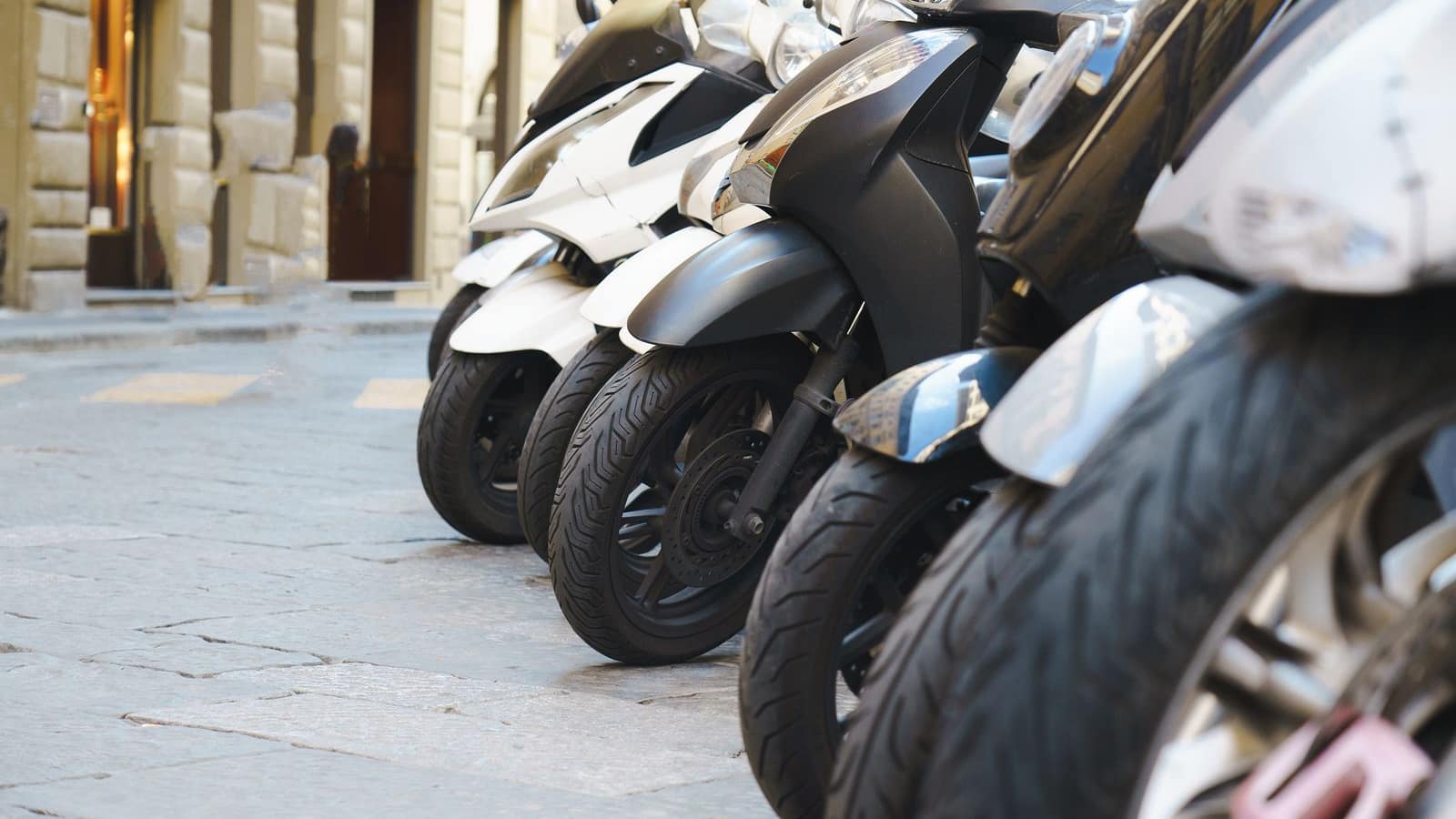
Electric scooter tires explained
Tire type decides more about how a scooter rides than the motor does, and it is the specification most listings bury. Four constructions, four size bands, and what each one costs you.
By Ryder M. · Published October 10, 2026
Kick & Volt earns a commission when you buy through our Amazon links, at no extra cost to you. It never changes what we recommend or how we rank it — read the full disclosure.
The short answer
Buy self-healing tubeless tires if you can, in the largest diameter the scooter offers. Self-healing tubeless gives you the ride quality of an air tire with most of the puncture risk removed, and a larger wheel rolls over a pothole edge that a small one drops into. Solid tires never puncture and that is their only advantage — they transmit every crack in the road straight into your hands. Pneumatic tires with inner tubes ride best and flat most.
Four constructions
Almost every adult scooter runs one of four tire types, and the listing often names only the diameter.
- Pneumatic with an inner tube. Air inside a tube inside a casing. The best ride and the most flats; a puncture means removing the wheel and replacing the tube, which on a rear hub motor is a genuinely awkward job.
- Tubeless pneumatic. Air held by the casing against the rim, no tube. Rides like a tubed tire, survives small punctures better because there is no tube to pinch, and seals with liquid sealant rather than a patch.
- Self-healing tubeless. Tubeless with sealant already inside from the factory. Small thorns and glass seal themselves as they go in. This is the construction to want, and it is now standard on most mainstream commuters.
- Solid or honeycomb. No air at all. Cannot puncture, cannot go soft, cannot be adjusted for load, and transmits road shock directly to the deck and bars. A maker that sells both is unusually candid that solid tires give up grip and comfort (NAVEE, Oct 2026).
If you want the solid-tire option specifically, the models that offer it are in the solid-tire round-up. Everything else on this page assumes you are choosing between air types.
What tire diameter changes
Diameter is the number listings always publish, so it is worth knowing what it buys. The mechanism is simple: a wheel bridges a gap it is large relative to, and drops into a gap it is not. Across our registry the sizes run from 9 to 12 inches.
- 8.5 to 9 inches. The small end. Found on the lightest machines, and the reason they are unforgiving on broken pavement. The Apollo Go runs 9-inch pre-sealed tubeless at 46 lb (eRideHero, Sep 2026).
- 9.5 to 10 inches. The mainstream band. The NIU KQi Air at 9.5 inches, the NAVEE ST3 Pro and Segway Ninebot E3 Pro at 10. Fine on reasonable asphalt.
- 10.5 to 11 inches. Where ride quality visibly improves. The NIU KQi 300X at 10.5 inches, the Segway Ninebot Max G3 and Nami Burn-E 2 Max at 11 (eRideHero, Sep 2026).
- 12 inches and up. Scooter-as-small-motorcycle territory. The Segway ZT3 Pro runs 12-inch self-healing tubeless on long-travel hydraulic suspension, and it is the model singled out for ride quality on mixed surfaces in our data (eRideHero, Sep 2026).
Bigger wheels cost weight and fold size, which is the trade you are actually making — weight and fold size covers the other half of it.
What our models actually run
Four scooters spanning the size range, every tire specification below as the testers recorded it: 12-inch, 11-inch, 10-inch and 9.5-inch, all of them self-healing tubeless.

24.7 mph and 22.7 measured miles with the best ride quality in its payload bracket — the comfortable all-terrain option.

28 mph measured, IPX6, dual disc brakes and 286 lb of payload — the most complete mainstream commuter in the data.
24.9 measured miles at 24.8 mph with drum-and-disc braking — the value commuter that does not compromise on stopping.

The lightest genuinely usable commuter we found data for — 26.4 lb, and it still measured 24.2 miles.
Fat tires and off-road tread
“Fat tire” is a width claim rather than a diameter one, and width is the specification listings are loosest about. The clearest example in our data is the Varla Eagle One V2 at 10 x 3.5-inch tubeless pneumatic with an all-terrain tread (Electric Scooter Insider, Oct 2026) — a 3.5-inch section is roughly double a commuter tire, and it is why that scooter works on gravel and why it weighs 82 lb.
Width buys flotation on loose surfaces and a larger contact patch; it costs rolling resistance, range and weight. If your route is genuinely unpaved, the tire is secondary to the suspension and the motor — the all-terrain round-up ranks the machines built for it, and the off-road hub has the rest. If your route is bad asphalt rather than dirt, a bigger commuter tire on real suspension is the better answer than a fat tire.
Flats, sealant and what to carry
Three practical points, none of which appears on a spec sheet:
- Pressure is a maintenance item. An under-inflated pneumatic tire costs range, wears unevenly and pinch-flats. Checking it is on the monthly pass in our maintenance checklist.
- Sealant is not permanent. Factory sealant in a self-healing tire dries out over a year or two. Topping it up is cheap; discovering it has dried out is not.
- Rear wheels are the hard ones. On most scooters the motor is in the rear hub, so a rear flat is a bigger job than a front flat. This is the real argument for self-healing tires over plain tubeless.
Tire choice also interacts with wet-weather riding more than people expect: a sealed tire and a sealed scooter are different things. See IP ratings and rain for the second half of that, and suspension explained for the component that does the rest of the work your tires cannot.
What we do not know
Frequently asked questions
▸What are the best electric scooter tires?
Self-healing tubeless pneumatic, in the largest diameter the scooter offers. You get air tire ride quality with most of the puncture risk removed, which is the combination worth paying for.
▸Are solid tires on an electric scooter bad?
Not bad, just a trade. They cannot puncture or lose pressure, and they transmit road shock straight into the deck and handlebars and give up grip. They make most sense on a short, smooth commute or where punctures are frequent.
▸Does tire size matter on an electric scooter?
Yes. A larger wheel bridges a gap a smaller wheel drops into, so 11 and 12 inch tires ride noticeably better on broken pavement than 8.5 and 9 inch. The cost is weight and fold size.
▸What is a self-healing tire?
A tubeless tire with sealant already inside from the factory. Small punctures from thorns or glass seal themselves as the object goes in, so you often never know it happened. The sealant dries out over time and can be topped up.
Read next
Kick & Volt does not ride or bench-test scooters. Every real-world figure on this page is attributed to the third party that measured it — how we research this.