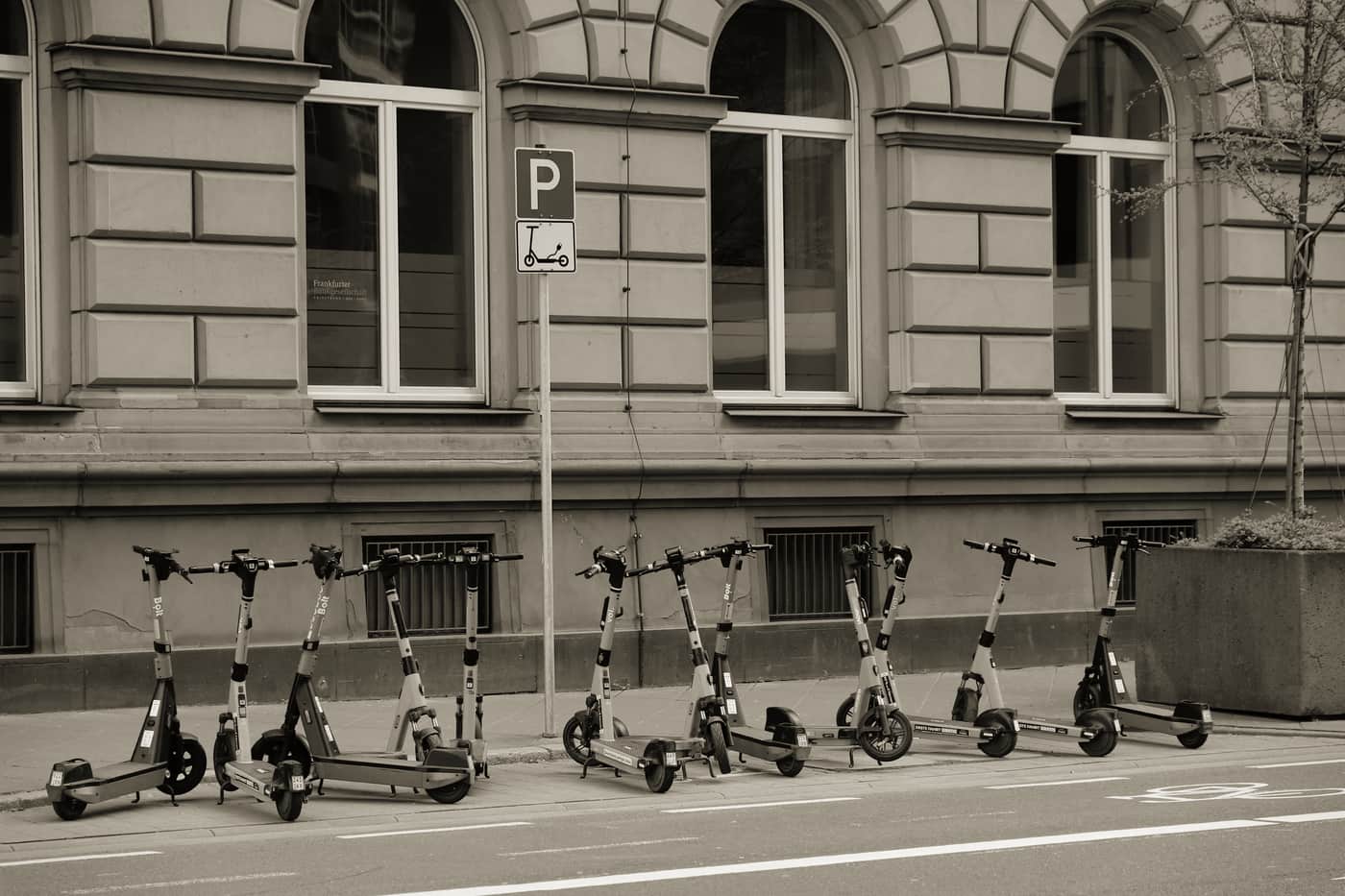
What is a Segway scooter?
The word covers two unrelated products. One is the self-balancing platform from airport security footage, discontinued in 2020. The other is the best-selling stand-up electric scooter line in the US.
By Ryder M. · Published October 6, 2026
Kick & Volt earns a commission when you buy through our Amazon links, at no extra cost to you. It never changes what we recommend or how we rank it — read the full disclosure.
The short answer
Today, a “Segway scooter” almost always means a Segway Ninebot KickScooter — a conventional stand-up electric scooter you push off and ride, with a folding stem and a thumb throttle. It is not self-balancing and does not lean to steer. The original Segway, the self-balancing two-wheeled Personal Transporter launched in December 2001, had production ended in July 2020. If somebody says they are buying a Segway in 2026, they mean a kick scooter.
The short answer
This is a genuinely confusing brand, and the confusion is not the searcher’s fault. One name now covers a discontinued self-balancing machine, a current range of stand-up kick scooters, electric unicycles, e-bikes, e-mopeds, go-karts and robotic lawnmowers. Four of the models in our own product registry carry the name, and every one of them is a normal two-wheeled stand-up scooter.
So the practical translation is short. If you are shopping, you are shopping kick scooters, and the things that matter are the things that matter on any scooter: measured range, weight, brakes, payload and a weather rating. Our Segway brand page works through the whole line-up on measured data, and this page explains how the name got here.
The original Segway
The Segway PT was a two-wheeled self-balancing personal transporter launched in December 2001, with customer deliveries starting in 2002. It balanced itself on two side-by-side wheels, you stood between them, and you steered by leaning — the self-balancing technology came out of Dean Kamen’s earlier iBOT wheelchair work.
It never became the mass-market vehicle it was pitched as, and its lasting cultural footprint was tour groups and mall security. Ninebot ceased production on 15 July 2020. There is no current model, and no scooter sold under the Segway name today works this way.
This matters for one practical reason: if you search for a Segway expecting the self-balancing machine, nothing on sale will do that. The closest current products are electric unicycles, which are a different skill and a different risk profile from anything this site covers.
How Segway became a scooter brand
The Chinese company Ninebot — which made its own self-balancing machines and had raised funding from Xiaomi and Sequoia Capital — acquired Segway on 1 April 2015 for more than $75 million. The combined business kept both names, which is why the product you buy is badged “Segway Ninebot” and why the KickScooter line uses Ninebot’s model naming: E-series at the budget end, Max and GT above it.
That history explains a pattern you can see in the data. Segway publishes more complete spec sheets than any other manufacturer in our registry — the Ninebot Max G3 is the only mainstream commuter whose row has no gaps at all, with measured range and speed, motor wattage, brake type, IP rating and payload all present (eRideHero, Sep 2026). It also runs the largest service and parts network in the category, which is a consumer-electronics company’s advantage rather than a scooter start-up’s.
What to look for in one
Four things separate the Segway models from each other, and they are the same four axes this whole site ranks on:
- Measured range, not claimed. Segway is not the efficiency leader. The Max G3 manages 0.46 measured miles per pound and the ZT3 Pro 0.35, both below the registry average, because Segway builds substantial scooters with suspension and sealing rather than light ones.
- Payload. The Max G3 is rated 286 lb and the GT3 330 lb, both of which clear the 265 lb category wall (eRideHero, Sep 2026) (eRideHero, Sep 2026). Oddly, the heavier ZT3 Pro sits at 265 lb.
- Weather rating. The Max G3 publishes IPX6, the highest in our mainstream commuter set, and the budget E3 Pro publishes IPX5, which is rare at its price (eRideHero, Sep 2026).
- Brakes against speed. The Max G3 pairs dual disc brakes with a measured 28 mph, which is a lot of speed for that hardware at 54.2 lb. The GT3 Pro moves to dual-piston hydraulics, which is the correct answer at its speed.
The Segway models we have sourced data for
Four scooters covering the current line-up: the most complete mainstream commuter, the budget pick, the all-terrain model and the performance machine. Every range and speed figure below is a measured one.
28 mph measured, IPX6, dual disc brakes and 286 lb of payload — the most complete mainstream commuter in the data.
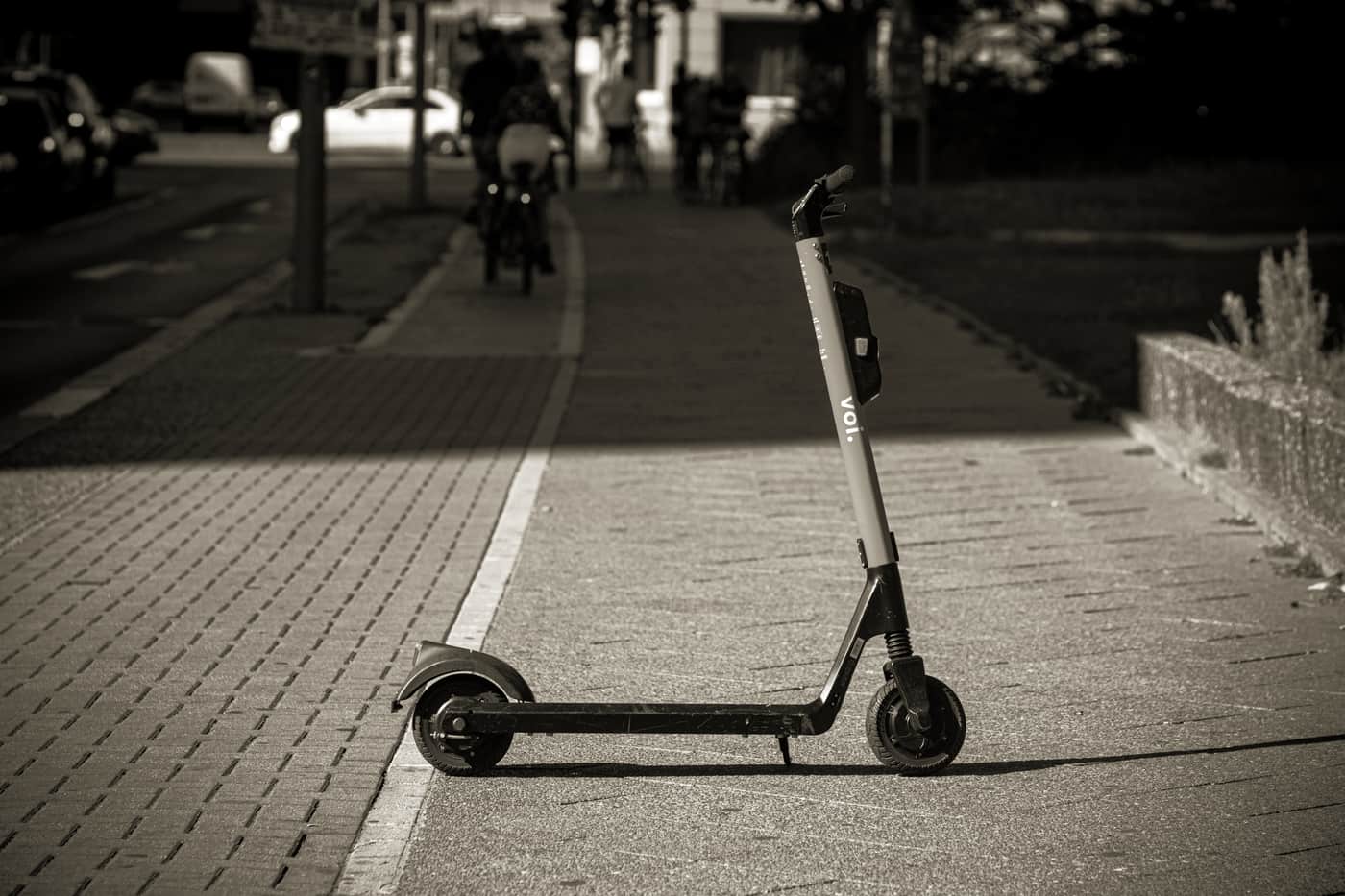
Segway Ninebot E3 Pro
The conservative budget pick: 17.2 measured miles, IPX5, and the largest service network in the category behind it.

24.7 mph and 22.7 measured miles with the best ride quality in its payload bracket — the comfortable all-terrain option.

Segway GT3 Pro
Just under 50 mph with roughly 45 miles and dual-piston hydraulic brakes, at a listed $2,699.99.
Segway against the rest of the market
| Model | Range | Top speed | Weight | Max rider | Motor | Brakes | IP | Price |
|---|---|---|---|---|---|---|---|---|
| Segway Ninebot Max G3 | 24.9 milesMeasured | 28 mphMeasured | 54.2 lbMeasured | 286 lbMeasured | 850 WMeasured | Dual discMeasured | IPX6Claim | Check price |
| Segway Ninebot E3 Pro | 17.2 milesMeasured | 19.3 mphMeasured | 40.1 lbMeasured | 265 lbMeasured | 400 WMeasured | Not published | IPX5Claim | Check price |
| Segway ZT3 Pro | 22.7 milesMeasured | 24.7 mphMeasured | 65.5 lbMeasured | 265 lbMeasured | Not published | Not published | Not published | Check price |
| Segway GT3 Pro | ~45 milesMeasured | Under 50 mphMeasured | Not published | Not published | Not published | Dual-piston hydraulicMeasured | Not published | Check price |
Measured figures come from a named third-party test; Claim figures come from the manufacturer. Sources are listed under each model below. Price links are paid affiliate links. Empty specifications read “Not published” rather than being estimated.
Two honest marks against the brand, both worth knowing before you buy. The first is efficiency: for the same measured range, a Segway weighs more than a NIU or a VMAX, and that is a design choice rather than a defect — you are paying weight for adjustable hydraulic suspension, 11-inch tires and IPX6 sealing.
The second is historical and cuts deeper. In a twelve-model claimed-versus-tested range study, the older Ninebot Max G30P was the worst performer of the twelve, delivering 53% of its 40.4-mile claim, and the E2 Pro delivered 74% (Rider Guide, Sep 2026). Those are previous-generation models and neither describes a current one, but at a category average of 71% they are a reason to plan from a tested figure rather than a Segway spec sheet wherever both exist. The full study is on real-world range versus claimed.
Set against that, the thing Segway does better than anyone: it tells you what you are buying. In a category where brake type is missing for roughly a third of models, Segway publishes brakes, IP rating and payload consistently. Our brand ranking places it second overall largely on that basis.
Which Segway to buy
- Most people: the Ninebot Max G3. 24.9 measured miles, 28 mph, IPX6, dual disc brakes and 286 lb of payload — the most completely specified mainstream commuter in our data. It leads our commuter round-up, and what it actually costs is covered separately.
- On a budget: the Ninebot E3 Pro. 17.2 measured miles and IPX5 at a price where competitors publish no rating at all.
- Mixed surfaces: the ZT3 Pro. Singled out for ride quality by a tester riding mixed surfaces, and the pick on our all-terrain round-up.
- Performance: the GT3 Pro. Roughly 45 measured miles and just under 50 mph on dual-piston hydraulics — and well outside the street-legal band in most of the US.
If you are choosing between Segway and the other mainstream brands, the head-to-head we have measured data for is the Max G3 against the Apollo Go.
What we do not know
Frequently asked questions
▸What is a Segway scooter?
In 2026 it means a Segway Ninebot KickScooter — a conventional stand-up electric scooter with a folding stem and a thumb throttle. It is not self-balancing. The original self-balancing Segway Personal Transporter launched in December 2001 and production ended in July 2020.
▸Is a Segway the same as an electric scooter?
The products Segway sells now are electric scooters, yes. The machine most people picture when they hear the name — the self-balancing platform you steer by leaning — is a different product and has not been made since 2020.
▸Who owns Segway?
Ninebot, a Chinese company backed by Xiaomi and Sequoia Capital, acquired Segway on 1 April 2015 for more than $75 million. Products are badged Segway Ninebot as a result.
▸Which Segway scooter is best?
The Ninebot Max G3 for most riders: 24.9 measured miles, 28 mph measured, IPX6, dual disc brakes and a 286 lb payload rating. It is the only mainstream commuter in our registry with no gaps in its specification at all.
▸Can you still buy a self-balancing Segway?
Not new. Production of the Segway PT ended in July 2020. The nearest current products are electric unicycles, which are a different skill and risk profile and are not covered on this site.
Read next
Kick & Volt does not ride or bench-test scooters. Every real-world figure on this page is attributed to the third party that measured it — how we research this.