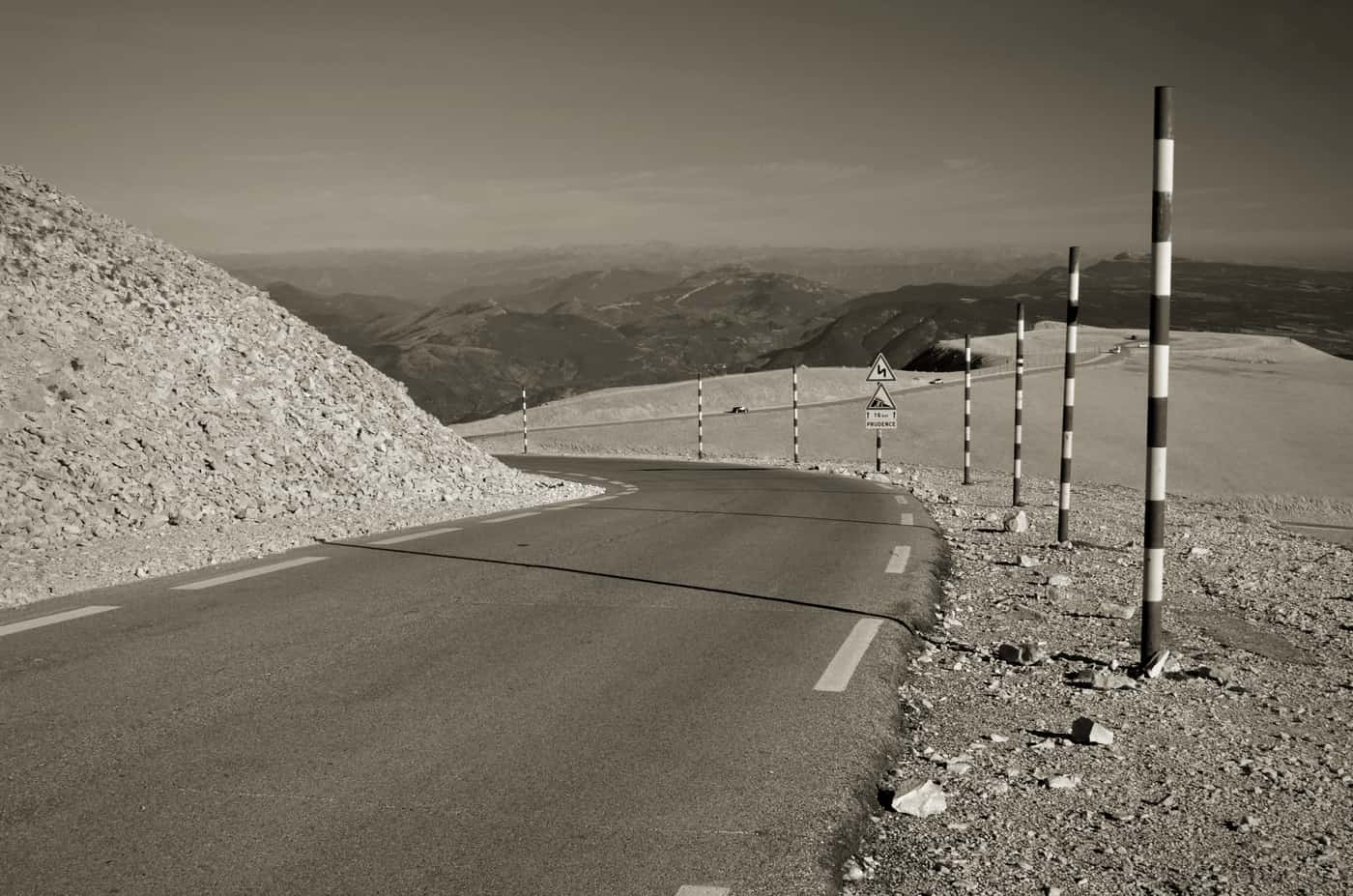
The best electric scooters for hills
Climbing is a power-to-weight problem, and the two numbers that decide it are the motor's watts and your body weight. Here are the thresholds, and the scooters that clear them.
By Ryder M. · Published September 27, 2026
Kick & Volt earns a commission when you buy through our Amazon links, at no extra cost to you. It never changes what we recommend or how we rank it — read the full disclosure.
The short answer
For ordinary city hills up to about 10%, look for 500 W or more. For genuinely steep streets of 15-20%, look for 1000 W or more. Above 20%, you want 1500 W and dual motors (Hiboy, Sep 2026). Add three to five percentage points to your requirement if you weigh significantly more than the roughly 165 lb standard testing weight (Levy Electric, Sep 2026).
The gradient thresholds
| Gradient | What it takes | What that feels like |
|---|---|---|
| Under 5% | Any working scooter | A gentle rise you barely notice in a car |
| 5-10% | 500 W and up | A typical residential street with a slope |
| 10-15% | Good torque plus rider input | Most standard scooters top out here |
| 15-20% | 1000 W and up | A genuinely steep street |
| Over 20% | 1500 W and up, plus dual motors | San Francisco territory |
Wattage thresholds from manufacturer engineering guidance (Hiboy, Sep 2026) (Levy Electric, Sep 2026). Treat them as vendor claims: every one of these companies also sells a scooter it would like to sell you.
A useful sanity check: a power-to-weight ratio of around 15-20 watts per kilogram of total load gives good climbing on moderate inclines (Levy Electric, Sep 2026). For a 180 lb rider on a 50 lb scooter — about 104 kg all in — that points at roughly 1,500 to 2,000 W for confident moderate climbing, which is a good deal more than most commuters carry. Treat it as an upper bound rather than a hard requirement: plenty of 500-800 W scooters handle city hills perfectly well at a lower speed.
| # | Product | Best for | Score | Price |
|---|---|---|---|---|
| 1 |  Kaabo King GTR4000 W. Nothing you can legally ride up will trouble it. Kaabo King GTR4000 W. Nothing you can legally ride up will trouble it. | Off-road hyperscooter | 6.4 | |
| 2 | NAVEE NT5 Ultra XDual motors at a listed $1,299.99 — traction as well as power, which is what wet gradients need. | Best dual-motor commuter | 3.1 | |
| 3 | 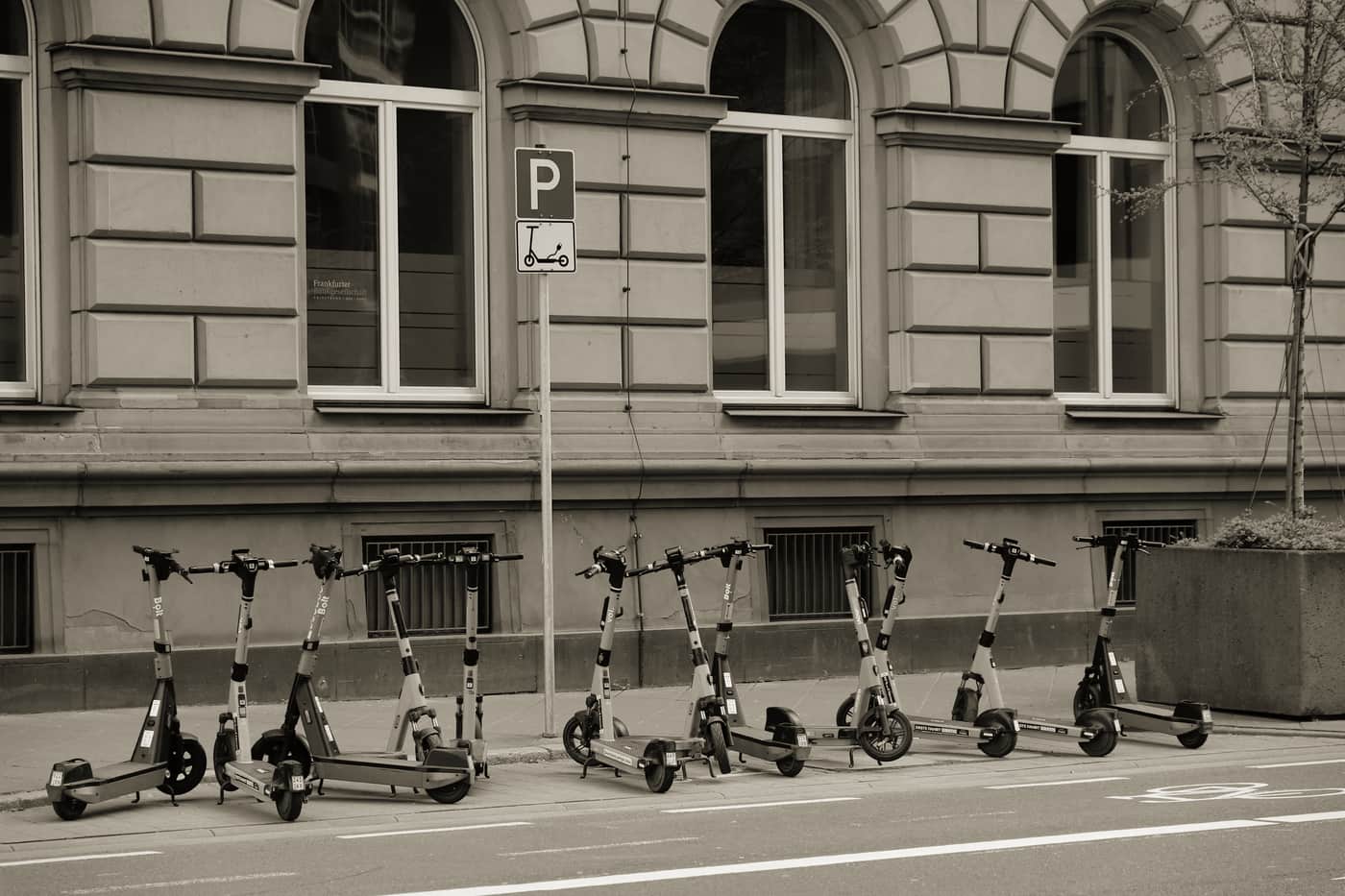 Segway Ninebot Max G3850 W with a 286 lb payload and IPX6. The most sensible hill commuter on this list. Segway Ninebot Max G3850 W with a 286 lb payload and IPX6. The most sensible hill commuter on this list. | Best ride quality | 6.1 | |
| 4 | INMOTION ClimberSingled out for hill performance by a tester who rides gradients, at just 45.8 lb. | Best on hills | 6.0 | |
| 5 |  Apollo Go700 W at 46 lb — the best power-to-weight ratio of any portable scooter here. Apollo Go700 W at 46 lb — the best power-to-weight ratio of any portable scooter here. | Most capable lightweight | 5.9 | |
| 6 |  NAVEE ST3 Pro600 W clears the 5-10% band with a typical adult aboard. NAVEE ST3 Pro600 W clears the 5-10% band with a typical adult aboard. | Value commuter | 5.3 |
Scores are computed from published specifications using the rubric on our research methodology page. Tap any row to jump to the full write-up.
Every pick in full
Each model below lists what the maker publishes, what an independent tester measured, and the trade-off you accept by choosing it. Nothing here is perfect.
Kaabo King GTR
4000 W. Nothing you can legally ride up will trouble it.
- Range:
- 48.2 milesMeasured (eRideHero, Sep 2026)
- Top speed:
- 66 mphMeasured (eRideHero, Sep 2026)
- Weight:
- 137 lbMeasured (eRideHero, Sep 2026)
- Max rider:
- 330 lbMeasured (eRideHero, Sep 2026)
What is good
- 4000 W will climb any gradient you can stand on
- 48.2 measured miles at a 330 lb payload
- The off-road suspension is the real product here, not the top speed
What you give up
- 66 mph on dual disc brakes rather than hydraulics
- 137 lb
- Not street-legal at these speeds in any US state we are aware of
NAVEE NT5 Ultra X
Dual motors at a listed $1,299.99 — traction as well as power, which is what wet gradients need.
- Top speed:
- 39 mphMeasured (Rider Guide, Sep 2026)
- Weight:
- 80.4 lbMeasured (Rider Guide, Sep 2026)
What is good
- Dual motors for a listed $1,299.99
- 39 mph is genuine open-road speed
- Dual-motor traction is what actually gets you up a wet 15% grade
What you give up
- No range figure published on the page we sourced
- 80.4 lb
- No brake, IP or payload spec published either — a lot of unknowns at this speed
Listed at $1,299.99Measured (Rider Guide, Sep 2026) when we read that page. We do not publish live prices — check the current one before you buy.
Segway Ninebot Max G3
850 W with a 286 lb payload and IPX6. The most sensible hill commuter on this list.
- Range:
- 24.9 milesMeasured (eRideHero, Sep 2026)
- Top speed:
- 28 mphMeasured (eRideHero, Sep 2026)
- Weight:
- 54.2 lbMeasured (eRideHero, Sep 2026)
- Max rider:
- 286 lbMeasured (eRideHero, Sep 2026)
What is good
- IPX6 is the highest weather rating in our mainstream commuter set
- 850 W handles 10%+ grades with an average adult aboard
- 286 lb payload gives genuine headroom over the usual 265 lb ceiling
What you give up
- 54.2 lb — folding it is easy, lifting it is not
- 24.9 measured miles is mid-pack despite the hardware
- 28 mph is more speed than most brake setups at this weight want
INMOTION Climber
Singled out for hill performance by a tester who rides gradients, at just 45.8 lb.
- Range:
- 24.7 milesMeasured (eRideHero, Sep 2026)
- Top speed:
- 23.4 mphMeasured (eRideHero, Sep 2026)
- Weight:
- 45.8 lbMeasured (eRideHero, Sep 2026)
- Max rider:
- 286 lbMeasured (eRideHero, Sep 2026)
What is good
- Singled out for hill performance by a publication that tests on real gradients
- 45.8 lb is unusually light for a scooter built to climb
- 286 lb payload gives climbing headroom for a heavier rider
What you give up
- No motor wattage or gradeability figure published in the source we used
- 23.4 mph is modest — climbing hardware is geared, not fast
- 24.7 miles shrinks fast on a genuinely hilly route
Apollo Go
700 W at 46 lb — the best power-to-weight ratio of any portable scooter here.
- Range:
- 19.8 milesMeasured (eRideHero, Sep 2026)
- Top speed:
- 26.7 mphMeasured (eRideHero, Sep 2026)
- Weight:
- 46 lbMeasured (eRideHero, Sep 2026)
- Max rider:
- 265 lbMeasured (eRideHero, Sep 2026)
What is good
- IP66 — dust-tight and rated for powerful water jets, the best rating in the dataset
- 700 W at 46 lb gives a genuinely good power-to-weight ratio for hills
- A drum brake is the right choice on a scooter meant to be ridden wet
What you give up
- 19.8 measured miles is the weak spot
- Regen is a supplement, not a second friction brake
- 265 lb payload despite the capable hardware
NAVEE ST3 Pro
600 W clears the 5-10% band with a typical adult aboard.
- Range:
- 24.9 milesMeasured (eRideHero, Sep 2026)
- Top speed:
- 24.8 mphMeasured (eRideHero, Sep 2026)
- Weight:
- 55 lbMeasured (eRideHero, Sep 2026)
- Max rider:
- 265 lbMeasured (eRideHero, Sep 2026)
What is good
- Drum front and disc rear — the drum keeps working when the road is soaked
- 600 W clears the threshold for 8-10% grades with a typical adult aboard
- Range and speed both measured near 25, which is a rare balance
What you give up
- 55 lb rules out regular stair carries
- 265 lb payload, the same ceiling as far cheaper scooters
- Brake feel on a drum is duller than a hydraulic disc
Your weight changes the answer
This is the part most hill guides skip. A 200 lb rider on a 350 W scooter sees materially worse uphill performance than a 120 lb rider on the same machine (NAVEE, Sep 2026), and manufacturers' gradeability figures are measured with a light rider on a full battery in ideal conditions (Levy Electric, Sep 2026).
Two practical consequences. First, if you are over about 220 lb, treat every published grade rating as roughly one band optimistic. Second, if you are near a scooter’s payload ceiling, hill performance is the first thing that degrades — before range, before top speed. That is one of the arguments in what a payload rating actually means, and it is why the hills and heavy-rider pages on this site cross-link so heavily.
Why the advertised grade rating is optimistic
Manufacturers publish a maximum incline. The same manufacturers acknowledge that the figure is measured with a light rider, a full battery and a perfect surface, and that real-world testing typically shows 10-22% grades as the practical band, with optimal climbing at about 60% of the maximum rating (Levy Electric, Sep 2026). That is the same structural optimism that affects range claims — which we document in full in the claimed-versus-tested study.
There is also a subtlety worth knowing: torque, not watts, is what moves you against gravity (Levy Electric, Sep 2026). Two 800 W motors with different gearing will climb differently, and wattage is simply the proxy the market has settled on. Our watts and torque explainer goes into why.
What we do not know
The other thing hills do
Climbing eats range. A hilly route will not just be slower, it will be shorter — which is why the 30% headroom rule in the commute-sizing guide matters more on a hilly commute than a flat one.
Frequently asked questions
▸How many watts do I need for hills?
500 W and up handles 5-10% grades; 1000 W and up is the guidance for 10-15% and steeper; above 20% you want 1500 W and dual motors. Add three to five percentage points to your requirement if you are heavier than about 165 lb.
▸Can an electric scooter go up a steep hill?
Most standard scooters handle 10-15% grades. Steeper than that needs 1000 W or more, and performance drops off sharply with rider weight. Manufacturer maximum-incline ratings are measured with a light rider in ideal conditions.
▸Does rider weight really change hill performance that much?
Yes — more than for any other spec. A 200 lb rider on a 350 W scooter sees noticeably worse climbing than a 120 lb rider on the same machine, and manufacturers test with light riders.
▸Is a dual-motor scooter better on hills?
Usually, for two reasons: more combined power, and traction split across two wheels, which matters on a wet or loose climb where a single driven wheel can spin.
Read next
Kick & Volt does not ride or bench-test scooters. Every real-world figure on this page is attributed to the third party that measured it — how we research this.