
Segway Ninebot Max G3 price: what it costs, and what you get
A $1,200 MSRP, 24.9 independently measured miles and an IPX6 rating. This page is about whether that is the right $1,200 — the review covers how it rides.
By Ryder M. · Published October 4, 2026
Kick & Volt earns a commission when you buy through our Amazon links, at no extra cost to you. It never changes what we recommend or how we rank it — read the full disclosure.
The short answer
The Segway Ninebot Max G3 carries a US MSRP of $1,200 (Rider Guide, Oct 2026). For that you get the best-specified mainstream commuter in our data: 28 mph and 24.9 miles both independently measured, an IPX6 weather rating, dual disc brakes, dual adjustable hydraulic suspension and a 286 lb payload (eRideHero, Sep 2026). It is not the longest range at the price — the NIU KQi 300X measured 26.8 miles and weighs 5.5 lb less. Buy the G3 for the sealing, suspension and payload; buy the NIU if range and weight are what you care about.
The short answer
This page answers a price question. If you want to know how the Max G3 rides and what every figure on its spec sheet is sourced to, that is the Segway Ninebot Max G3 review. What follows is about money: what the number is, what it buys relative to the alternatives, and the three cases where a cheaper scooter is the better purchase.
One thing to be clear about up front, because it is unusual: we do not publish live prices anywhere on this site. There is no price feed here. Every figure on this page is a listed price or MSRP read on a dated page, and the buy links go to Amazon so you can check the current number yourself. A price article that quotes a figure as though it were live is out of date the week after it is written.
What the price actually is
The $1,200 figure is the US manufacturer’s suggested retail price, as listed on a publication’s per-model data page that we read on 4 October 2026 (Rider Guide, Oct 2026). It renders with a Claim chip on this site, and that is deliberate: an MSRP is the maker’s number, not a measurement, and not necessarily what anything sells for.
Three things follow from that:
- MSRP is a ceiling, not a price. Street prices on mainstream commuters move around with promotions and retailer discounting. Treat $1,200 as the reference point and check the actual number before you buy.
- The sibling matters here. The Segway MAX G3 Plus was listed at $1,199.99 by the same publication (Rider Guide, Sep 2026) — effectively the same money for a different machine. More on that below.
- Price is not a spec. Everything else on this page is tied to a measured figure; the price is the one number that will be wrong soonest.
The G3 and the three scooters to weigh it against
The Max G3 itself, its own sibling at a near-identical price, and the two mid-weight commuters that beat it on measured range for less money. Every price here is a listed figure read on a dated page — we publish no live prices.
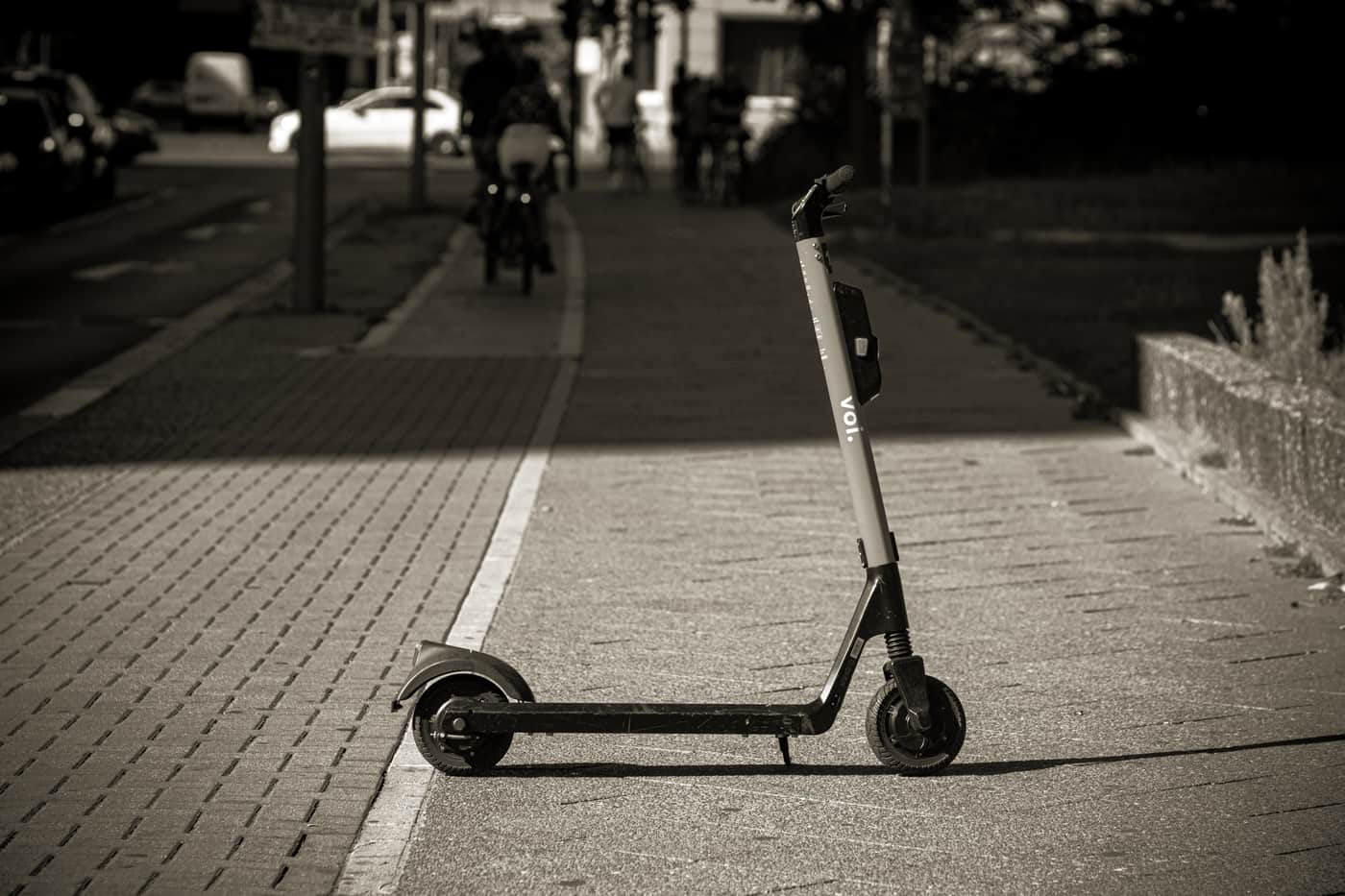
28 mph measured, IPX6, dual disc brakes and 286 lb of payload — the most complete mainstream commuter in the data.
Segway MAX G3 Plus
Rider Guide's overall pick: 28 mph and 21.2 miles at a listed $1,199.99.
The balanced answer: 26.8 measured miles, 23.6 mph and dual disc brakes at a weight you can still fold into a trunk.
24.9 measured miles at 24.8 mph with drum-and-disc braking — the value commuter that does not compromise on stopping.
What $1,200 buys per measured mile
| Model | Range | Top speed | Weight | Max rider | Motor | Brakes | IP | Price |
|---|---|---|---|---|---|---|---|---|
| Segway Ninebot Max G3 | 24.9 milesMeasured | 28 mphMeasured | 54.2 lbMeasured | 286 lbMeasured | 850 WMeasured | Dual discMeasured | IPX6Claim | Check price |
| Segway MAX G3 Plus | 21.2 milesMeasured | 28 mphMeasured | 55.1 lbMeasured | Not published | Not published | Not published | Not published | Check price |
| NIU KQi 300X | 26.8 milesMeasured | 23.6 mphMeasured | 48.7 lbMeasured | 265 lbMeasured | 500 WMeasured | Dual discMeasured | Not published | Check price |
| NAVEE ST3 Pro | 24.9 milesMeasured | 24.8 mphMeasured | 55 lbMeasured | 265 lbMeasured | 600 WMeasured | Drum + discMeasured | IPX5Claim | Check price |
Measured figures come from a named third-party test; Claim figures come from the manufacturer. Sources are listed under each model below. Price links are paid affiliate links. Empty specifications read “Not published” rather than being estimated.
Read that table on measured range rather than on price and the ranking inverts. The NIU KQi 300X records 26.8 miles, the Max G3 and NAVEE ST3 Pro both 24.9, and the Max G3 Plus 21.2 — and the Plus and the G3 are the two most expensive rows (eRideHero, Sep 2026) (Rider Guide, Sep 2026).
So the G3 is not bought for miles per dollar. What the extra money buys, specifically:
- IPX6 sealing. The highest weather rating in our mainstream commuter set and two steps above nothing, which is what the KQi 300X publishes. The ratings ladder is in IP ratings and wet weather; note that no publication tests ingress, so every IP figure on this site is a manufacturer claim.
- Dual adjustable hydraulic suspension. The only adjustable setup among these four, on 11-inch self-healing tubeless tires — the biggest sealed tire in our mainstream data.
- 286 lb of payload. Above the category’s standard 265 lb ceiling, which both NAVEEs and the NIU sit at. For a rider near that line it is the whole argument.
- 850 W and a measured 28 mph. Comfortable on 10%+ gradients with an average adult aboard, where the 500 W NIU is right at the threshold.
And what it costs you: 54.2 lb, which is firmly in roll-it-to-a-rack territory, and 1.9 fewer measured miles than a cheaper scooter.
Max G3 or Max G3 Plus?
At effectively the same money — a $1,200 MSRP against a listed $1,199.99 — this is the first comparison to resolve, and the measured data favors the plain G3.
The Plus was measured at 21.2 miles and 28 mph at 55.1 lb by one publication (Rider Guide, Sep 2026); the G3 was measured at 24.9 miles and 28 mph at 54.2 lb by another (eRideHero, Sep 2026). Those are different testers on different protocols, so the 3.7-mile gap is not a clean like-for-like — but it is the only evidence available, and it does not favor paying the same money for less measured range.
The Plus has its own case: it was named best overall by the publication that tested it, and that verdict reflects the whole package rather than one number. If you find it materially cheaper than the G3, it is a reasonable buy. At parity, the G3’s published IPX6 rating and 286 lb payload are specs the Plus’s source page does not list at all.
Three cheaper scooters to weigh
If $1,200 is the top of your budget rather than the middle of it, these are the trades:
- NIU KQi 300X — 26.8 measured miles, dual disc brakes, 48.7 lb. More measured range, 5.5 lb lighter, easier to bring indoors. You give up the IP rating, the adjustable suspension and 21 lb of payload headroom. The head-to-head with the ST3 Pro is here.
- NAVEE ST3 Pro — 24.9 measured miles, 600 W, IPX5, a front drum brake that keeps working soaked. Matches the G3 on measured range for less money; gives up suspension adjustability, 250 W and 21 lb of payload.
- Go further down the ladder — a listed $799 VMAX VX2 Lite gives 19.3 measured miles, and a listed $439 GoTrax G4 gives 14.6. Whether that is a sensible saving depends entirely on your commute length; budget electric scooter ideas works through the bands.
The wider shortlist at this money is under $1,000 below it and under $2,000 above it.
When the G3 is the right $1,200
Three situations make it the clear buy, and they are all about things cheaper scooters do not publish:
- You ride through winter. IPX6 plus dual discs plus 11-inch sealed tires is the most weather-complete mainstream package in our data — the waterproof round-up ranks it second overall, behind only an IP66 machine with far less range.
- You are a heavier rider on a commuter budget. 286 lb beats the 265 lb ceiling that excludes a lot of people from this entire price class. If you are above 286 lb, the heavy-rider class is the right page instead.
- Your route is rough or hilly. Adjustable dual hydraulic suspension and 850 W are what you are paying for, and neither shows up on a listing as a headline number.
If none of those three apply, the honest answer is that $1,200 buys you more scooter than your commute needs, and the NIU or the NAVEE will serve you better for less. That is also the conclusion of the wider commuter round-up, which ranks all four of these machines against each other on our published rubric.
What we do not know
Frequently asked questions
▸How much does the Segway Ninebot Max G3 cost in the US?
Its US MSRP is $1,200 as listed on a per-model data page we read on 4 October 2026. Street prices move with promotions, and we publish no live prices — check the current figure before you buy.
▸Is the Segway Ninebot Max G3 worth $1,200?
Yes if you ride through winter, weigh near the usual 265 lb commuter ceiling, or have a rough or hilly route — IPX6, 286 lb of payload and adjustable dual hydraulic suspension are what the money buys. If none of those apply, cheaper scooters have more measured range.
▸What is the difference between the Max G3 and the Max G3 Plus?
At effectively identical listed prices, the plain G3 has the better measured range in our data — 24.9 miles against 21.2 — plus a published IPX6 rating and a 286 lb payload that the Plus’s source page does not list. The Plus was named best overall by the publication that tested it.
▸What is the real range of the Max G3?
24.9 miles, measured by an independent tester riding to shutdown. That is the figure to plan a commute around, and it compares with a claimed 50 miles on the maker’s own spec sheet.
▸Is there a better scooter than the Max G3 for the money?
On measured range per dollar, yes — the NIU KQi 300X records 26.8 miles at a lower price and 5.5 lb less weight. It publishes no IP rating and has a 265 lb payload, which is exactly the trade.
Read next
Kick & Volt does not ride or bench-test scooters. Every real-world figure on this page is attributed to the third party that measured it — how we research this.