
Electric scooter vs electric bike
We sell scooters here, which is exactly why this page has to be honest about the cases where an e-bike is the better buy. There are several.
By Ryder M. · Published September 27, 2026
Kick & Volt earns a commission when you buy through our Amazon links, at no extra cost to you. It never changes what we recommend or how we rank it — read the full disclosure.
The short answer
Buy an electric scooter if your journey is under about 8 miles each way, you need to carry or store the thing in a small space, and you value being able to fold it. Buy an e-bike if your journey is longer, the surfaces are rough, you need to carry cargo, you are a heavier rider, or comfort over distance matters most.
Side by side
| Factor | Electric scooter | E-bike |
|---|---|---|
| Portability | Folds; 26-60 lb for a commuter; carryable at the light end | Rarely folds usefully; heavier; not carried |
| Storage | Fits under a desk or in a hallway | Needs a bike rack, shed or wall hook |
| Measured range | 11-27 miles for commuters; 35-60 for long-range models | Generally longer, and pedaling extends it further |
| Comfort on rough ground | Small wheels transmit everything; suspension helps a little | Large wheels absorb far more; substantially better |
| Payload | 265 lb is the default ceiling; 330-352 lb at the heavy-duty end | Generally higher as standard |
| Braking | Drum to hydraulic, often unpublished | Bicycle-grade discs as standard |
| Legality | Varies by state and city; speed-threshold dependent | Widely settled class system in most states |
| Exercise | None | As much or as little as you want |
| Learning curve | Minutes | You already know how |
Where the scooter wins
Anywhere storage is the constraint
This is the scooter’s decisive advantage and it is not close. A folded commuter goes under a desk, in a hallway cupboard, or in a car boot alongside the shopping. An e-bike needs dedicated space at both ends of the journey. If you live in an apartment without a bike room, the scooter is often the only one of the two that actually works.
Multi-modal journeys
Train, then scooter, then office. A 26.4 lb folding scooter makes that trivial; an e-bike makes it a logistics problem. Our lightweight round-up is built around exactly this buyer.
Short urban trips
Under about three miles, the scooter’s instant readiness — unfold, go — beats the e-bike’s comfort advantage.
Where the e-bike wins
Distance
Even the best scooters in our registry measure 35-60 miles and weigh 57-103 lb to do it. An e-bike covers comparable distances more comfortably, and pedaling extends the range when the battery runs low — a scooter with a flat battery is a heavy object you push.
Rough surfaces
Wheel diameter is physics. A scooter’s 8-10 inch wheels transmit road defects almost directly; a bicycle wheel rolls over them. On broken pavement this is the difference between a tolerable commute and an unpleasant one, and no amount of suspension fully closes it.
Heavier riders
The scooter category has a hard 265 lb wall with limited options above it, as our payload guide explains. E-bikes routinely offer more capacity with bicycle-grade brakes to match. If you are over 280 lb and your journey is over five miles, it is worth pricing both.
Carrying anything
Panniers, a rack, a child seat. A scooter carries what fits on your back.
Legal certainty
E-bike classification is settled in most US states in a way that scooter law still is not — see our legality guide for how variable the scooter picture remains.
How to decide
Three questions, in order:
- Where does it live at each end? If either end has no secure, sheltered space, the scooter wins by default.
- How far, and on what surface? Over 8 miles each way, or on genuinely bad pavement, the e-bike wins.
- What do you weigh, with what you carry? Over about 280 lb, the e-bike has the wider choice.
If the scooter is the answer, the commuter round-up is the place to start. If you want the comfort of a seat without moving to a bicycle, the seated category is the middle ground, and the seated scooter versus moped guide covers what happens as those machines get bigger.
What we do not know
If the scooter is the right answer, start here
Three scooters that cover the cases where a scooter genuinely beats an e-bike: an all-rounder for a normal commute, a sealed one for year-round riding, and an ultralight for a journey that involves stairs or a train.
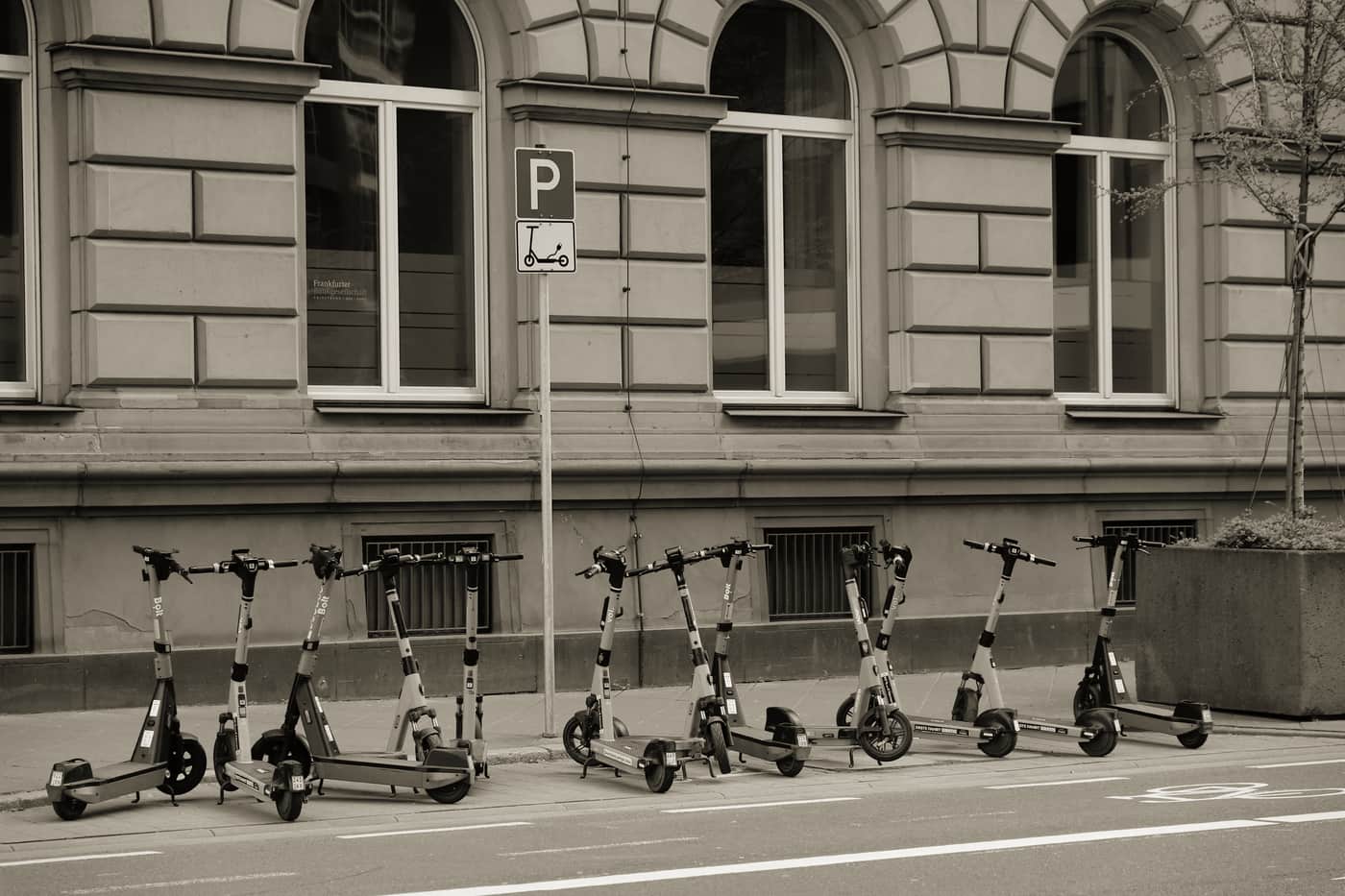
NIU KQi 300X
The balanced answer: 26.8 measured miles, 23.6 mph and dual disc brakes at a weight you can still fold into a trunk.
Segway Ninebot Max G3
28 mph measured, IPX6, dual disc brakes and 286 lb of payload — the most complete mainstream commuter in the data.

NIU KQi Air
The lightest genuinely usable commuter we found data for — 26.4 lb, and it still measured 24.2 miles.
Frequently asked questions
▸Is an electric scooter or an e-bike better for commuting?
A scooter if your commute is under about 8 miles each way and storage is tight. An e-bike if the journey is longer, the surfaces are rough, or you need to carry cargo. Storage at both ends is usually the deciding factor.
▸Which is cheaper, a scooter or an e-bike?
Entry-level scooters start lower, but the two categories overlap heavily in the middle. We do not publish live prices, so compare current figures for the specific models you are considering.
▸Which has better range?
E-bikes generally, and the gap widens because you can pedal when the battery runs low. Our measured scooter figures run from 11 to 60 miles depending heavily on weight.
▸Are e-bikes safer than scooters?
Larger wheels handle road defects far better and bicycle-grade brakes are standard rather than an upgrade, both of which help. Rider behavior and protective gear matter more than the vehicle type.
Read next
Kick & Volt does not ride or bench-test scooters. Every real-world figure on this page is attributed to the third party that measured it — how we research this.