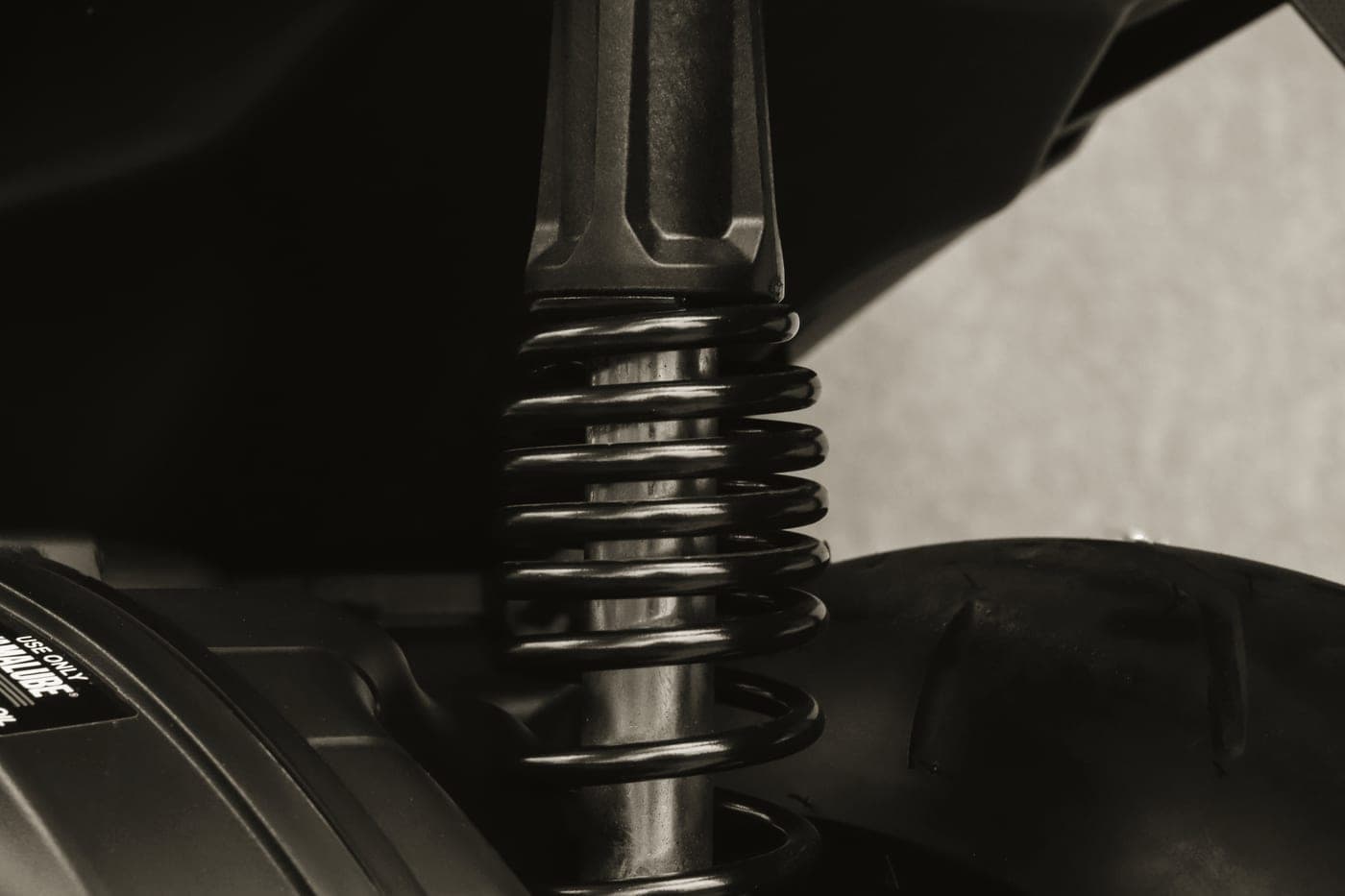
The best electric scooters with suspension
Suspension is the spec that decides whether a rough commute is tolerable, and it is one of the few comfort features that is actually published per model.
By Ryder M. · Published September 29, 2026
Kick & Volt earns a commission when you buy through our Amazon links, at no extra cost to you. It never changes what we recommend or how we rank it — read the full disclosure.
Why suspension matters more on a scooter than a bike
Wheel diameter is the reason. A bicycle rolls over a road defect that a scooter’s 9 to 11 inch wheel drops into, so the same pothole transmits far more shock. On a scooter, suspension and tire volume are not luxuries — they are what makes a rough commute repeatable rather than something you abandon after a month.
It is also, unusually, a spec that gets published. Most comfort characteristics are invisible on a spec sheet, but suspension type and tire size are both reported per model by the tester whose data this site uses (eRideHero, Sep 2026), which is why this page can rank on evidence rather than impression.
One honest note up front: the NIU KQi Air has no suspension at all (eRideHero, Sep 2026). It is our top pick for portability elsewhere on this site, and on a rough surface it is the worst scooter in our registry. Both things are true, and the choice between them is exactly what this page is for.
| # | Product | Best for | Score | Price |
|---|---|---|---|---|
| 1 | 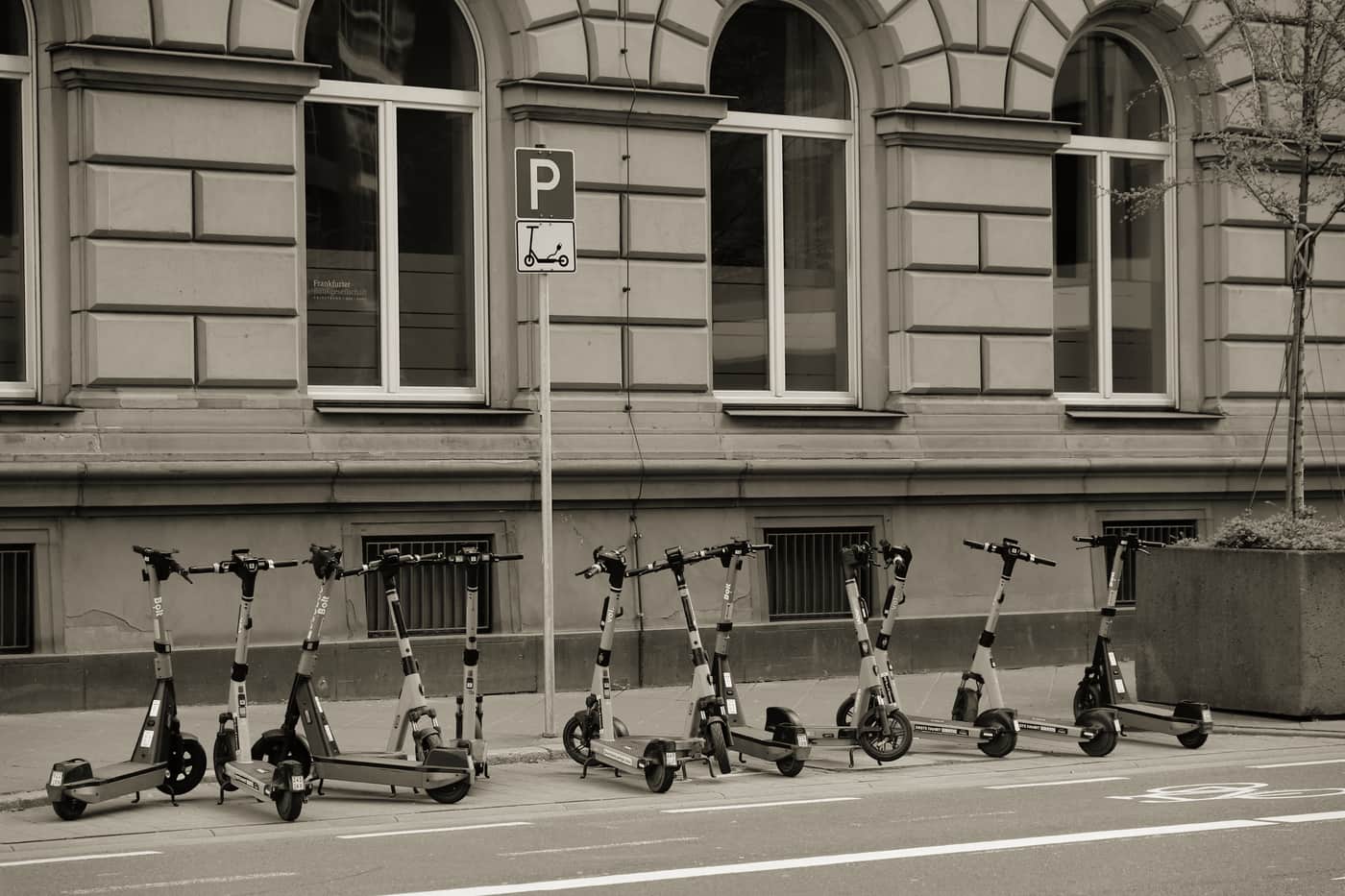 Segway Ninebot Max G3Dual hydraulic and adjustable, on 11-inch self-healing tubeless tires. The best combination here. Segway Ninebot Max G3Dual hydraulic and adjustable, on 11-inch self-healing tubeless tires. The best combination here. | Best ride quality | 6.1 | |
| 2 |  NAVEE ST3 ProDual suspension on 10-inch self-healing tubeless tires — the value benchmark for comfort. NAVEE ST3 ProDual suspension on 10-inch self-healing tubeless tires — the value benchmark for comfort. | Value commuter | 5.3 | |
| 3 |  NAVEE GT3 ProDual: front fork plus rear spring, on 10-inch tubeless. Unusual at this price. NAVEE GT3 ProDual: front fork plus rear spring, on 10-inch tubeless. Unusual at this price. | Best budget overall | 5.2 | |
| 4 | Apollo GoDual front spring and rear rubber at 46 lb, with IP66 sealing. | Most capable lightweight | 5.9 | |
| 5 |  VMAX VX2 Hub (18.2 Ah)Front hydraulic with rear rubber, alongside 35.6 measured miles. VMAX VX2 Hub (18.2 Ah)Front hydraulic with rear rubber, alongside 35.6 measured miles. | Best measured range | 6.4 | |
| 6 |  Segway Ninebot E3 ProDual rubber dampening front and rear — the budget way to get both ends sprung. Segway Ninebot E3 ProDual rubber dampening front and rear — the budget way to get both ends sprung. | Budget buyers who want support | 5.1 |
Scores are computed from published specifications using the rubric on our research methodology page. Tap any row to jump to the full write-up.
Every pick in full
Each model below lists what the maker publishes, what an independent tester measured, and the trade-off you accept by choosing it. Nothing here is perfect.
Segway Ninebot Max G3
Dual hydraulic and adjustable, on 11-inch self-healing tubeless tires. The best combination here.
- Range:
- 24.9 milesMeasured (eRideHero, Sep 2026)
- Top speed:
- 28 mphMeasured (eRideHero, Sep 2026)
- Weight:
- 54.2 lbMeasured (eRideHero, Sep 2026)
- Max rider:
- 286 lbMeasured (eRideHero, Sep 2026)
What is good
- IPX6 is the highest weather rating in our mainstream commuter set
- 850 W handles 10%+ grades with an average adult aboard
- 286 lb payload gives genuine headroom over the usual 265 lb ceiling
What you give up
- 54.2 lb — folding it is easy, lifting it is not
- 24.9 measured miles is mid-pack despite the hardware
- 28 mph is more speed than most brake setups at this weight want
NAVEE ST3 Pro
Dual suspension on 10-inch self-healing tubeless tires — the value benchmark for comfort.
- Range:
- 24.9 milesMeasured (eRideHero, Sep 2026)
- Top speed:
- 24.8 mphMeasured (eRideHero, Sep 2026)
- Weight:
- 55 lbMeasured (eRideHero, Sep 2026)
- Max rider:
- 265 lbMeasured (eRideHero, Sep 2026)
What is good
- Drum front and disc rear — the drum keeps working when the road is soaked
- 600 W clears the threshold for 8-10% grades with a typical adult aboard
- Range and speed both measured near 25, which is a rare balance
What you give up
- 55 lb rules out regular stair carries
- 265 lb payload, the same ceiling as far cheaper scooters
- Brake feel on a drum is duller than a hydraulic disc
NAVEE GT3 Pro
Dual: front fork plus rear spring, on 10-inch tubeless. Unusual at this price.
- Range:
- 23.3 milesMeasured (eRideHero, Sep 2026)
- Top speed:
- 20.6 mphMeasured (eRideHero, Sep 2026)
- Weight:
- 48.5 lbMeasured (eRideHero, Sep 2026)
- Max rider:
- 265 lbMeasured (eRideHero, Sep 2026)
What is good
- 23.3 measured miles at a budget price is the standout number in the set
- IPX5 means real rain and road spray, not just a light shower
- 20.6 mph is enough to hold a bike lane without drama
What you give up
- 48.5 lb for a budget scooter — you are not carrying this far
- 400 W limits it on sustained climbs
- No brake type published in the test data we found
Apollo Go
Dual front spring and rear rubber at 46 lb, with IP66 sealing.
- Range:
- 19.8 milesMeasured (eRideHero, Sep 2026)
- Top speed:
- 26.7 mphMeasured (eRideHero, Sep 2026)
- Weight:
- 46 lbMeasured (eRideHero, Sep 2026)
- Max rider:
- 265 lbMeasured (eRideHero, Sep 2026)
What is good
- IP66 — dust-tight and rated for powerful water jets, the best rating in the dataset
- 700 W at 46 lb gives a genuinely good power-to-weight ratio for hills
- A drum brake is the right choice on a scooter meant to be ridden wet
What you give up
- 19.8 measured miles is the weak spot
- Regen is a supplement, not a second friction brake
- 265 lb payload despite the capable hardware
VMAX VX2 Hub (18.2 Ah)
Front hydraulic with rear rubber, alongside 35.6 measured miles.
- Range:
- 35.6 milesMeasured (eRideHero, Sep 2026)18.2 Ah battery variant
- Top speed:
- 33.5 mphMeasured (eRideHero, Sep 2026)
- Weight:
- 57.1 lbMeasured (eRideHero, Sep 2026)
- Max rider:
- 287 lbMeasured (eRideHero, Sep 2026)
What is good
- 35.6 measured miles is the longest independently verified range here under 60 lb
- IPX6 — the top weather rating in this data set
- 287 lb payload with the range to match
What you give up
- 33.5 mph on a 500 W motor means the top speed arrives slowly
- 57.1 lb is the practical ceiling for a scooter you fold into a car
- No brake type published in the test data we found
Segway Ninebot E3 Pro
Dual rubber dampening front and rear — the budget way to get both ends sprung.
- Range:
- 17.2 milesMeasured (eRideHero, Sep 2026)
- Top speed:
- 19.3 mphMeasured (eRideHero, Sep 2026)
- Weight:
- 40.1 lbMeasured (eRideHero, Sep 2026)
- Max rider:
- 265 lbMeasured (eRideHero, Sep 2026)
What is good
- IPX5 at a budget price — most scooters this cheap publish no rating at all
- 17.2 measured miles covers a 7-mile each-way commute with margin
- Parts and service are easier to find than for any other brand here
What you give up
- 19.3 mph is slow if your route includes a stretch of open road
- 400 W is mid-pack at best on hills
- Nothing about it is exciting — that is rather the point
Side by side
| Model | Range | Top speed | Weight | Max rider | Motor | Brakes | IP | Price |
|---|---|---|---|---|---|---|---|---|
| Segway Ninebot Max G3 | 24.9 milesMeasured | 28 mphMeasured | 54.2 lbMeasured | 286 lbMeasured | 850 WMeasured | Dual discMeasured | IPX6Measured | Check price |
| NAVEE ST3 Pro | 24.9 milesMeasured | 24.8 mphMeasured | 55 lbMeasured | 265 lbMeasured | 600 WMeasured | Drum + discMeasured | IPX5Measured | Check price |
| NAVEE GT3 Pro | 23.3 milesMeasured | 20.6 mphMeasured | 48.5 lbMeasured | 265 lbMeasured | 400 WMeasured | Not published | IPX5Measured | Check price |
| Apollo Go | 19.8 milesMeasured | 26.7 mphMeasured | 46 lbMeasured | 265 lbMeasured | 700 WMeasured | Drum + regenMeasured | IP66Measured | Check price |
| VMAX VX2 Hub (18.2 Ah) | 35.6 milesMeasured18.2 Ah battery variant | 33.5 mphMeasured | 57.1 lbMeasured | 287 lbMeasured | 500 WMeasured | Not published | IPX6Measured | Check price |
| Segway Ninebot E3 Pro | 17.2 milesMeasured | 19.3 mphMeasured | 40.1 lbMeasured | 265 lbMeasured | 400 WMeasured | Not published | IPX5Measured | Check price |
Measured figures come from a named third-party test; Claim figures come from the manufacturer. Sources are listed under each model below. Price links are paid affiliate links. Empty specifications read “Not published” rather than being estimated.
Suspension and tire figures for every model above come from the same independent round-up (eRideHero, Sep 2026), so they are directly comparable rather than assembled from different makers’ marketing.
The types, and what they do
Dual hydraulic, adjustable — the best of it
Only the Segway Ninebot Max G3 offers this among mainstream commuters (eRideHero, Sep 2026), and it pairs it with 11-inch self-healing tubeless tires, the largest here. Adjustability matters because suspension tuned for a 150 lb rider is wrong for a 250 lb one. In our registry only the Nami Burn-E 2 Max and Kaabo King GTR otherwise offer hydraulic damping, and both are hyperscooters.
Dual spring or rubber — the sensible middle
The NAVEE ST3 Pro, NAVEE GT3 Pro, Apollo Go and Segway E3 Pro all have something at both ends. Having both ends sprung matters more than what the springs are made of: a front-only setup leaves your rear wheel — and the deck you are standing on — taking every impact undamped.
Front only — better than nothing
The NIU KQi 300X has front hydraulic suspension and nothing at the rear (eRideHero, Sep 2026). That takes the worst of the fork impacts out but leaves the deck harsh. It is a reasonable compromise on a scooter chosen mainly for its 26.8 measured miles.
Tires are half the answer
Air volume is suspension by another name. An 11-inch tubeless tire absorbs considerably more than a 9-inch one before the springs are even involved, and self-healing tubeless construction removes the most common roadside failure. Tire pressure matters too — under-inflation increases rolling resistance and costs range (Hiboy, Sep 2026), and it makes pinch flats far more likely, which is why it is on the maintenance checklist.
What suspension costs you
Weight and, usually, money. Every scooter on this page weighs between 40.1 and 57.1 lb. The one genuinely light model in our registry, the NIU KQi Air at 26.4 lb, gets there partly by having no suspension at all. If you carry your scooter up stairs, that trade may still be the right one — the bands are in our weight guide.
What we do not know
Frequently asked questions
▸Do I need suspension on an electric scooter?
If your route has broken pavement, curbs or gravel, yes — a scooter’s small wheels drop into defects a bicycle rolls over. On smooth pavement you can trade it away for lower weight.
▸What is the best suspension type?
Dual hydraulic with adjustment, which among mainstream commuters means the Segway Ninebot Max G3. Failing that, having something at both ends matters more than what the springs are made of.
▸Are bigger tires as good as suspension?
They do a lot of the same work. An 11-inch tubeless tire absorbs considerably more than a 9-inch one before the springs engage, and self-healing tubeless construction removes the most common roadside failure.
▸Which scooters have no suspension?
In our registry, the NIU KQi Air — which is also our lightest pick at 26.4 lb. That is the trade: it is the best scooter here to carry and the worst to ride over bad ground.
Read next
Kick & Volt does not ride or bench-test scooters. Every real-world figure on this page is attributed to the third party that measured it — how we research this.