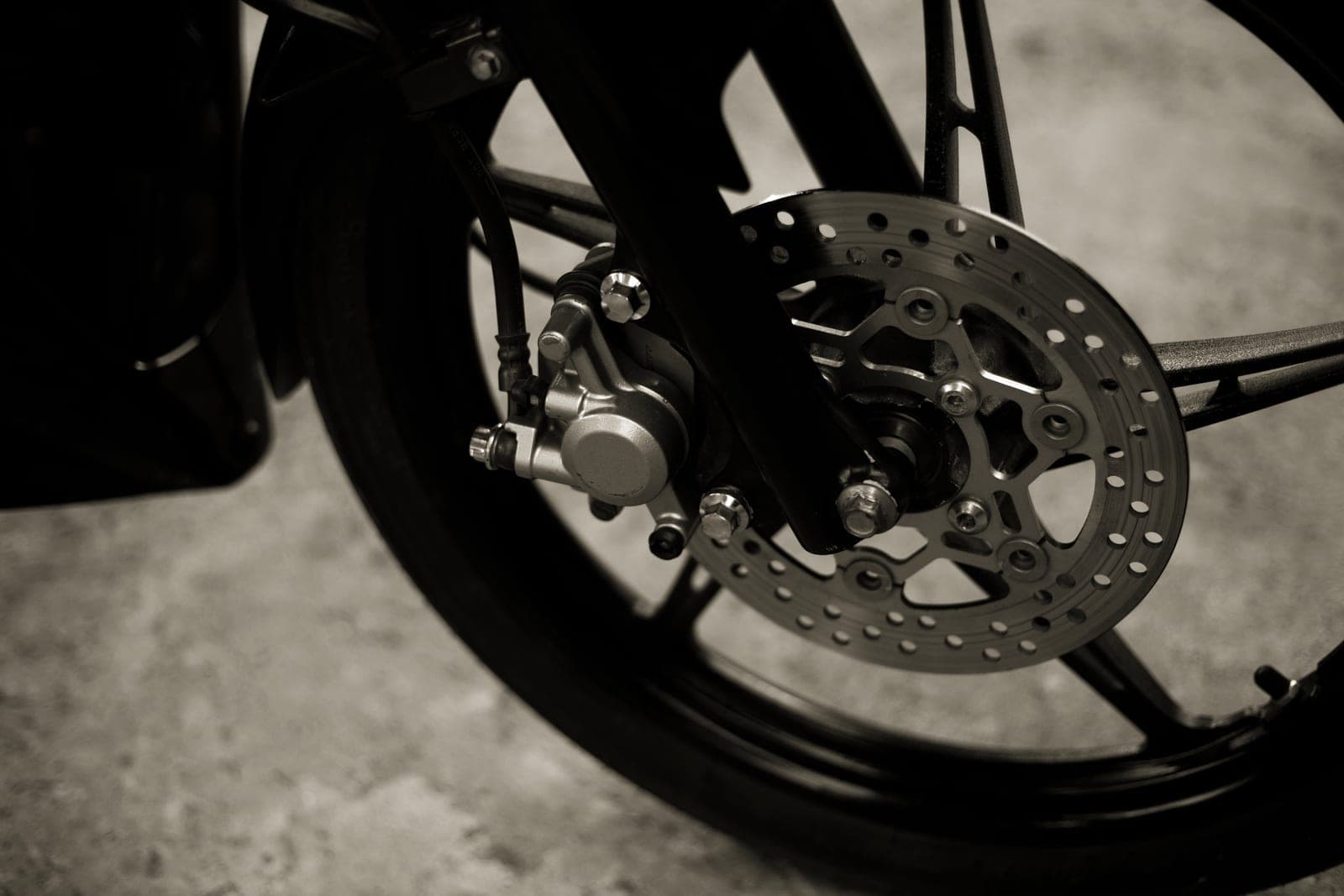
Electric scooter brakes: squeaking, rubbing and not working
Brake complaints are the most common ownership problem in this category, and most of them trace to one of four causes. Here is how to tell them apart on each hardware type.
By Ryder M. · Published October 10, 2026
Kick & Volt earns a commission when you buy through our Amazon links, at no extra cost to you. It never changes what we recommend or how we rank it — read the full disclosure.
The short answer
Squeaking is usually contaminated or glazed pads; rubbing is usually caliper alignment or a cable that has not released; weak braking is usually cable stretch or pad wear; and a lever that pulls to the bar on a hydraulic system means air or fluid loss — stop riding. Pad and cable adjustment is ordinary owner maintenance. Hydraulic bleeding and anything involving a cracked rotor or a soft lever is a workshop job, and riding on it is the one genuinely dangerous choice here.
First, know your hardware
The same symptom means different things on different brakes, so start by identifying what you have. Our brake hardware guide covers the full ranking; the short version is below.
| Brake type | Strength | Trade-off |
|---|---|---|
| Full hydraulic | Strongest and most consistent, least lever force | Hardest to service yourself |
| Semi-hydraulic | Better than mechanical, short of full hydraulic | A sensible middle |
| Mechanical disc | Strong and consistent; the most common type at every price | Cables stretch and need adjusting |
| Drum | Durable, low maintenance, reliable wet because it is enclosed | Less outright stopping force than a disc |
| Electronic / regenerative | No maintenance at all, adds bite alongside a friction brake | Not strong enough to be a primary brake |
| Foot brake | Simple | Inconsistent, limited stopping power |
Characteristics per an independent brake reference (eRideHero, Sep 2026). No stopping distances are quoted here because that source publishes none, and we have measured none ourselves.
Two notes before you touch anything. Brake type is not published for roughly a third of the models in our registry, so your own listing may not tell you — look at the wheel instead: a visible metal disc with a caliper is a disc brake, a sealed drum at the hub is a drum, and a lever with a hose rather than a cable is hydraulic. And regenerative or electronic braking is not a friction brake at all; if your scooter relies on it plus one friction brake, as the VMAX VX2 Lite does with a front drum plus rear regen (Rider Guide, Sep 2026), then that one friction brake is the whole system and its maintenance matters twice as much.
Squeaking
Almost always the pads, and almost never dangerous. Three causes, in order of likelihood: contamination from oil, chain lubricant or road grime on the rotor; glazing, where a hard pad surface has formed from heat; and bedding-in, which is normal on a new scooter and stops within the first few rides.
For contamination, clean the rotor with isopropyl alcohol and a clean cloth — never an oily rag, and never a spray lubricant anywhere near a brake. For glazing, light repeated braking from low speed on a quiet stretch will usually scuff the surface back. If neither helps, the pads are worn or the wrong compound, and replacing them is a cheap job. A drum brake that squeaks is unusual and is more likely to be dust inside the drum.
Rubbing and dragging
A brake that touches the rotor when the lever is released costs range, wears pads and makes the scooter feel heavy. On a mechanical disc, the cause is nearly always caliper alignment or a cable that has not returned — the fix is loosening the caliper bolts, squeezing the lever, and retightening with the caliper centred on the rotor. On a hydraulic system a persistent drag can be a sticking piston, which is workshop work.
The other common cause is a bent rotor, which produces a rub once per wheel revolution rather than continuously. Spin the wheel and watch the gap. A visibly bent rotor can sometimes be trued; a cracked one is replaced immediately.
Weak or dead brakes
On a cable system, cable stretch is the first suspect and the easiest fix: most calipers have a barrel adjuster that takes up slack in seconds. Pad wear is second — pads have a minimum thickness and below it they stop working rather than working less. A disconnected or frayed cable is third, and it is the one that produces a brake that simply does nothing.
On an electronic or regenerative brake, a sudden loss of braking is usually electrical: a disconnected brake-lever sensor is the most common single cause, and it often shows up alongside a scooter that will not throttle, because many controllers cut power when the brake sensor reads engaged. That is a plug to check, not a repair.
A lever that pulls to the bar
On a hydraulic system this is air in the line or fluid loss, and it is the one symptom on this page that should end the ride. A hydraulic lever that reaches the handlebar has no reserve left to give you. Bleeding a scooter brake needs the right fluid, the right kit and a procedure that varies by caliper — a workshop job unless you already know how. On a cable system the same symptom is usually stretched cable or worn-through pads, which is the same urgency and a simpler fix.
Scooters that publish their brakes
Brake specification is missing for roughly a third of the models we hold data for. These four publish theirs, and they cover the range: full hydraulic, dual disc, drum-and-disc, and a single friction brake with regen.
352 lb of payload and 46.3 measured miles with XTECH hydraulics — the heavy-rider scooter with nothing missing.
28 mph measured, IPX6, dual disc brakes and 286 lb of payload — the most complete mainstream commuter in the data.
24.9 measured miles at 24.8 mph with drum-and-disc braking — the value commuter that does not compromise on stopping.
VMAX VX2 Lite
Best-under-$1,000 per Rider Guide: 25 mph, 19.3 miles, and a front drum plus rear regen brake pairing.
When to stop riding
Four conditions, none of them negotiable: a hydraulic lever that pulls to the bar, a cracked or deeply scored rotor, pads worn past their wear indicator, and any brake that works intermittently. The regulator’s own micromobility hazard reporting treats braking failure as a serious injury mechanism (CPSC micromobility report, 2017-2024, Oct 2026), and a scooter is not a bicycle you can slow with your shoes.
The preventative version of this page is the monthly pass in our maintenance checklist: lever feel, pad thickness, rotor condition, cable tension. Heavier riders should check more often rather than less, because mass is the variable brakes feel most — frame and brake checks covers that case specifically.
If the brakes were never good enough
Some brake complaints are not faults. A single friction brake plus regenerative assist is a system working exactly as specified and still not giving you much, and no adjustment changes that. Two real friction brakes is the floor we would buy at; hydraulics are the upgrade.
The models that have them are in the hydraulic-brake round-up, and the speed-against-hardware argument is in the 50 mph page, where several very fast machines run brakes that are not matched to the speed. If you are shopping rather than fixing, the fastest scooters under $1,000 makes the same point inside a budget.
What we do not know
Frequently asked questions
▸Why are my electric scooter brakes squeaking?
Usually contaminated or glazed pads. Clean the rotor with isopropyl alcohol and a clean cloth, and bed the pads in with repeated light braking from low speed. New scooters often squeak for the first few rides and then stop.
▸Why are my electric scooter brakes rubbing?
A mechanical disc caliper that is not centred on the rotor, a cable that has not released, or a bent rotor. If the rub happens once per wheel revolution it is the rotor; if it is constant it is alignment or cable tension.
▸My electric scooter brakes stopped working — what now?
Stop riding. On a cable brake check for a frayed or detached cable and worn pads. On an electronic brake check the brake-lever sensor plug. On a hydraulic brake a lever that pulls to the bar means air or fluid loss and needs a workshop.
▸Can I adjust electric scooter brakes myself?
Cable tension, caliper alignment and pad replacement are ordinary owner jobs with basic tools. Hydraulic bleeding, a cracked rotor and a soft hydraulic lever are not — those go to a mechanic.
Read next
Kick & Volt does not ride or bench-test scooters. Every real-world figure on this page is attributed to the third party that measured it — how we research this.