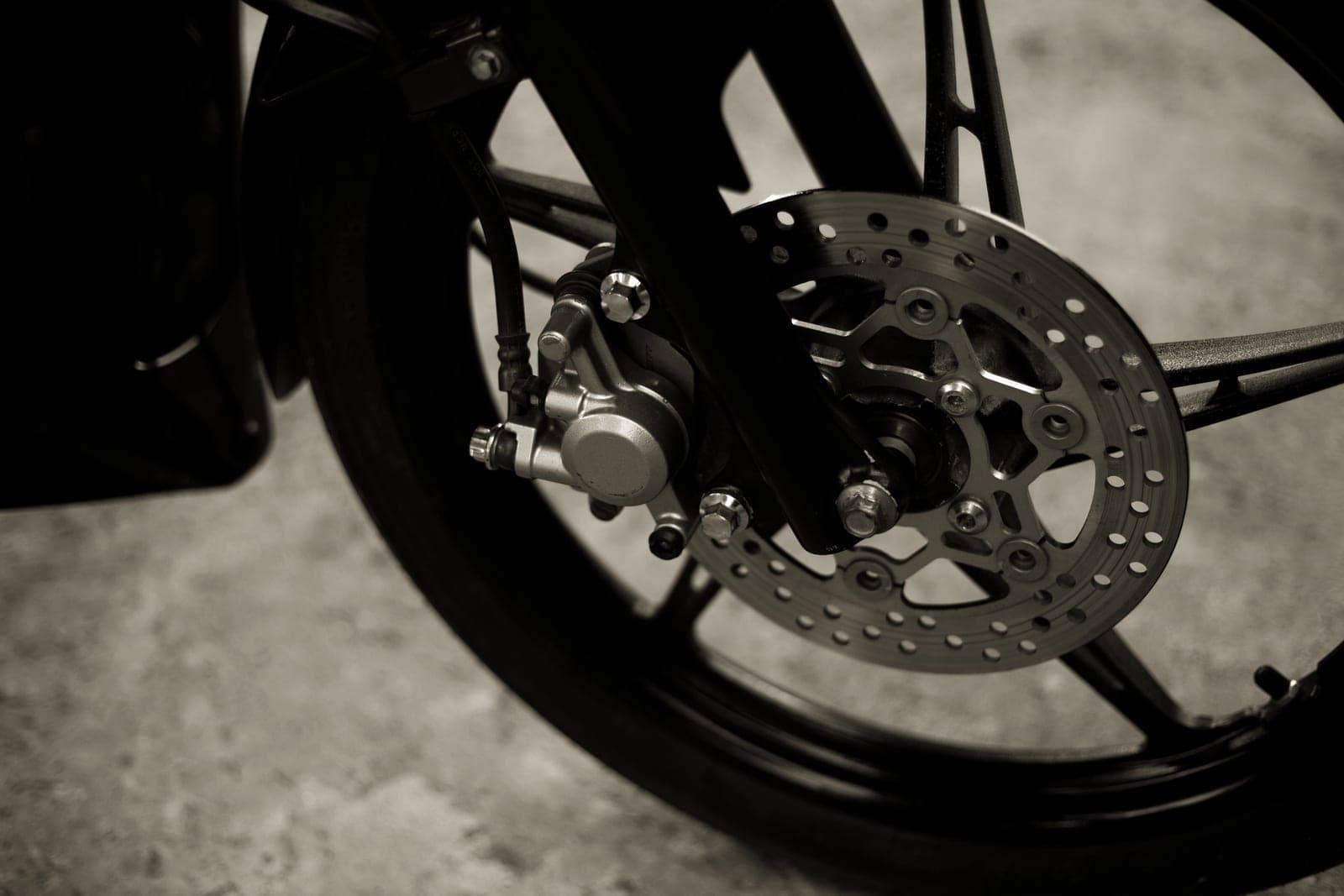
Electric scooter brakes explained
The most safety-relevant spec on a scooter and the one most often left out of a listing. Here is what each type does, and the one combination to walk away from.
By Ryder M. · Published September 27, 2026
The short answer
Full hydraulic is the strongest and most consistent, and the hardest to service. Mechanical disc is strong, common and cable-adjustable. Drum is slightly weaker but durable, low-maintenance and reliable when wet because it is enclosed. Regenerative braking is not strong enough to be a primary brake (eRideHero, Sep 2026). The setup to avoid is a single friction brake paired with regen.
The types, ranked
| Brake type | Strength | Trade-off |
|---|---|---|
| Full hydraulic | Strongest and most consistent, least lever force | Hardest to service yourself |
| Semi-hydraulic | Better than mechanical, short of full hydraulic | A sensible middle |
| Mechanical disc | Strong and consistent; the most common type at every price | Cables stretch and need adjusting |
| Drum | Durable, low maintenance, reliable wet because it is enclosed | Less outright stopping force than a disc |
| Electronic / regenerative | No maintenance at all, adds bite alongside a friction brake | Not strong enough to be a primary brake |
| Foot brake | Simple | Inconsistent, limited stopping power |
Characteristics per an independent brake reference (eRideHero, Sep 2026). No stopping distances are quoted here because that source publishes none, and we have measured none ourselves.
The honest caveat on that table: it describes characteristics, not measured stopping distances. The independent source we use for brake hardware publishes no braking-distance figures, discussing rotor size, tires, weather, weight and speed as factors instead (eRideHero, Sep 2026). We have not measured any either, so this page ranks by mechanism rather than by a number we cannot support.
Why regen is not a brake
Regenerative braking uses the motor as a generator, slowing the scooter and putting a little charge back. It has genuine advantages: no maintenance at all, and it adds bite alongside a friction brake (eRideHero, Sep 2026). What it cannot do is stop the scooter on its own with the authority a friction brake has, particularly from speed or downhill.
Which makes the common budget configuration — one disc at the front, regen at the rear — a single point of failure. If that cable stretches or that pad wears out, you are relying on a system the reference material explicitly says is not strong enough to be primary. It is not a reason to reject a scooter outright, but it is a reason to keep the one friction brake in good order; the maintenance checklist covers how.
Wet-weather performance
Drums win here, and it is the main reason they persist on commuters that would otherwise fit a disc. The enclosed design keeps water out, so a drum is reliable in the wet (eRideHero, Sep 2026). Discs work well wet too but may make noise and need a moment to clear the rotor before biting — the practical consequence is braking earlier.
The NAVEE ST3 Pro’s front drum plus rear disc is a genuinely thoughtful wet-weather configuration for that reason, and it is why it earns a place in our commuter round-up despite being neither the fastest nor the longest-range scooter there. More on wet riding in the IP-rating guide.
What to buy at each speed
- Up to 20 mph: a mechanical disc or drum at each wheel is entirely adequate. Two friction brakes matters more than which type.
- 20-30 mph: two friction brakes, ideally with a disc at the front for outright power. This is where a single-friction-brake-plus-regen setup starts to feel thin.
- 30-40 mph: semi-hydraulic at minimum. The EMOVE RoadRunner V3’s XTECH hybrid hydraulics are the example.
- Above 40 mph: full hydraulic, and preferably multi-piston. The Solar Hyperion RST’s quad-piston hydraulics and the Segway GT3 Pro’s dual-piston setup are the only configurations in our registry that genuinely match their top speeds.
A rider-weight note: more mass means more energy to dissipate, so a heavier rider should read one line down that list. It is one of the main arguments in what a payload rating actually means, and the inspection routine is in frame and brake checks.
What we do not know
Frequently asked questions
▸What is the best type of electric scooter brake?
Full hydraulic for outright stopping power and consistency, at the cost of being hardest to service. Mechanical disc is the best all-round compromise, and drum is the most reliable in wet weather because it is enclosed.
▸Is regenerative braking enough on its own?
No. It requires no maintenance and adds useful bite alongside a friction brake, but it is not strong enough to be a primary braking system, especially from speed or downhill.
▸Are drum brakes worse than disc brakes?
They have less outright stopping force, but they are durable, low-maintenance and more reliable in the wet because the mechanism is enclosed. On a commuter ridden year-round that is often the better trade.
▸How do I know my brakes need attention?
A lever that pulls closer to the grip than it used to means a stretched cable or worn pads. Grinding means the pad material is gone. Either is a stop-riding signal.
Read next
Kick & Volt does not ride or bench-test scooters. Every real-world figure on this page is attributed to the third party that measured it — how we research this.