The best electric scooters with drum brakes
A drum brake is the only friction brake on a scooter that the weather cannot reach. It is duller under the lever and heavier than a disc, and in a wet climate those are the right trade-offs to make.
By Ryder M. · Published November 21, 2026
Kick & Volt earns a commission when you buy through our Amazon links, at no extra cost to you. It never changes what we recommend or how we rank it — read the full disclosure.
The short answer
The best electric scooter with a drum brake is the NAVEE ST3 Pro, and it is the only one in this set with a second real friction brake beside it: a front drum plus a rear disc, with 24.9 measured miles at 24.8 measured mph, 600 W and a published IPX5 rating (eRideHero, Sep 2026). It is also the only drum-brake machine in our registry carrying a live Amazon price as of November 28, 2026. The budget pick is the INMOTION Climber, the cheapest in the set on a dated manufacturer listing — IPX6, 900 W claimed and a 286 lb rating — with the caveat that our source describes a drum while retailer listings describe a rear disc, so treat the exact hardware as unsettled (Rider Guide, Oct 2026). For the wettest riding of all, the Apollo Go pairs a drum with the only IP66 rating in this registry (eRideHero, Sep 2026) (Apollo Scooters, Oct 2026).
What a drum does that a disc cannot
A disc brake squeezes pads onto an exposed rotor. A drum brake pushes shoes outward against the inside of an enclosed hub. Everything that follows comes from that one difference: the drum is sealed.
Sealed means road grit cannot get between the friction surfaces, which is what scores a rotor and chews pads on a scooter ridden through winter grime. It means standing water cannot glaze a pad, so the first stop after a puddle feels like the last one before it. And it means there is no rotor to bend — a scooter lives its life being leaned against walls and loaded into cars, and a trued rotor is a consumable in that environment while a drum is not.
The costs are real and worth stating. A drum is heavier for the same stopping power, it has less outright bite than a hydraulic disc, it sheds heat poorly on a long descent, and you cannot see how much shoe is left without taking the wheel off. Brakes explained ranks all four hardware tiers, and how to fix electric scooter brakes covers the adjustment a drum needs.
How these were ranked
Whether there is a second friction brake first, then measured range, then published sealing, then motor output. The first criterion does most of the work: one of these five pairs its drum with a disc, three pair it with regeneration, and that is the difference between two brakes and one.
Every registry model that publishes a drum brake is on this page — all five of them. That is the complete set rather than a selection, and it is small because most manufacturers in this market do not publish a brake type at all: of 45 registry models, 23 state their brake hardware. Where a figure is the maker’s rather than a measurement it is labeled as such, which applies to the whole spec sheet of the NIU KQi 100P and most of the INMOTION Climber’s (Rider Guide, Oct 2026).
| # | Product | Best for | Score | Price |
|---|---|---|---|---|
| 1 | 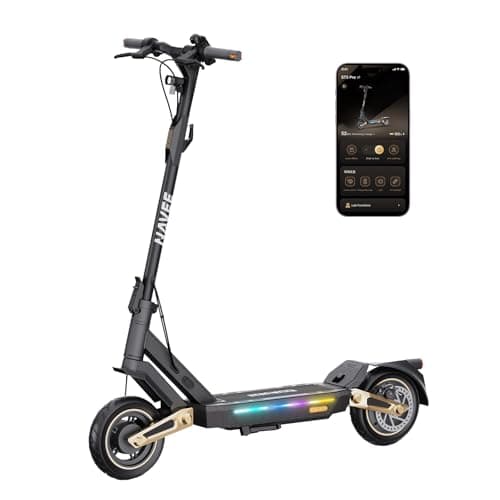 NAVEE ST3 ProThe pick, and the only one here with a live Amazon price: a front drum plus a rear disc, 24.9 measured miles, 600 W and IPX5. | Value commuter | 5.3 | $599.99 · View on Amazon #ad How we are funded · Price as of November 28, 2026 |
| 2 |  Apollo GoFor the wettest commutes: a drum plus regeneration behind an IP66 rating, with 700 W at 46 lb. | Most capable lightweight | 5.9 | |
| 3 |  INMOTION ClimberThe budget pick on its dated listing, with a caveat: a drum, IPX6 and 900 W at 286 lb, but sources disagree on the hardware. | Best on hills | 6.4 | |
| 4 |  VMAX VX2 LiteFor a wet climate on a budget: a front drum and 25 measured mph. The rear is regeneration, not a brake. | Best under $1,000 | 5.1 | |
| 5 |  NIU KQi 100PFor a teenager: a drum plus regeneration, UL 2272 certification and app-adjustable braking, on NIU's figures. | Ages 14+, adjustable | 5.8 |
Scores are computed from published specifications using the rubric on our research methodology page. Tap any row to jump to the full write-up.
Every pick in full
Each model below lists what the maker publishes, what an independent tester measured, and the trade-off you accept by choosing it. Nothing here is perfect.
NAVEE ST3 Pro
The pick, and the only one here with a live Amazon price: a front drum plus a rear disc, 24.9 measured miles, 600 W and IPX5.
- Range:
- 24.9 milesMeasured (eRideHero, Sep 2026)
- Top speed:
- 24.8 mphMeasured (eRideHero, Sep 2026)
- Weight:
- 55 lbMeasured (eRideHero, Sep 2026)
- Max rider:
- 265 lbMeasured (eRideHero, Sep 2026)
What is good
- Drum front and disc rear — the drum keeps working when the road is soaked
- 600 W clears the threshold for 8-10% grades with a typical adult aboard
- Range and speed both measured near 25, which is a rare balance
What you give up
- 55 lb rules out regular stair carries
- 265 lb payload, the same ceiling as far cheaper scooters
- Brake feel on a drum is duller than a hydraulic disc
#ad How we are funded · Price as of November 28, 2026
Apollo Go
For the wettest commutes: a drum plus regeneration behind an IP66 rating, with 700 W at 46 lb.
- Range:
- 19.8 milesMeasured (eRideHero, Sep 2026)
- Top speed:
- 26.7 mphMeasured (eRideHero, Sep 2026)
- Weight:
- 46 lbMeasured (eRideHero, Sep 2026)
- Max rider:
- 265 lbMeasured (eRideHero, Sep 2026)
What is good
- IP66 — dust-tight and rated for powerful water jets, the best rating in the dataset
- 700 W at 46 lb gives a genuinely good power-to-weight ratio for hills
- A drum brake is the right choice on a scooter meant to be ridden wet
What you give up
- 19.8 measured miles is the weak spot
- Regen is a supplement, not a second friction brake
- 265 lb payload despite the capable hardware
INMOTION Climber
The budget pick on its dated listing, with a caveat: a drum, IPX6 and 900 W at 286 lb, but sources disagree on the hardware.
- Range:
- 24.7 milesMeasured (eRideHero, Sep 2026)
- Top speed:
- 23.4 mphMeasured (eRideHero, Sep 2026)
- Weight:
- 45.8 lbMeasured (eRideHero, Sep 2026)
- Max rider:
- 286 lbMeasured (eRideHero, Sep 2026)
What is good
- Singled out for hill performance by a publication that tests on real gradients
- 45.8 lb is unusually light for a scooter built to climb
- 286 lb payload gives climbing headroom for a heavier rider
What you give up
- A 20-degree gradeability claim is the maker's, and nobody has published a hill test of it
- 23.4 mph is modest — climbing hardware is geared, not fast
- 24.7 measured miles against a 35-mile claim is 71% delivered, and shrinks further on hills
Listed at $599Claim (Rider Guide, Oct 2026)MSRP, not a street price; retailer listings sit higher when we read that page. That is a dated figure, not a live one — check the current price before you buy.
VMAX VX2 Lite
For a wet climate on a budget: a front drum and 25 measured mph. The rear is regeneration, not a brake.
- Range:
- 19.3 milesMeasured (Rider Guide, Sep 2026)
- Top speed:
- 25 mphMeasured (Rider Guide, Sep 2026)
- Weight:
- 52.1 lbMeasured (Rider Guide, Sep 2026)
What is good
- A front drum brake is the low-maintenance choice for a wet climate
- 25 mph from a scooter positioned below the $800 band
- VMAX's measured range figures hold up better than most across this dataset
What you give up
- Rear regen is not a real second brake — you are riding on one friction brake
- 19.3 miles is modest for the money
- 52.1 lb
Listed at $799Measured (Rider Guide, Sep 2026) when we read that page. That is a dated figure, not a live one — check the current price before you buy.
NIU KQi 100P
For a teenager: a drum plus regeneration, UL 2272 certification and app-adjustable braking, on NIU's figures.
- Range:
- 18 milesClaim (Hiboy, Sep 2026)
- Top speed:
- 17.4 mphClaim (Hiboy, Sep 2026)
- Weight:
- 38.1 lbClaim (Hiboy, Sep 2026)
- Max rider:
- 265 lbClaim (Hiboy, Sep 2026)
No independent range test for this model has been published as of September 2026. Applying the category’s measured 71% average to the 18 mile claim suggests roughly 12.8 real miles — an estimate from the claimed-versus-tested study, not a measurement of this scooter.
What is good
- App-adjustable acceleration and braking — you can dial it down while a new rider learns
- 265 lb payload means it will not be outgrown
- UL 2272 certified, with front suspension
What you give up
- 600 W is a peak figure, not a sustained one
- No independent test published for this model as of September 2026
- 38.1 lb is at the top of what a smaller rider will carry
Side by side
| Model | Range | Top speed | Weight | Max rider | Motor | Brakes | IP | Price |
|---|---|---|---|---|---|---|---|---|
| NAVEE ST3 Pro | 24.9 milesMeasured | 24.8 mphMeasured | 55 lbMeasured | 265 lbMeasured | 600 WMeasured | Drum + discMeasured | IPX5Claim | $599.99 · View on Amazon #ad How we are funded · Price as of November 28, 2026 |
| Apollo Go | 19.8 milesMeasured | 26.7 mphMeasured | 46 lbMeasured | 265 lbMeasured | 700 WMeasured | Drum + regenMeasured | IP66Claim | |
| INMOTION Climber | 24.7 milesMeasured | 23.4 mphMeasured | 45.8 lbMeasured | 286 lbMeasured | Dual-driven, 900 W continuous (1,500 W peak)Claim | DrumClaimRetailer listings describe a rear disc plus electronic braking on both wheels, so treat the exact hardware as unsettled | IPX6Claim | |
| VMAX VX2 Lite | 19.3 milesMeasured | 25 mphMeasured | 52.1 lbMeasured | Not published | Not published | Front drum plus rear regenMeasured | Not published | |
| NIU KQi 100P | 18 milesClaim | 17.4 mphClaim | 38.1 lbClaim | 265 lbClaim | 600 W peakClaim | Drum + regenerativeClaim | Not published | |
| NIU KQi 300X | 26.8 milesMeasured | 23.6 mphMeasured | 48.7 lbMeasured | 265 lbMeasured | 500 WMeasured | Dual discMeasured | Not published | $369.99 · View on Amazon #ad How we are funded · Price as of November 28, 2026 |
Measured figures come from a named third-party test; Claim figures come from the manufacturer. Sources are listed under each model below. Price links are paid affiliate links. Empty specifications read “Not published” rather than being estimated.
The last row is the NIU KQi 300X, which runs dual discs and is here as the contrast: 26.8 measured miles, 23.6 measured mph and the strongest dry stop of any mainstream commuter in our data (eRideHero, Sep 2026). If your roads are dry most of the year, that row is the better buy and this page is the wrong page — scooters with dual disc brakes is the complete set for that hardware, and the KQi 300X leads it on price.
The drum-plus-regen trap
Three of the five picks pair a drum with regenerative braking: the Apollo Go, the VMAX VX2 Lite and the NIU KQi 100P (eRideHero, Sep 2026) (Rider Guide, Sep 2026). Read that as one friction brake, because that is what it is.
Regeneration converts motion back into charge, and it stops being able to do that when the pack is full — which is precisely the state your scooter is in at the top of the hill you are about to ride down. It also fades rather than failing cleanly, so the warning you get is a gradual one. It is a genuinely useful supplement for speed control and a poor second brake, and this site’s standing advice is to refuse a scooter whose only rear brake is regenerative.
That is why the ST3 Pro leads this page by some distance: drum front, disc rear, two independent friction circuits (eRideHero, Sep 2026). Among the rest, the Apollo Go is the one we would still buy, on the strength of its IP66 rating and 700 W at 46 lb (Apollo Scooters, Oct 2026) (eRideHero, Sep 2026) — just ride it knowing where the braking comes from. The safest electric scooters ranks the whole registry on braking and sealing together.
When a drum is the wrong choice
Two situations. The first is long sustained descents. A drum is an enclosed box, so the heat it generates has nowhere convenient to go, and brake fade on a long hill is the failure mode that matters. If you live somewhere with real gradient, hydraulic discs are the answer and scooters with hydraulic brakes is the page.
The second is weight. Energy to dissipate scales with total mass, and a heavy rider on a fast machine asks more of a brake than a drum of scooter size comfortably delivers. Every EMOVE in our data uses hydraulics for exactly this reason (eRideHero, Sep 2026), and frame and brake checks for heavy riders covers what to inspect if you are near a payload ceiling. The EMOVE round-up covers that end of the market.
What a drum costs you in maintenance
Less work, less often, with worse visibility. A drum’s cable needs occasional adjustment as the shoes wear, and that is roughly the whole routine: no pad swaps every few hundred miles, no rotor truing, no contamination to clean off. In exchange you cannot glance at the wheel and see how much material is left, so the service interval is a calendar item rather than an inspection.
Across a scooter’s life that favors the drum for most commuters. The maintenance checklist sets out the schedule, scooters for daily use ranks the registry on what actually wears out, and repairs, parts and service covers parts availability — which matters more for a drum, because fewer shops stock the shoes.
What we do not know
Frequently asked questions
▸Are drum brakes good on an electric scooter?
In a wet climate, yes. A drum is sealed, so grit cannot score the friction surfaces, water cannot glaze the shoes and there is no rotor to bend. It is duller under the lever than a hydraulic disc and sheds heat poorly on long descents, which are the two reasons not to pick one.
▸Which electric scooter has the best drum brakes?
The NAVEE ST3 Pro, because it is the only one in our registry that pairs a front drum with a rear disc rather than with regeneration — two independent friction brakes, plus 24.9 measured miles and a published IPX5 rating.
▸Is a drum brake better than a disc brake?
Different, not better. A disc gives more outright bite and cools better, which wins on long hills and at high speed. A drum is sealed against grit and water and needs far less servicing, which wins on a scooter ridden through winter. Pick for your roads.
▸Is a drum brake plus regenerative braking enough?
That is one friction brake, not two. Regeneration fades as the battery fills and gives you almost nothing when it is full — the state your scooter is in at the top of a hill. Three of the five scooters on this page are built that way, and it is why the ST3 Pro leads.
▸Do drum brakes need maintenance?
Much less than discs: an occasional cable adjustment as the shoes wear, and no pad swaps or rotor truing. The trade-off is visibility — you cannot see how much shoe is left without removing the wheel, so treat it as a calendar item rather than an inspection.
Read next
Kick & Volt does not ride or bench-test scooters. Every real-world figure on this page is attributed to the third party that measured it — how we research this.