The safest electric scooters, and the specs that make them safer
Nobody publishes crash-test data for electric scooters, and exactly one model in our whole registry has a measured braking distance. Here is what can honestly be ranked, and the five machines that rank well.
By Ryder M. · Published November 10, 2026
Kick & Volt earns a commission when you buy through our Amazon links, at no extra cost to you. It never changes what we recommend or how we rank it — read the full disclosure.
The short answer
The safest mainstream electric scooter in our data is the Segway Ninebot Max G3: dual disc brakes, 11-inch self-healing tubeless tires, dual adjustable hydraulic suspension and a published IPX6 rating, with 24.9 measured miles and a 286 lb payload (eRideHero, Sep 2026). The budget pick is the NIU KQi 300X, which keeps dual discs and 10.5-inch sealed tires at the lowest live price here (eRideHero, Sep 2026). One honest caveat up front: no scooter on this page has a crash rating, and only the Varla Eagle One V2 has a braking distance anybody measured — 2.0 m from 15 mph (Electric Scooter Insider, Oct 2026). Live prices as of November 14, 2026.
What can honestly be ranked
Four specifications, all published, all of which change what happens in the moment something goes wrong. Brake hardware, because stopping distance is the whole story. Tire size and construction, because grip and pothole tolerance decide whether you stay upright. Sealing, because an electrical fault in the wet is a failure mode rather than an inconvenience. And top speed, because kinetic energy scales with the square of it.
Payload rating belongs on that list too for riders near it: brakes have to dissipate energy proportional to total mass, and a machine ridden at 95% of its rating is a different machine from one ridden at 70% — what a payload rating actually means covers that.
What nobody publishes
There is no crash-test standard for electric scooters the way there is for cars, so no model in our registry has a crash rating. Braking distance is almost as scarce: across every source we use — eRideHero, Rider Guide, Electric Scooter Insider, ScooterGearLab — exactly one measured braking distance exists for one model, the Varla Eagle One V2 at 2.0 m from 15 mph (Electric Scooter Insider, Oct 2026).
Frame fatigue data, stem-clamp failure rates and tire blowout rates do not exist publicly either. What does exist is population-level injury data from the US Consumer Product Safety Commission (U.S. Consumer Product Safety Commission, Oct 2026) (CPSC micromobility report, 2017-2024, Oct 2026), which tells you about riders and conditions rather than about models. Are electric scooters safe works through what that data does and does not say, including the battery-fire question.
How these were ranked
Brake hardware tier first: full hydraulic above semi-hydraulic, above drum or mechanical disc, above electronic or foot braking alone. Then tire diameter and construction. Then published IP rating. Then measured top speed, treated as a liability rather than a feature. A model with no published brake type cannot rank at the top, which is why two machines this site rates highly elsewhere are absent.
Claimed figures do not count here at all. The twelve-model study behind this site measured advertised range at an average of 71% of the printed number (Rider Guide, Sep 2026), and a brake specification is not more carefully written than a range specification.
| # | Product | Best for | Score | Price |
|---|---|---|---|---|
| 1 | 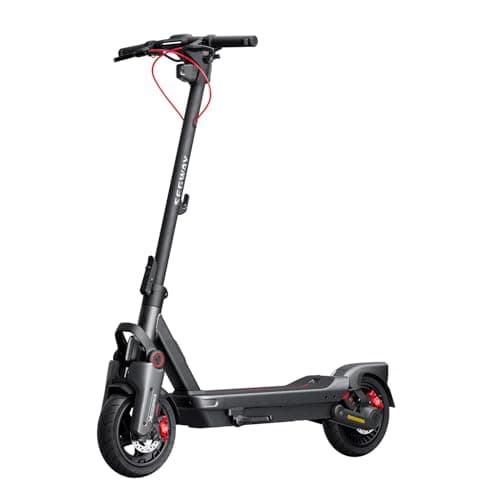 Segway Ninebot Max G3The pick: dual disc brakes, 11-inch self-healing tubeless tires, dual adjustable hydraulic suspension and IPX6 sealing — the best combination of stopping, grip and weather tolerance in our mainstream set. | Best ride quality | 6.1 | $999.00 · View on Amazon #ad How we are funded · Price as of November 14, 2026 |
| 2 | 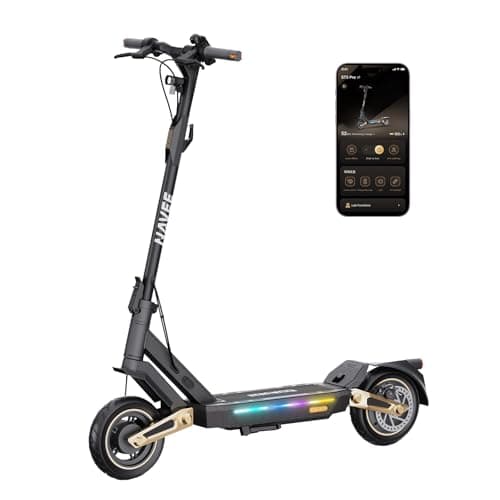 NAVEE ST3 ProThe most consistent brake in bad weather. An enclosed front drum cannot pick up grit or glaze a pad, paired with a rear disc and IPX5. | Value commuter | 5.3 | $709.99 · View on Amazon #ad How we are funded · Price as of November 14, 2026 |
| 3 |  Varla Eagle One V2The only machine here with a braking distance somebody actually measured: 2.0 m from 15 mph, on 10 x 3.5-inch all-terrain tires. | Dual motors plus a factory seat option | 6.4 | |
| 4 |  EMOVE Cruiser V2Hydraulic XTECH brakes with a 352 lb payload rating and 46.3 measured miles — the right hardware if you are a heavy rider at speed. | Best for heavy riders | 7.8 | |
| 5 | 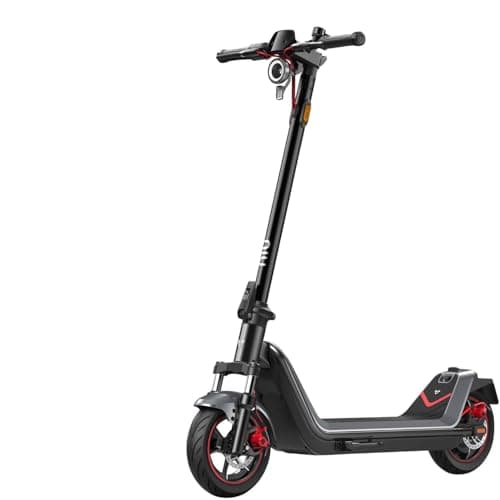 NIU KQi 300XThe budget pick: dual disc brakes and 10.5-inch self-healing tubeless tires at the lowest live price here, with 26.8 measured miles. | Best all-round commuter | 5.2 | $369.99 · View on Amazon #ad How we are funded · Price as of November 14, 2026 |
Scores are computed from published specifications using the rubric on our research methodology page. Tap any row to jump to the full write-up.
Every pick in full
Each model below lists what the maker publishes, what an independent tester measured, and the trade-off you accept by choosing it. Nothing here is perfect.
Segway Ninebot Max G3
The pick: dual disc brakes, 11-inch self-healing tubeless tires, dual adjustable hydraulic suspension and IPX6 sealing — the best combination of stopping, grip and weather tolerance in our mainstream set.
- Range:
- 24.9 milesMeasured (eRideHero, Sep 2026)
- Top speed:
- 28 mphMeasured (eRideHero, Sep 2026)
- Weight:
- 54.2 lbMeasured (eRideHero, Sep 2026)
- Max rider:
- 286 lbMeasured (eRideHero, Sep 2026)
What is good
- IPX6 is the highest weather rating in our mainstream commuter set
- 850 W handles 10%+ grades with an average adult aboard
- 286 lb payload gives genuine headroom over the usual 265 lb ceiling
What you give up
- 54.2 lb — folding it is easy, lifting it is not
- 24.9 measured miles is mid-pack despite the hardware
- 28 mph is more speed than most brake setups at this weight want
#ad How we are funded · Price as of November 14, 2026
NAVEE ST3 Pro
The most consistent brake in bad weather. An enclosed front drum cannot pick up grit or glaze a pad, paired with a rear disc and IPX5.
- Range:
- 24.9 milesMeasured (eRideHero, Sep 2026)
- Top speed:
- 24.8 mphMeasured (eRideHero, Sep 2026)
- Weight:
- 55 lbMeasured (eRideHero, Sep 2026)
- Max rider:
- 265 lbMeasured (eRideHero, Sep 2026)
What is good
- Drum front and disc rear — the drum keeps working when the road is soaked
- 600 W clears the threshold for 8-10% grades with a typical adult aboard
- Range and speed both measured near 25, which is a rare balance
What you give up
- 55 lb rules out regular stair carries
- 265 lb payload, the same ceiling as far cheaper scooters
- Brake feel on a drum is duller than a hydraulic disc
#ad How we are funded · Price as of November 14, 2026
Varla Eagle One V2
The only machine here with a braking distance somebody actually measured: 2.0 m from 15 mph, on 10 x 3.5-inch all-terrain tires.
- Range:
- 24.4 milesMeasured (Electric Scooter Insider, Oct 2026)Logged at 37.8 F with 1,063 ft of climbing — hard conditions, so treat it as a floor
- Top speed:
- 36.1 mphMeasured (Electric Scooter Insider, Oct 2026)197 lb rider
- Weight:
- 82 lbClaim (Electric Scooter Insider, Oct 2026)
- Max rider:
- 330 lbClaim (Electric Scooter Insider, Oct 2026)Varla's own recommendation is 265 lb or under
What is good
- 2,000 W across two wheels, and a tester measured 36.1 mph out of it
- A braking distance somebody actually measured: 2.0 m from 15 mph
- The seat is a factory part Varla sells for this exact model, not a universal clamp-on
What you give up
- The seat is a separate purchase on top, so the sticker is not the real price
- IP54 is splash-only — the weakest weather rating of any scooter on this page
- 330 lb is the spec; Varla itself recommends staying under 265 lb, which is the number to plan around
Listed at $1,548Claim (Electric Scooter Insider, Oct 2026)The sale price shown against a $1,999 list when we read the test when we read that page. That is a dated figure, not a live one — check the current price before you buy.
EMOVE Cruiser V2
Hydraulic XTECH brakes with a 352 lb payload rating and 46.3 measured miles — the right hardware if you are a heavy rider at speed.
- Range:
- 46.3 milesMeasured (eRideHero, Sep 2026)
- Top speed:
- 32.2 mphMeasured (eRideHero, Sep 2026)
- Weight:
- 74 lbMeasured (eRideHero, Sep 2026)
- Max rider:
- 352 lbMeasured (eRideHero, Sep 2026)
What is good
- 352 lb payload with 46.3 miles independently measured — not a claim, a test result
- Hydraulic XTECH brakes, which is what 32 mph and a heavy rider need
- The best combination of payload, range and braking in our whole dataset
What you give up
- 74 lb
- No IP rating published in the test data we sourced
- 32.2 mph is fast enough that a helmet stops being optional
NIU KQi 300X
The budget pick: dual disc brakes and 10.5-inch self-healing tubeless tires at the lowest live price here, with 26.8 measured miles.
- Range:
- 26.8 milesMeasured (eRideHero, Sep 2026)
- Top speed:
- 23.6 mphMeasured (eRideHero, Sep 2026)
- Weight:
- 48.7 lbMeasured (eRideHero, Sep 2026)
- Max rider:
- 265 lbMeasured (eRideHero, Sep 2026)
What is good
- 26.8 measured miles is more real range than most scooters twice its weight
- Dual disc brakes front and rear rather than a disc-plus-regen compromise
- 500 W is the threshold where 8-10% grades stop being a problem
What you give up
- 48.7 lb is a two-hands-and-a-pause lift, not a one-hand carry
- No IP rating published in the test data we found
- 265 lb payload ceiling rules it out for heavier riders
#ad How we are funded · Price as of November 14, 2026
Side by side
| Model | Range | Top speed | Weight | Max rider | Motor | Brakes | IP | Price |
|---|---|---|---|---|---|---|---|---|
| Segway Ninebot Max G3 | 24.9 milesMeasured | 28 mphMeasured | 54.2 lbMeasured | 286 lbMeasured | 850 WMeasured | Dual discMeasured | IPX6Claim | $999.00 · View on Amazon #ad How we are funded · Price as of November 14, 2026 |
| NAVEE ST3 Pro | 24.9 milesMeasured | 24.8 mphMeasured | 55 lbMeasured | 265 lbMeasured | 600 WMeasured | Drum + discMeasured | IPX5Claim | $709.99 · View on Amazon #ad How we are funded · Price as of November 14, 2026 |
| Varla Eagle One V2 | 24.4 milesMeasuredLogged at 37.8 F with 1,063 ft of climbing — hard conditions, so treat it as a floor | 36.1 mphMeasured197 lb rider | 82 lbClaim | 330 lbClaimVarla's own recommendation is 265 lb or under | Dual 1,000 W (3,200 W peak)Claim | Dual hydraulic calipers, 160 mm rotors, plus electronicClaim | IP54Claim | |
| EMOVE Cruiser V2 | 46.3 milesMeasured | 32.2 mphMeasured | 74 lbMeasured | 352 lbMeasured | Not published | Hydraulic XTECHMeasured | Not published | |
| NIU KQi 300X | 26.8 milesMeasured | 23.6 mphMeasured | 48.7 lbMeasured | 265 lbMeasured | 500 WMeasured | Dual discMeasured | Not published | $369.99 · View on Amazon #ad How we are funded · Price as of November 14, 2026 |
Measured figures come from a named third-party test; Claim figures come from the manufacturer. Sources are listed under each model below. Price links are paid affiliate links. Empty specifications read “Not published” rather than being estimated.
Read the brakes column first and the top-speed column second. The fastest machine on this page is also the one with the measured braking distance, which is not a coincidence — the tester who rides fast machines is the tester who measures stopping.
Brakes: the tier list
Full hydraulic is the top tier: consistent lever feel, strong modulation, no cable stretch. The EMOVE Cruiser V2’s XTECH hydraulics are the example here (eRideHero, Sep 2026).
Dual mechanical disc is the mainstream answer and it is a good one: strong dry stops, cheap pads, and an adjustment anybody can learn. The Max G3 and the KQi 300X both run it (eRideHero, Sep 2026).
Drum plus disc trades peak force for consistency. An enclosed drum does not care about water or grit, which makes the NAVEE ST3 Pro the machine we would pick for a wet winter commute (eRideHero, Sep 2026).
Electronic or regenerative braking alone is the bottom and should be disqualifying. Regeneration fades as the battery fills and gives you nothing when it is full. Brakes explained has the full ranking, and hydraulic-brake scooters is the page if you want the top tier specifically.
Speed is a safety specification
A rider at 28 mph carries roughly 2.2 times the kinetic energy of the same rider at 19 mph, and has to shed all of it through the same brakes on the same tires. That is why nothing above 40 measured mph is on this page, and why scooters for beginners ranks slow machines highest.
It is also why a cheap fast scooter is the worst combination in this market: speed is cheap to add and braking is expensive to get right. The cheapest 40 mph scooter is explicit about that trade, and claimed against measured top speed covers how far the printed figures drift.
The part that is not the scooter
Across the CPSC’s micromobility data, the injury pattern is dominated by head injuries and by riders without helmets (U.S. Consumer Product Safety Commission, Oct 2026) (CPSC micromobility report, 2017-2024, Oct 2026). No specification on this page changes that as much as a helmet does. Helmets and safety gear covers what to buy, and how to ride an electric scooter covers the braking and cornering habits that matter in the first month.
Two maintenance items belong here as well, because a well-specified scooter with worn pads is not a safe scooter. The maintenance checklist and frame and brake checks are the routines; brake pads and stem-clamp torque are the two things to check before anything else.
What we do not know
Frequently asked questions
▸What is the safest electric scooter?
On published specifications, the Segway Ninebot Max G3: dual disc brakes, 11-inch self-healing tubeless tires, adjustable hydraulic suspension and IPX6 sealing. No scooter has a crash rating, so this is a specification ranking rather than a test result.
▸Which electric scooter has the shortest braking distance?
We only have one measured figure in our entire source set: the Varla Eagle One V2 at 2.0 m from 15 mph, measured by Electric Scooter Insider. Nobody else publishes braking distances for these machines.
▸Are hydraulic brakes worth it on a scooter?
Above about 25 mph, yes — consistent lever feel and no cable stretch matter more as speed rises. Below that, well-adjusted dual mechanical discs are enough for most riders and far cheaper to maintain.
▸Is a slower scooter safer?
Mechanically, yes: kinetic energy scales with the square of speed, so a rider at 28 mph has about 2.2 times as much to shed as the same rider at 19 mph, through the same hardware.
▸What matters more than the scooter itself?
A helmet. The CPSC’s micromobility injury data is dominated by head injuries among riders not wearing one, and no specification on this page moves the needle as far.
Read next
Kick & Volt does not ride or bench-test scooters. Every real-world figure on this page is attributed to the third party that measured it — how we research this.