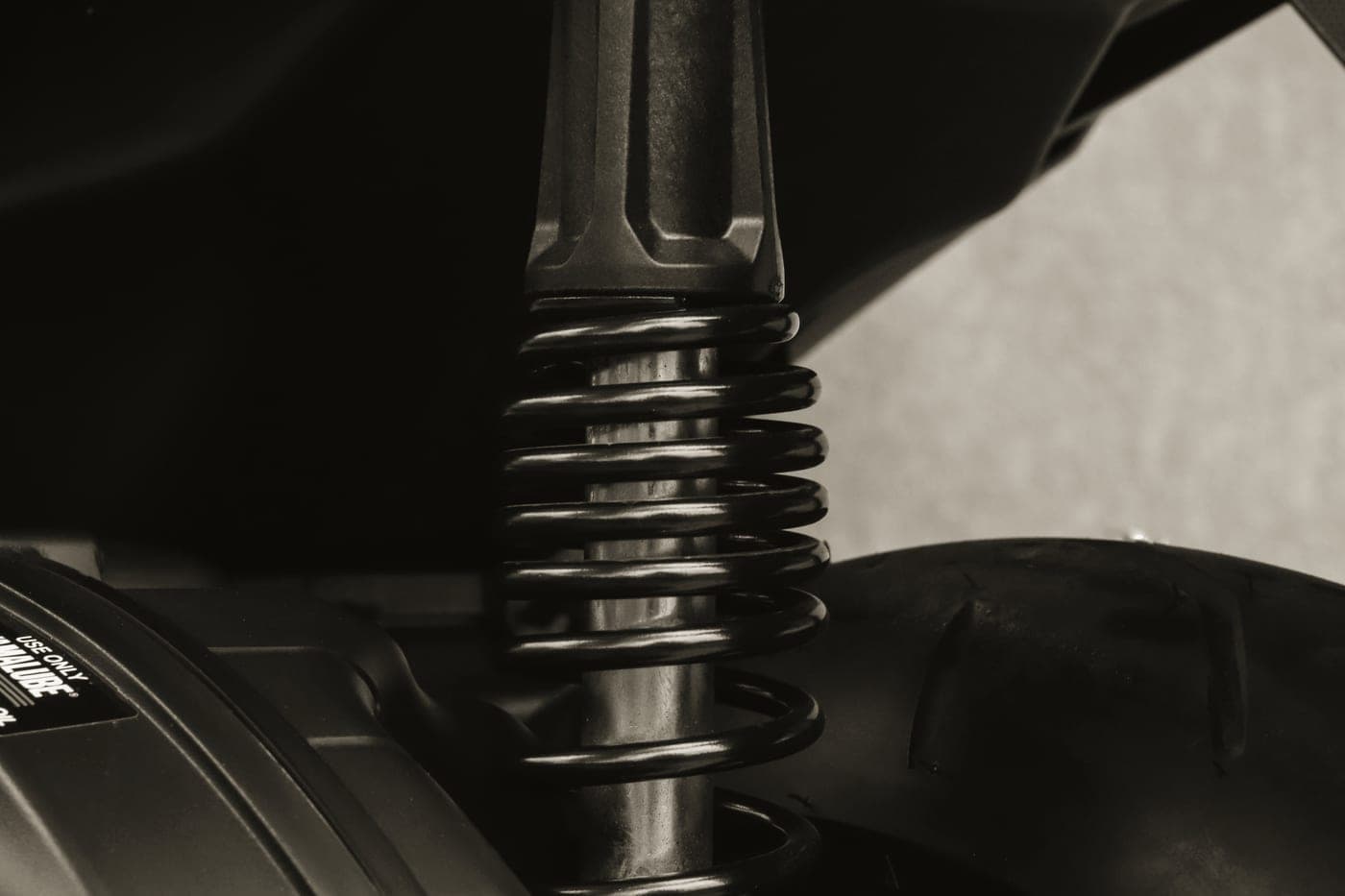
The most comfortable electric scooters
Nobody measures comfort, and no manufacturer publishes suspension travel. What they do publish is suspension type, wheel diameter, tire construction and payload rating — and those four, read together, predict ride quality better than any adjective.
By Ryder M. · Published November 21, 2026
Kick & Volt earns a commission when you buy through our Amazon links, at no extra cost to you. It never changes what we recommend or how we rank it — read the full disclosure.
The short answer
The most comfortable electric scooter in our data is the Segway Ninebot Max G3. It is the only machine in the registry that pairs dual adjustable hydraulic suspension with 11-inch self-healing tubeless tires and 286 lb of payload rating, and it measured 24.9 miles at 28 mph with an IPX6 rating besides (eRideHero, Sep 2026). The budget pick is the NAVEE GT3 Pro, the cheapest machine here with a live price as of November 28, 2026: a genuine front fork plus a rear spring, 10-inch tubeless tires and IPX5 (eRideHero, Sep 2026). If what you actually want is to sit down, the GoTrax A5 is the cheapest route to a seat in this registry — read its 220 lb payload rating first (Rider Guide, Sep 2026).
The four specs that predict ride quality
Comfort is the one thing buyers ask about that nobody tests. There is no standard protocol, no instrumented rig in consumer reviewing, and — importantly — no manufacturer in this registry publishes suspension travel in millimeters. So “60 mm of travel” versus “80 mm” is not a comparison anybody on this site, or any site, can honestly make from published data.
What is published, and what does predict ride quality, is four things. Suspension type: hydraulic beats spring, spring beats rubber dampening, and any of them beats none. Wheel diameter: a bigger wheel rolls over a given pothole with less angular disturbance, which is physics rather than marketing. Tire construction: a pneumatic or tubeless tire is a spring in its own right, and a solid tire is not. Payload headroom: a frame and suspension working at 70% of rated load rides very differently from the same hardware at 95%.
Those four are what this page ranks. Electric scooter suspension explained covers the hardware types and electric scooter tires explained covers why tire construction matters as much as the fork.
How these were ranked
Suspension completeness first — dual outranks single, hydraulic outranks spring — then wheel diameter, then tire construction, then payload headroom. A machine with no published suspension spec does not appear, which is why several otherwise excellent scooters are absent: the Segway GT3 and the GoTrax GX3 publish none in the data we used (eRideHero, Sep 2026) (Rider Guide, Sep 2026).
The seated option is ranked last rather than first, deliberately. A seat removes your legs from the suspension equation, which helps on a smooth road and hurts on a rough one — your spine takes the hit a bent knee used to absorb. Seated against standing electric scooters works through the trade honestly.
| # | Product | Best for | Score | Price |
|---|---|---|---|---|
| 1 | 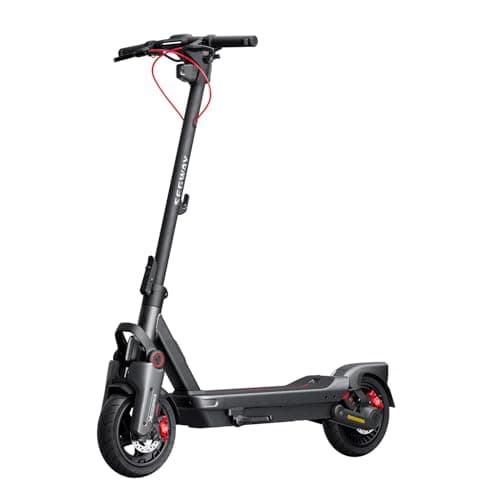 Segway Ninebot Max G3The pick: dual adjustable hydraulic suspension, 11-inch self-healing tubeless tires and 286 lb of payload rating. | Best ride quality | 6.1 | $999.99 · View on Amazon #ad How we are funded · Price as of November 28, 2026 |
| 2 | 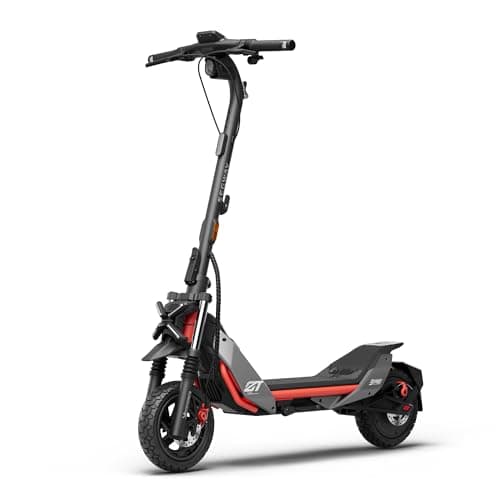 Segway ZT3 ProFor broken pavement. The one machine here a tester singled out for ride quality, and the heaviest at 65.5 lb. | Best all-terrain ride quality | 4.7 | $789.98 · View on Amazon #ad How we are funded · Price as of November 28, 2026 |
| 3 | 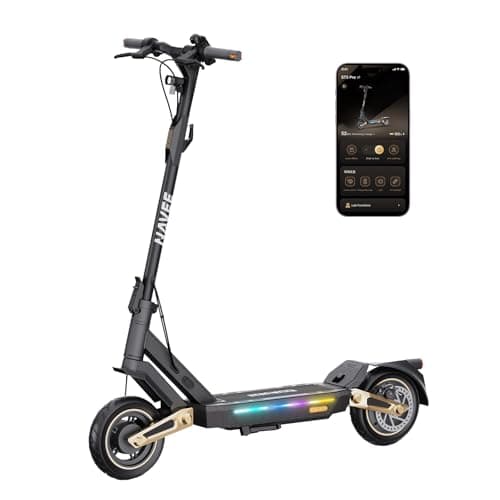 NAVEE ST3 ProFor a wet commute: dual suspension, 10-inch self-healing tubeless tires and a front drum brake that keeps working soaked. | Value commuter | 5.3 | $599.99 · View on Amazon #ad How we are funded · Price as of November 28, 2026 |
| 4 | 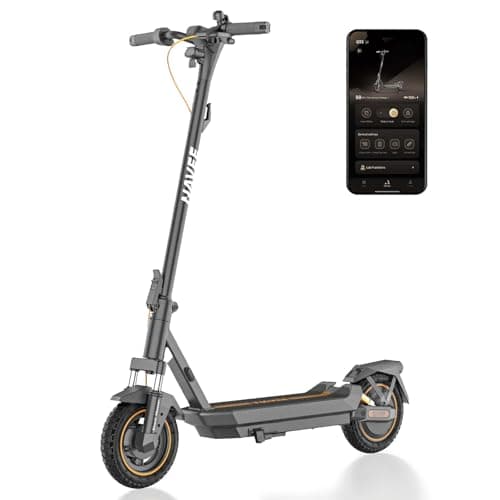 NAVEE GT3 ProThe budget pick: a real front fork plus a rear spring, 10-inch tubeless tires and IPX5, at the lowest live price here. | Best budget overall | 5.2 | $419.99 · View on Amazon #ad How we are funded · Price as of November 28, 2026 |
| 5 | 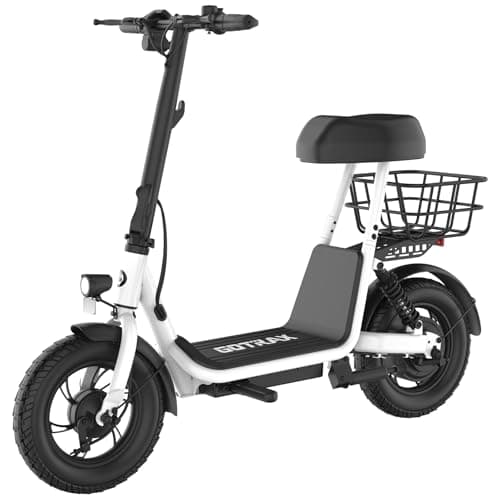 GoTrax A5For anyone whose answer to comfort is a seat. The cheapest seated scooter in our registry, with a 220 lb ceiling. | Cheapest seated option | 4.7 | $322.99 · View on Amazon #ad How we are funded · Price as of November 28, 2026 |
Scores are computed from published specifications using the rubric on our research methodology page. Tap any row to jump to the full write-up.
Every pick in full
Each model below lists what the maker publishes, what an independent tester measured, and the trade-off you accept by choosing it. Nothing here is perfect.
Segway Ninebot Max G3
The pick: dual adjustable hydraulic suspension, 11-inch self-healing tubeless tires and 286 lb of payload rating.
- Range:
- 24.9 milesMeasured (eRideHero, Sep 2026)
- Top speed:
- 28 mphMeasured (eRideHero, Sep 2026)
- Weight:
- 54.2 lbMeasured (eRideHero, Sep 2026)
- Max rider:
- 286 lbMeasured (eRideHero, Sep 2026)
What is good
- IPX6 is the highest weather rating in our mainstream commuter set
- 850 W handles 10%+ grades with an average adult aboard
- 286 lb payload gives genuine headroom over the usual 265 lb ceiling
What you give up
- 54.2 lb — folding it is easy, lifting it is not
- 24.9 measured miles is mid-pack despite the hardware
- 28 mph is more speed than most brake setups at this weight want
#ad How we are funded · Price as of November 28, 2026
Segway ZT3 Pro
For broken pavement. The one machine here a tester singled out for ride quality, and the heaviest at 65.5 lb.
- Range:
- 22.7 milesMeasured (eRideHero, Sep 2026)
- Top speed:
- 24.7 mphMeasured (eRideHero, Sep 2026)
- Weight:
- 65.5 lbMeasured (eRideHero, Sep 2026)
- Max rider:
- 265 lbMeasured (eRideHero, Sep 2026)
What is good
- Singled out for ride quality by a tester that rides on mixed surfaces
- 24.7 mph is a sensible ceiling for an all-terrain scooter with a 265 lb payload
- Segway's suspension is the reason this is the comfortable choice
What you give up
- 65.5 lb for 22.7 miles is a poor weight-to-range ratio
- 265 lb payload is low for a machine this substantial
- No brake or IP spec published in the data we sourced
#ad How we are funded · Price as of November 28, 2026
NAVEE ST3 Pro
For a wet commute: dual suspension, 10-inch self-healing tubeless tires and a front drum brake that keeps working soaked.
- Range:
- 24.9 milesMeasured (eRideHero, Sep 2026)
- Top speed:
- 24.8 mphMeasured (eRideHero, Sep 2026)
- Weight:
- 55 lbMeasured (eRideHero, Sep 2026)
- Max rider:
- 265 lbMeasured (eRideHero, Sep 2026)
What is good
- Drum front and disc rear — the drum keeps working when the road is soaked
- 600 W clears the threshold for 8-10% grades with a typical adult aboard
- Range and speed both measured near 25, which is a rare balance
What you give up
- 55 lb rules out regular stair carries
- 265 lb payload, the same ceiling as far cheaper scooters
- Brake feel on a drum is duller than a hydraulic disc
#ad How we are funded · Price as of November 28, 2026
NAVEE GT3 Pro
The budget pick: a real front fork plus a rear spring, 10-inch tubeless tires and IPX5, at the lowest live price here.
- Range:
- 23.3 milesMeasured (eRideHero, Sep 2026)
- Top speed:
- 20.6 mphMeasured (eRideHero, Sep 2026)
- Weight:
- 48.5 lbMeasured (eRideHero, Sep 2026)
- Max rider:
- 265 lbMeasured (eRideHero, Sep 2026)
What is good
- 23.3 measured miles at a budget price is the standout number in the set
- IPX5 means real rain and road spray, not just a light shower
- 20.6 mph is enough to hold a bike lane without drama
What you give up
- 48.5 lb for a budget scooter — you are not carrying this far
- 400 W limits it on sustained climbs
- No brake type published in the test data we found
#ad How we are funded · Price as of November 28, 2026
GoTrax A5
For anyone whose answer to comfort is a seat. The cheapest seated scooter in our registry, with a 220 lb ceiling.
- Range:
- 15.5 milesClaim (Rider Guide, Sep 2026)
- Top speed:
- 15.5 mphClaim (Rider Guide, Sep 2026)
- Weight:
- 51 lbClaim (Rider Guide, Sep 2026)
- Max rider:
- 220 lbClaim (Rider Guide, Sep 2026)
No independent range test for this model has been published as of September 2026. Applying the category’s measured 71% average to the 15.5 mile claim suggests roughly 11 real miles — an estimate from the claimed-versus-tested study, not a measurement of this scooter.
What is good
- A seated scooter on pneumatic tires at the bottom of the category price band
- 15.5 mph is a speed a 400 W motor and budget brakes can actually handle
- The lowest-risk way to find out whether you want a seat at all
What you give up
- 220 lb payload is the lowest here and rules out a large share of adults
- No independent range test published as of September 2026 — 15.5 miles is the maker's figure
- Expect roughly 11 miles if the category's 71% average holds
#ad How we are funded · Price as of November 28, 2026
Side by side
| Model | Range | Top speed | Weight | Max rider | Motor | Brakes | IP | Price |
|---|---|---|---|---|---|---|---|---|
| Segway Ninebot Max G3 | 24.9 milesMeasured | 28 mphMeasured | 54.2 lbMeasured | 286 lbMeasured | 850 WMeasured | Dual discMeasured | IPX6Claim | $999.99 · View on Amazon #ad How we are funded · Price as of November 28, 2026 |
| Segway ZT3 Pro | 22.7 milesMeasured | 24.7 mphMeasured | 65.5 lbMeasured | 265 lbMeasured | Not published | Not published | Not published | $789.98 · View on Amazon #ad How we are funded · Price as of November 28, 2026 |
| NAVEE ST3 Pro | 24.9 milesMeasured | 24.8 mphMeasured | 55 lbMeasured | 265 lbMeasured | 600 WMeasured | Drum + discMeasured | IPX5Claim | $599.99 · View on Amazon #ad How we are funded · Price as of November 28, 2026 |
| NAVEE GT3 Pro | 23.3 milesMeasured | 20.6 mphMeasured | 48.5 lbMeasured | 265 lbMeasured | 400 WMeasured | Not published | IPX5Claim | $419.99 · View on Amazon #ad How we are funded · Price as of November 28, 2026 |
| GoTrax A5 | 15.5 milesClaim | 15.5 mphClaim | 51 lbClaim | 220 lbClaim | 400 W (550 W peak)Claim | Not published | Not published | $322.99 · View on Amazon #ad How we are funded · Price as of November 28, 2026 |
| Segway Ninebot E3 Pro | 17.2 milesMeasured | 19.3 mphMeasured | 40.1 lbMeasured | 265 lbMeasured | 400 WMeasured | Not published | IPX5Claim | $499.99 · View on Amazon #ad How we are funded · Price as of November 28, 2026 |
Measured figures come from a named third-party test; Claim figures come from the manufacturer. Sources are listed under each model below. Price links are paid affiliate links. Empty specifications read “Not published” rather than being estimated.
The last row is the Segway Ninebot E3 Pro, which publishes dual rubber dampeningrather than a fork or a hydraulic unit (eRideHero, Sep 2026). It is in the table because the distinction matters: rubber dampening takes the edge off road buzz and does almost nothing about a pothole.
Wheel diameter does more than suspension
This is the finding that surprises people. Of the twelve models in this registry that publish a tire specification, wheel diameter runs from 9 inches to 12 (eRideHero, Sep 2026) (Rider Guide, Oct 2026), and the difference between a 9-inch and an 11-inch wheel over the same expansion joint is larger than the difference between no suspension and a front spring.
The reason is geometric. A wheel meeting an edge has to climb it, and the angle it climbs at falls as diameter rises — a bigger wheel converts less of that obstacle into vertical acceleration at the deck in the first place, which means there is less for a fork to absorb. The Max G3’s 11-inch tires are doing at least as much of its ride-quality work as its hydraulic forks (eRideHero, Sep 2026).
Tire construction compounds it. Every tire-equipped model in this registry runs pneumatic or tubeless rather than solid, and five of them run self-healing tubeless (eRideHero, Sep 2026) — which is the current answer to flats without giving up the air-spring effect a solid tire removes. Scooters with sealed and solid tires covers that trade-off properly, and scooters with big tires is the page if wheel diameter is your priority.
Does a seat make it more comfortable?
On a smooth road, yes, and considerably — standing for 40 minutes is its own kind of fatigue. On a rough road a seat is worse, because your knees are the best suspension on any scooter and sitting takes them out of the circuit.
The GoTrax A5 is the cheapest way to find out which kind of road you actually ride, and the honest caveats are its 220 lb payload rating and the fact that nobody has independently tested it — its 15.5-mile claim implies roughly 11 real miles at the category’s 71% average (Rider Guide, Sep 2026) (Rider Guide, Sep 2026). If you know you want a seat, the seated scooter hub is the right section and seated scooters for seniors and older adults leads on exactly the comfort criteria this page ranks.
What we cannot tell you
Three things, stated plainly because the rest of the internet will not. We cannot tell you how much travel any of these forks has, because nobody publishes it. We cannot tell you how a scooter feels, because we have not ridden any of them and this site has no testing program — our methodology page sets out what that means. And we cannot rank deck size or handlebar height, which both affect comfort enormously, because no manufacturer in this registry publishes either.
What we can do is read the four published specs together and tell you which combinations have the most of them. If you want the full suspension segment rather than the comfort question, scooters with suspension ranks it on that axis alone, and scooters for daily use ranks on what wears out instead.
What we do not know
Frequently asked questions
▸What is the most comfortable electric scooter?
The Segway Ninebot Max G3, on published specs: dual adjustable hydraulic suspension, 11-inch self-healing tubeless tires and 286 lb of payload rating — the only machine in our registry with all three. Nobody has measured ride comfort, so this is a reading of the specs, not a test result.
▸Does suspension or wheel size matter more for comfort?
Wheel diameter, more often than people expect. A bigger wheel converts less of an obstacle into vertical movement at the deck in the first place, so there is less for a fork to absorb. Across this registry diameters run from 9 to 12 inches, which is a bigger spread in effect than spring-versus-none.
▸Is a seated electric scooter more comfortable?
On a smooth road, yes. On a rough one, no — your knees are the best suspension on any scooter and sitting removes them from the circuit, so your spine takes the hit instead. The GoTrax A5 is the cheapest way to find out which road you ride.
▸How much suspension travel do electric scooters have?
No manufacturer in this registry publishes the figure, so nobody can honestly tell you. Suspension can only be compared by type — hydraulic, spring, rubber dampening or none — which is how this page ranks it.
▸Which comfortable scooter is cheapest?
Of the machines with real suspension at both ends, the NAVEE GT3 Pro carried the lowest live price at our last check: a front fork plus a rear spring, 10-inch tubeless tires and a published IPX5 rating, with 23.3 measured miles.
Read next
Kick & Volt does not ride or bench-test scooters. Every real-world figure on this page is attributed to the third party that measured it — how we research this.