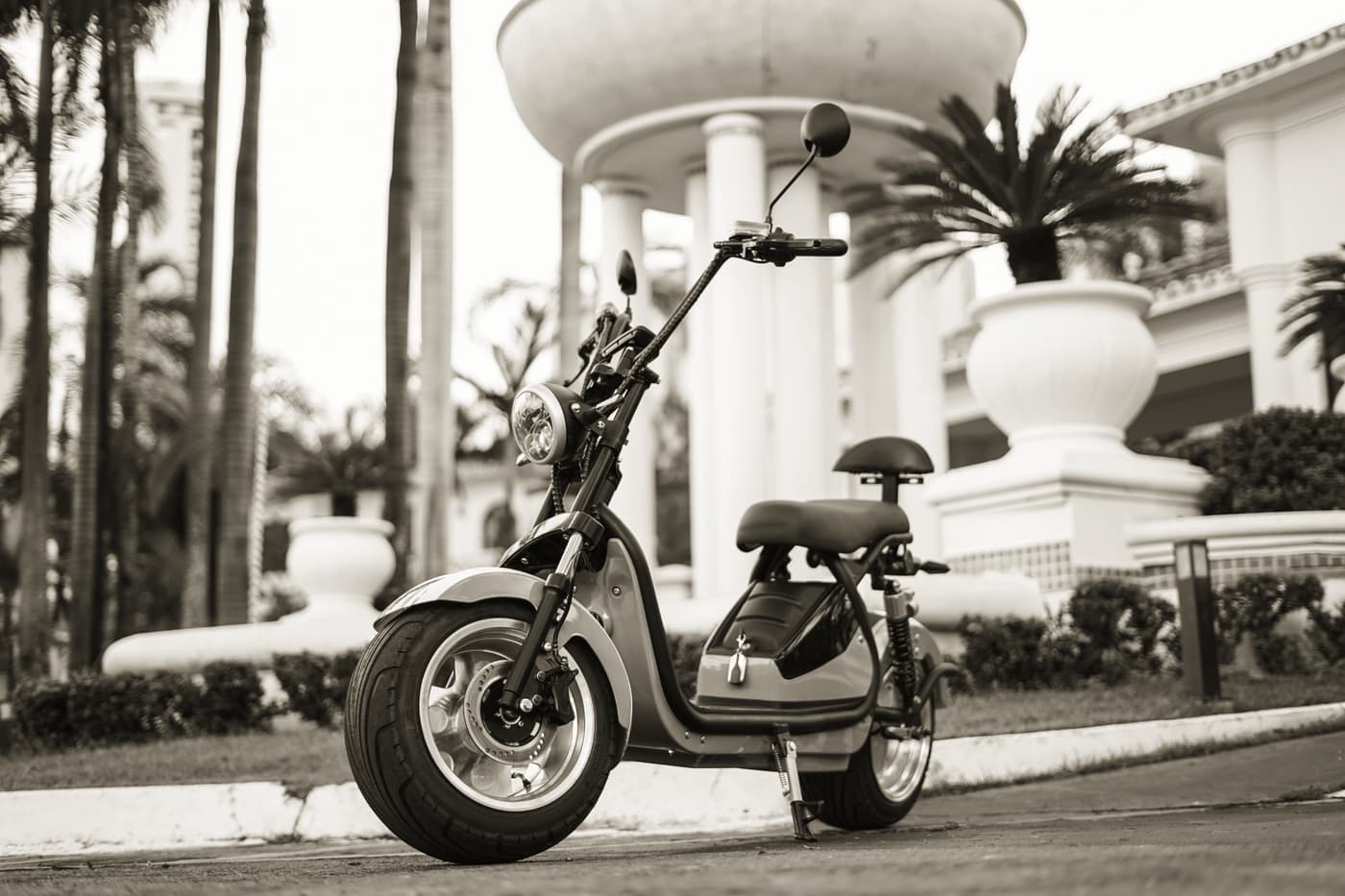
Seated vs standing electric scooter: which should you buy?
Adding a seat is not a comfort upgrade to the same machine. It changes the weight by 30 to 100 lb, usually removes the fold, and turns a last-mile tool into something closer to a moped.
By Ryder M. · Published October 10, 2026
Kick & Volt earns a commission when you buy through our Amazon links, at no extra cost to you. It never changes what we recommend or how we rank it — read the full disclosure.
The short answer
Buy standing unless your journey is long, your knees or back rule out standing, or you are carrying cargo. A standing commuter in our data weighs 26 to 55 lb, folds, and measures 14 to 36 miles. A seated machine weighs 37 to 154 lb, usually does not fold usefully, and buys you a saddle plus, in most cases, far more range and power than a standing scooter offers. The seat is not the upgrade; the vehicle class is.
What a seat actually changes
Four things, in descending order of how much they will affect your life:
- Weight. The lightest seated machine in our registry is the JackRabbit XG Pro at 37 lb; the heaviest is the EMOVE RoadRunner Pro V2 at 153.7 lb (Rider Guide, Sep 2026). The standing commuters run 26.4 to 57.1 lb. If the scooter has to come indoors or up stairs, that range is the whole decision.
- The fold. Most seated machines either do not fold or fold into something you still cannot carry. A standing commuter folding flat is what makes a train-plus-scooter commute work at all.
- How it is treated legally. A seated, moped-style machine reads to most people — including enforcement — as a different vehicle, and in many places the rules follow the appearance as much as the specification. We do not give legal advice; see are electric scooters legal and seated scooter versus moped for the shape of it.
- What the journey can be. Standing is comfortable for roughly 20 to 30 minutes at a time for most riders. Beyond that a seat stops being a preference.
Who should buy seated
- Journeys over about 30 minutes each way. Standing fatigue is real and it arrives before the battery does.
- Knees, hips, back or balance. A seat removes the load-bearing and the balance demand at once, which is why the senior and older-adult round-up is seated-first.
- Heavier riders. The seated end of the registry is where the payload ratings go: 330 lb on the isinwheel H7 and EMOVE RoadRunner V3, 352 lb on the RoadRunner Pro V2 (Rider Guide, Sep 2026). See seated scooters for heavy adults.
- Cargo and delivery work. A saddle plus a rack is a different tool from a deck — delivery work covers both approaches.
Who should buy standing
- Multi-modal commutes. If the scooter goes on a bus, train or under a desk, it has to fold and weigh what you can lift — lightweight and folding is the page.
- Short, frequent trips. Under about 4 miles, standing is faster to get on and off and easier to park.
- Apartments and upstairs storage. A 110 lb seated machine is furniture.
- Tight budgets with real specifications. The standing side of the registry is where the independently measured figures are — see best for the money.
Picks either way
Two seated machines at opposite ends of the weight range, the standing benchmark, and the cheapest seated option in the registry with its payload caveat attached.
The moped-style seated scooter most people actually mean: dual 500 W motors, XTECH hydraulics, listed at $1,695.

JackRabbit XG Pro
37 lb with a seat and a 749 W motor — the only seated machine here you can carry, at a listed $2,249.
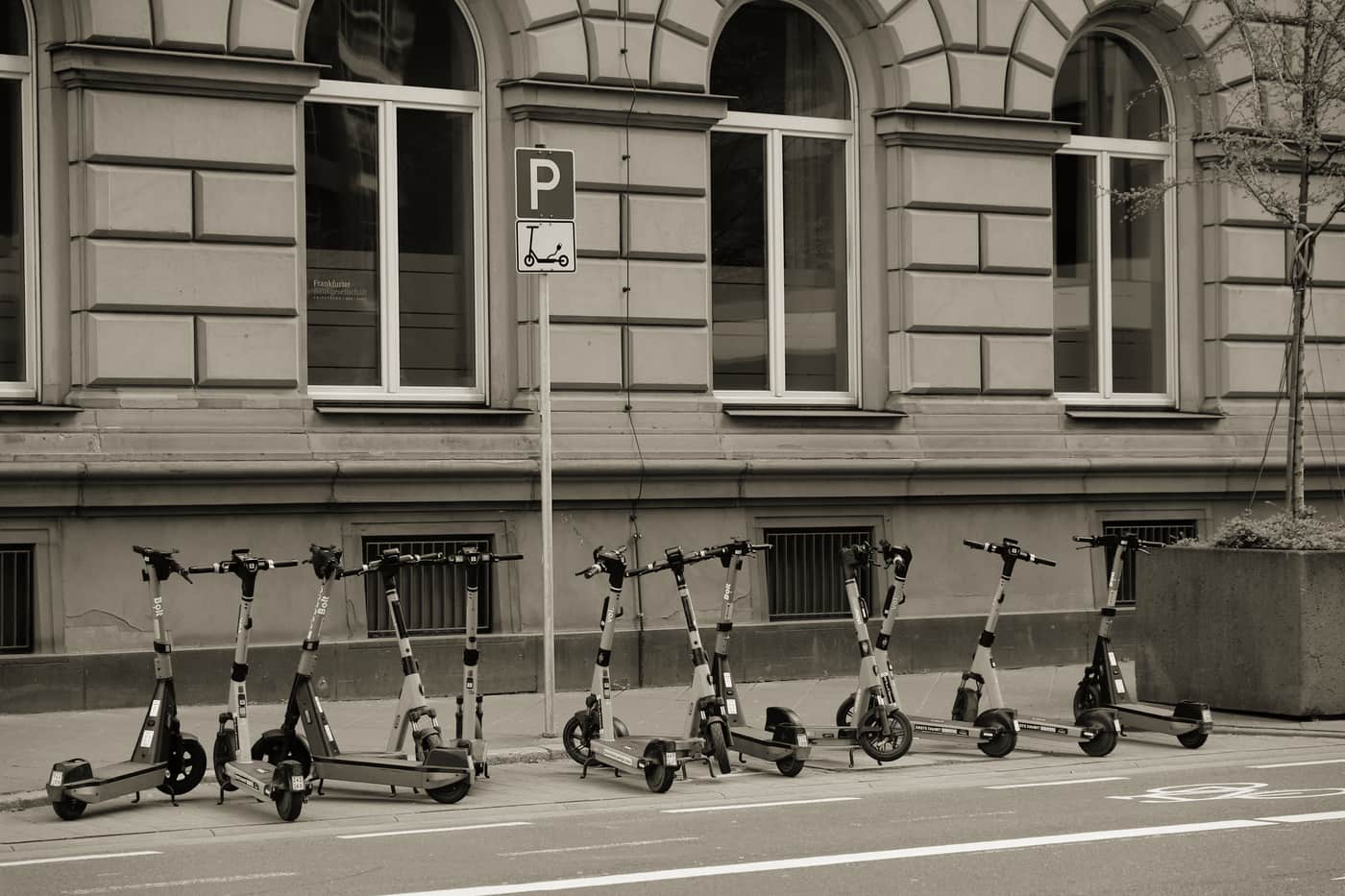
28 mph measured, IPX6, dual disc brakes and 286 lb of payload — the most complete mainstream commuter in the data.
GoTrax A5
The cheapest way into a seated scooter, at a listed $300 — and the 220 lb payload is the reason it is cheap.
The detachable middle ground
Some scooters take a seat as an accessory rather than building one in. The Varla Eagle One V2 is the clearest case in our data: a factory seat-and-rack combination exists and is sold separately (Varla, Oct 2026). That sounds like the best of both and usually is not. An accessory seat adds a post and a mount to a deck designed for standing, which means a higher saddle, a less natural riding position and another joint to check. It is a good answer if you want a seat occasionally and a poor one if you want a seat always.
The full argument, including what a built-in saddle does differently, is on detachable versus built-in seats.
The data gap on seated scooters
This is the uncomfortable part of the answer and you should know it before you shop. The independent testing in this category is overwhelmingly done on standing commuters. One seated-scooter round-up we examined recommends five machines and publishes no tested range or speed for any of them, and three of the five reach a seat through an accessory rather than a factory saddle (Scooter Gear Lab, Oct 2026).
The consequence is concrete: for most seated machines, the range and speed figures you can find are the manufacturer’s. Set against a measured average delivery of 71% of claimed range across twelve tested models (Rider Guide, Sep 2026), a seated scooter advertising 50 miles should be planned around something closer to 35.5 — and we are extrapolating from standing scooters to say even that, which is why we label it an estimate rather than a figure. The exception is the EMOVE RoadRunner Pro V2, measured at 55 miles against a 75-mile claim (Rider Guide, Sep 2026). Full detail is in real-world range versus claimed.
What we do not know
Frequently asked questions
▸Is a seated or standing electric scooter better?
Standing for short, multi-modal commutes where the scooter has to fold and be carried. Seated for journeys over about 30 minutes, for riders with knee, hip, back or balance issues, for heavier riders, and for carrying cargo.
▸Are seated electric scooters harder to store?
Usually much harder. Most do not fold usefully and they weigh from 37 lb to over 150 lb, against 26 to 57 lb for a folding standing commuter. Ground-floor storage near a socket is effectively a requirement.
▸Can you add a seat to a standing electric scooter?
Only where the maker sells a factory seat and rack for that model — the Varla Eagle One V2 is one example. A bolt-on seat raises the riding position and adds a joint to maintain, so it suits occasional seated use rather than permanent.
▸Do seated scooters have more range?
Typically they are specified with much larger batteries, so the advertised figures are higher. Verify carefully: independent testing of seated machines is rare, so most of those numbers are the manufacturer’s rather than measured.
Read next
Kick & Volt does not ride or bench-test scooters. Every real-world figure on this page is attributed to the third party that measured it — how we research this.