
NIU KQi 300X vs NAVEE GT3 Pro
Same weight to within 0.2 lb, same payload rating, same tire construction — and then the two scooters spend their budget on completely different things. One bought range and brakes; the other bought sealing and suspension.
By Ryder M. · Published October 19, 2026
Kick & Volt earns a commission when you buy through our Amazon links, at no extra cost to you. It never changes what we recommend or how we rank it — read the full disclosure.
The short answer
Buy the NIU KQi 300X if your commute is mostly dry, and the NAVEE GT3 Pro if it is not. The NIU measured 26.8 miles and 23.6 mph with dual disc brakes; the NAVEE measured 23.3 miles and 20.6 mph with a published IPX5 rating and suspension front and rear (eRideHero, Sep 2026). They weigh 48.7 lb and 48.5 lb, carry the same 265 lb payload rating and run the same tire construction, so this is not a better-or-worse comparison. It is a straight choice between 3.5 measured miles plus a second real brake, and a weather rating plus a rear spring.
Why this comparison is clean
Most head-to-heads in this category compare a figure one publication measured against a figure a different publication measured on a different route in different weather, and the result is noise presented as a finding. Every number on this page for both scooters is eRideHero’s, recorded on its own protocol with scooters it buys and weighs (eRideHero, Sep 2026). The range, speed, weight, payload, motor and tire figures are therefore directly comparable.
The weights make that unusually vivid. 48.7 lb against 48.5 lb is a 0.2 lb difference — inside the noise of a bathroom scale, and for practical purposes identical. Two scooters of the same mass, the same payload rating and the same tire construction, built by different companies to different priorities, is close to a controlled experiment in what a budget commuter’s money can buy.
What is not comparable, and what we will not score: reliability, warranty performance, parts availability and ride feel. We hold no data on any of them, which is the subject of how to judge scooter durability honestly. Nor will we assert a current price for either machine — the live figures sit inside the buy buttons on this page.
What each one is
The NIU KQi 300X is the efficiency and braking play: 48.7 lb, a 500 W motor, 10.5-inch self-healing tubeless tires, dual disc brakes front and rear, front hydraulic suspension only, a 265 lb payload rating, and 26.8 measured miles at a measured 23.6 mph (eRideHero, Sep 2026). 26.8 miles out of 48.7 lb is 0.55 measured miles per pound, and it is our default recommendation across the whole site. Full detail is in the NIU KQi 300X review.
The NAVEE GT3 Pro is the weather and comfort play: 48.5 lb, a 400 W motor, 10-inch tubeless tires, dual suspension (front fork plus rear spring), a published IPX5 rating, a 265 lb payload rating, and 23.3 measured miles at a measured 20.6 mph (eRideHero, Sep 2026). It is positioned at the budget end of the market and it carries the value pick on the best electric scooter for the money. Full detail is in the NAVEE GT3 Pro review.
| # | Product | Best for | Score | Price |
|---|---|---|---|---|
| 1 | 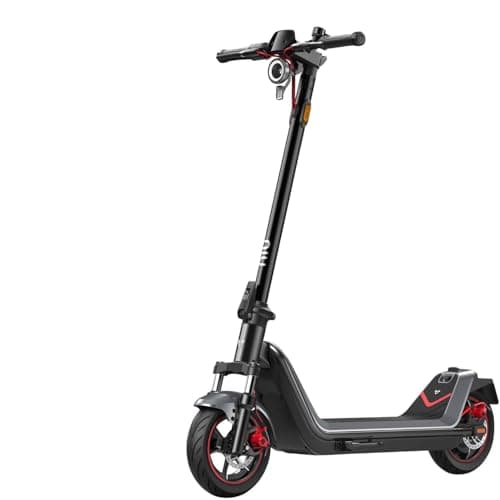 NIU KQi 300X26.8 measured miles, 23.6 mph and dual disc brakes front and rear. The one to buy if your route is dry. | Best all-round commuter | 5.2 | $369.99 · View on Amazon #ad How we are funded · Price as of November 14, 2026 |
| 2 | 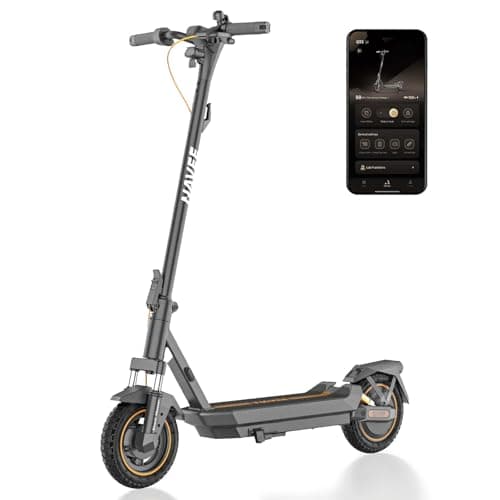 NAVEE GT3 Pro23.3 measured miles with a published IPX5 rating and suspension at both ends, from the cheaper machine. | Best budget overall | 5.2 | $489.99 · View on Amazon #ad How we are funded · Price as of November 14, 2026 |
| 3 | 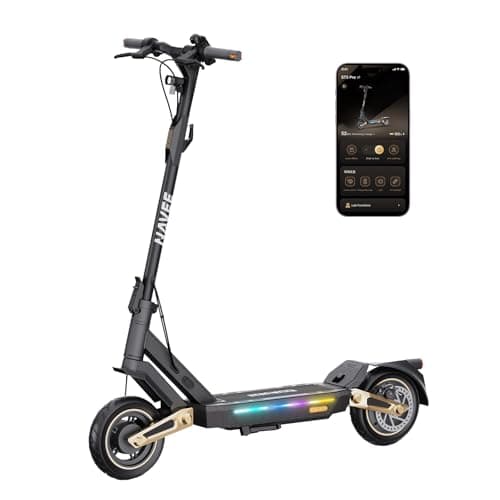 NAVEE ST3 Pro24.9 measured miles, 24.8 mph, IPX5 and a front drum — the scooter that refuses the trade-off, for 6.5 lb. | Value commuter | 5.3 | $709.99 · View on Amazon #ad How we are funded · Price as of November 14, 2026 |
Scores are computed from published specifications using the rubric on our research methodology page. Tap any row to jump to the full write-up.
Every pick in full
Each model below lists what the maker publishes, what an independent tester measured, and the trade-off you accept by choosing it. Nothing here is perfect.
NIU KQi 300X
26.8 measured miles, 23.6 mph and dual disc brakes front and rear. The one to buy if your route is dry.
- Range:
- 26.8 milesMeasured (eRideHero, Sep 2026)
- Top speed:
- 23.6 mphMeasured (eRideHero, Sep 2026)
- Weight:
- 48.7 lbMeasured (eRideHero, Sep 2026)
- Max rider:
- 265 lbMeasured (eRideHero, Sep 2026)
What is good
- 26.8 measured miles is more real range than most scooters twice its weight
- Dual disc brakes front and rear rather than a disc-plus-regen compromise
- 500 W is the threshold where 8-10% grades stop being a problem
What you give up
- 48.7 lb is a two-hands-and-a-pause lift, not a one-hand carry
- No IP rating published in the test data we found
- 265 lb payload ceiling rules it out for heavier riders
#ad How we are funded · Price as of November 14, 2026
NAVEE GT3 Pro
23.3 measured miles with a published IPX5 rating and suspension at both ends, from the cheaper machine.
- Range:
- 23.3 milesMeasured (eRideHero, Sep 2026)
- Top speed:
- 20.6 mphMeasured (eRideHero, Sep 2026)
- Weight:
- 48.5 lbMeasured (eRideHero, Sep 2026)
- Max rider:
- 265 lbMeasured (eRideHero, Sep 2026)
What is good
- 23.3 measured miles at a budget price is the standout number in the set
- IPX5 means real rain and road spray, not just a light shower
- 20.6 mph is enough to hold a bike lane without drama
What you give up
- 48.5 lb for a budget scooter — you are not carrying this far
- 400 W limits it on sustained climbs
- No brake type published in the test data we found
#ad How we are funded · Price as of November 14, 2026
NAVEE ST3 Pro
24.9 measured miles, 24.8 mph, IPX5 and a front drum — the scooter that refuses the trade-off, for 6.5 lb.
- Range:
- 24.9 milesMeasured (eRideHero, Sep 2026)
- Top speed:
- 24.8 mphMeasured (eRideHero, Sep 2026)
- Weight:
- 55 lbMeasured (eRideHero, Sep 2026)
- Max rider:
- 265 lbMeasured (eRideHero, Sep 2026)
What is good
- Drum front and disc rear — the drum keeps working when the road is soaked
- 600 W clears the threshold for 8-10% grades with a typical adult aboard
- Range and speed both measured near 25, which is a rare balance
What you give up
- 55 lb rules out regular stair carries
- 265 lb payload, the same ceiling as far cheaper scooters
- Brake feel on a drum is duller than a hydraulic disc
#ad How we are funded · Price as of November 14, 2026
Side by side
| Model | Range | Top speed | Weight | Max rider | Motor | Brakes | IP | Price |
|---|---|---|---|---|---|---|---|---|
| NIU KQi 300X | 26.8 milesMeasured | 23.6 mphMeasured | 48.7 lbMeasured | 265 lbMeasured | 500 WMeasured | Dual discMeasured | Not published | $369.99 · View on Amazon #ad How we are funded · Price as of November 14, 2026 |
| NAVEE GT3 Pro | 23.3 milesMeasured | 20.6 mphMeasured | 48.5 lbMeasured | 265 lbMeasured | 400 WMeasured | Not published | IPX5Claim | $489.99 · View on Amazon #ad How we are funded · Price as of November 14, 2026 |
| NAVEE ST3 Pro | 24.9 milesMeasured | 24.8 mphMeasured | 55 lbMeasured | 265 lbMeasured | 600 WMeasured | Drum + discMeasured | IPX5Claim | $709.99 · View on Amazon #ad How we are funded · Price as of November 14, 2026 |
Measured figures come from a named third-party test; Claim figures come from the manufacturer. Sources are listed under each model below. Price links are paid affiliate links. Empty specifications read “Not published” rather than being estimated.
Every cell in the first two columns is a measurement except the IP ratings, which are manufacturers’ claims — no consumer publication owns an ingress-testing rig, so an IP figure is always the maker’s.
What the NIU buys you
3.5 measured miles. 26.8 against 23.3 is about 15% more real range for the same weight, which on a five-mile round-trip commute is roughly one extra day between charges. It also buys margin, and margin is what range is actually for: cold weather, a gradient and a heavier rider all take their cut from a measured figure, which is why how far you can actually commute recommends planning around 30% less than any tested number.
A second real friction brake. The NIU runs dual discs front and rear. No brake type at all is published in the GT3 Pro test data we found — which is not evidence of a bad brake, but it does mean you cannot check. Two mechanical brakes give you redundancy: a stretched cable or a soaked pad still leaves you a way to stop, and that is the reason our brake hardware ranking treats two friction brakes as a floor rather than a feature.
3 mph and 100 W. 23.6 mph against 20.6 mph measured, from a 500 W motor against 400 W. Neither is fast — both sit inside the band that holds a bike lane without drama — but 500 W is the figure manufacturers cite as the threshold where 5 to 10% gradients stop being a problem (Hiboy, Sep 2026), and 400 W sits just under it. If your route has a real climb, that is the line you are standing on; how steep a hill it can climb has the wattage bands.
Half an inch of wheel. 10.5-inch self-healing tubeless against 10-inch tubeless. A larger wheel meets a pothole edge at a shallower angle, and self-healing tires seal small punctures as they happen — tires explained covers what each construction gives up. It is the smallest difference on this page.
What the NAVEE buys you
A published IPX5 rating. This is the GT3 Pro’s strongest card and it is stronger than it looks. IPX5 is tested against low-pressure water jets from any direction, which is the practical threshold for riding on wet roads where spray comes off the front wheel under pressure. The NIU KQi 300X publishes no IP rating at all in the test data we found, which means it has to be treated as a fair-weather scooter — IP ratings and wet weather explains what each digit is actually tested against, and the best-sealed round-up ranks the models that publish one.
Water is also the failure that ends a scooter rather than inconveniencing it: the controller and the battery management board are the parts that do not recover. An unpublished IP rating is therefore a real cost rather than a blank, and it is one of the four durability proxies we weight most heavily.
Suspension at both ends. The NAVEE runs a front fork plus a rear spring; the NIU has a front hydraulic fork and nothing at the rear (eRideHero, Sep 2026). On broken pavement that is the single biggest difference in how the two feel, and it is also the difference in how much noise they make, since road harshness and rolling noise share one cause — the argument of the quietest scooters round-up. See also suspension explained, which notes that no manufacturer in our registry publishes suspension travel in millimeters, so the comparison can only be by type.
The price position. We hold no dated price observation for either scooter and will not invent one. What the publications that test them consistently report is that the GT3 Pro sits at the budget end of the market and the KQi 300X above it — which is why 23.3 measured miles and an IPX5 rating from the GT3 Pro is the figure that earns it the value pick on best for the money. Check both buy buttons; the gap is the real argument and it changes week to week.
The scooter that refuses the trade
There is a third machine in the table, and for a lot of buyers it is the right answer. The NAVEE ST3 Pro measured 24.9 miles and 24.8 mph with a published IPX5 rating, a drum at the front and a disc at the rear (eRideHero, Sep 2026). That is more measured range than the GT3 Pro, more measured speed than the NIU, two real friction brakes, and the weather rating.
It costs 6.5 lb: 55 lb against 48.5. That is the band where a scooter stops being something you carry upstairs and starts being something that needs a lobby or a ground-floor space, per weight and fold size. And an enclosed front drum is the brake that keeps working when the road is soaked, which pairs naturally with the IPX5 rating. Its own head-to-heads are against the KQi 300X and against the Segway Max G3.
Which one to buy
NIU KQi 300X if your commute is mostly dry, mostly smooth, and long enough that 3.5 miles of extra measured range matters — or if you want two brakes you can look up before you buy. It is the more efficient machine and the more complete braking package, and it leads the commuter round-up.
NAVEE GT3 Pro if you ride in rain, your pavement is broken, or the budget is the binding constraint. 23.3 measured miles with a published weather rating and suspension at both ends, for less money and the same weight, is the best value in our measured data.
NAVEE ST3 Pro if you can live with 6.5 lb more. It is the only one of the three that does not ask you to give something up, and the drum front brake is the right hardware for a wet commute.
Neither if you are over about 250 lb loaded. Both are rated to exactly 265 lb, which is the industry default and leaves no headroom for a backpack — the best scooters for a 250 lb rider is the page for that.
What we do not know
Frequently asked questions
▸Which is better, the NIU KQi 300X or the NAVEE GT3 Pro?
Neither, in general — they weigh the same and spent the money differently. The NIU adds 3.5 measured miles, 3 mph and a second disc brake; the NAVEE adds a published IPX5 weather rating and suspension at both ends, for less. Dry commute: the NIU. Wet or broken roads: the NAVEE.
▸Is the NAVEE GT3 Pro waterproof?
No scooter is waterproof. The GT3 Pro carries a manufacturer IPX5 rating, which is tested against low-pressure water jets from any direction and is the practical threshold for riding on wet roads. The NIU KQi 300X publishes no IP rating at all in the data we hold.
▸How far do they actually go?
26.8 measured miles for the NIU KQi 300X and 23.3 for the NAVEE GT3 Pro, both recorded by the same tester riding until the scooter shut down. Plan a commute around roughly 30% less than either figure.
▸Which one is better on hills?
The NIU, on the numbers: 500 W against 400 W. Manufacturers consistently cite 500 W as the threshold where 5 to 10% residential gradients stop being a problem, so the NAVEE sits just under the line the NIU clears.
Read next
Kick & Volt does not ride or bench-test scooters. Every real-world figure on this page is attributed to the third party that measured it — how we research this.