The best electric scooters for beginners
A first scooter is the one case where a lower number is the better number. These four are ranked on measured top speed and brake hardware, with the fast machines deliberately left off.
By Ryder M. · Published November 10, 2026
Kick & Volt earns a commission when you buy through our Amazon links, at no extra cost to you. It never changes what we recommend or how we rank it — read the full disclosure.
The short answer
The best first electric scooter is the Segway Ninebot E3 Pro: eRideHero measured 17.2 miles and 19.3 mph out of it, with a published IPX5 rating, 10-inch tubeless tires and rubber dampening at both ends (eRideHero, Sep 2026). 19 mph is fast enough to be useful and slow enough to learn on, and Segway has the best parts and service coverage in the category. The budget pick is the NIU KQi 300X — the cheapest machine here, with dual disc brakes and 26.8 measured miles, though its 23.6 measured mph is the fastest on this page (eRideHero, Sep 2026). Live prices as of November 14, 2026.
What a first scooter needs
Three things, and none of them is power. It needs a top speed you can ride at without your hands tightening on the bars, which in practice means something in the high teens rather than the high twenties. It needs two independent friction brakes, because a new rider brakes late and hard. And it needs a published weather rating, because a first scooter is the one most likely to be caught out in rain on the way home from somewhere.
Everything else is a preference. Range matters less than people think at this stage: a first commute is usually under five miles each way, and every machine on this page measured at least 11.4 miles (eRideHero, Sep 2026). Our guide to riding an electric scooter covers the first-week skills, and helmets and safety gear covers what to buy alongside it.
How these were ranked
Measured top speed, ascending — the slowest machine with real brakes ranks highest. Then brake hardware, then published sealing, then weight, then measured range. Claimed figures do not move anything up this list: the twelve-model study behind this site found advertised range delivering 71% of the printed figure on average (Rider Guide, Sep 2026), and the pattern is the same on speed — claimed against measured top speed has the detail.
Nothing above 25 measured mph is on this page, which rules out several scooters this site rates highly elsewhere. That is deliberate. Fast commuter scooters is the page for when you have a season behind you.
| # | Product | Best for | Score | Price |
|---|---|---|---|---|
| 1 | 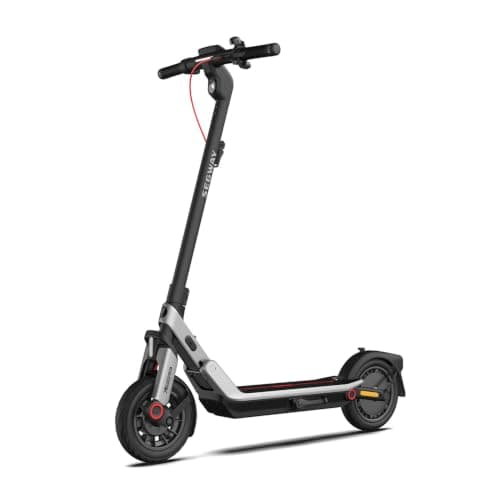 Segway Ninebot E3 ProThe pick: 19.3 measured mph is a speed a new rider can manage, with a published IPX5 rating, dampening at both ends and the largest service network in the category. | Budget buyers who want support | 5.1 | $549.99 · View on Amazon #ad How we are funded · Price as of November 14, 2026 |
| 2 | 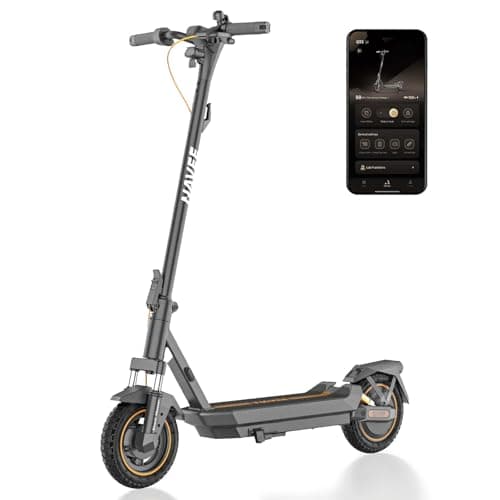 NAVEE GT3 ProFor a slightly longer first commute: 23.3 measured miles at 20.6 mph, IPX5, and suspension front and rear. | Best budget overall | 5.2 | $489.99 · View on Amazon #ad How we are funded · Price as of November 14, 2026 |
| 3 | 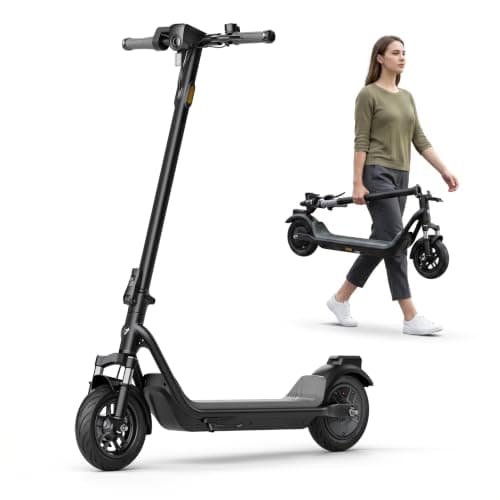 NIU KQi 100FThe slowest adult scooter in our data at 17.4 measured mph, and the lightest of these four at 38.8 lb. | Short last-mile hops | 4.0 | $399.00 · View on Amazon #ad How we are funded · Price as of November 14, 2026 |
| 4 | 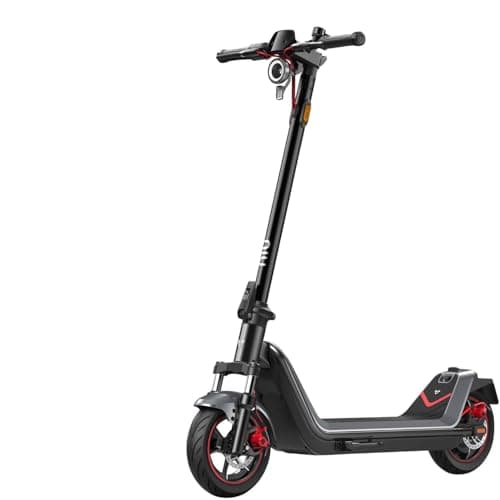 NIU KQi 300XThe budget pick and the one to grow into: the cheapest machine here, with dual disc brakes and 26.8 measured miles — and 23.6 mph, which is the fastest on this page. | Best all-round commuter | 5.2 | $369.99 · View on Amazon #ad How we are funded · Price as of November 14, 2026 |
Scores are computed from published specifications using the rubric on our research methodology page. Tap any row to jump to the full write-up.
Every pick in full
Each model below lists what the maker publishes, what an independent tester measured, and the trade-off you accept by choosing it. Nothing here is perfect.
Segway Ninebot E3 Pro
The pick: 19.3 measured mph is a speed a new rider can manage, with a published IPX5 rating, dampening at both ends and the largest service network in the category.
- Range:
- 17.2 milesMeasured (eRideHero, Sep 2026)
- Top speed:
- 19.3 mphMeasured (eRideHero, Sep 2026)
- Weight:
- 40.1 lbMeasured (eRideHero, Sep 2026)
- Max rider:
- 265 lbMeasured (eRideHero, Sep 2026)
What is good
- IPX5 at a budget price — most scooters this cheap publish no rating at all
- 17.2 measured miles covers a 7-mile each-way commute with margin
- Parts and service are easier to find than for any other brand here
What you give up
- 19.3 mph is slow if your route includes a stretch of open road
- 400 W is mid-pack at best on hills
- Nothing about it is exciting — that is rather the point
#ad How we are funded · Price as of November 14, 2026
NAVEE GT3 Pro
For a slightly longer first commute: 23.3 measured miles at 20.6 mph, IPX5, and suspension front and rear.
- Range:
- 23.3 milesMeasured (eRideHero, Sep 2026)
- Top speed:
- 20.6 mphMeasured (eRideHero, Sep 2026)
- Weight:
- 48.5 lbMeasured (eRideHero, Sep 2026)
- Max rider:
- 265 lbMeasured (eRideHero, Sep 2026)
What is good
- 23.3 measured miles at a budget price is the standout number in the set
- IPX5 means real rain and road spray, not just a light shower
- 20.6 mph is enough to hold a bike lane without drama
What you give up
- 48.5 lb for a budget scooter — you are not carrying this far
- 400 W limits it on sustained climbs
- No brake type published in the test data we found
#ad How we are funded · Price as of November 14, 2026
NIU KQi 100F
The slowest adult scooter in our data at 17.4 measured mph, and the lightest of these four at 38.8 lb.
- Range:
- 11.38 milesMeasured (eRideHero, Sep 2026)
- Top speed:
- 17.4 mphMeasured (eRideHero, Sep 2026)
- Weight:
- 38.8 lbMeasured (eRideHero, Sep 2026)
- Max rider:
- 265 lbMeasured (eRideHero, Sep 2026)
What is good
- One of the cheapest scooters in this data set with an independently measured range
- 17.4 mph is a sane speed on a scooter with entry-level brakes
- 38.8 lb is manageable for occasional lifting
What you give up
- 11.4 measured miles means a 5-mile each-way commute is already at the limit
- 300 W will struggle on anything steeper than a gentle rise
- No IP rating published — treat it as fair-weather
#ad How we are funded · Price as of November 14, 2026
NIU KQi 300X
The budget pick and the one to grow into: the cheapest machine here, with dual disc brakes and 26.8 measured miles — and 23.6 mph, which is the fastest on this page.
- Range:
- 26.8 milesMeasured (eRideHero, Sep 2026)
- Top speed:
- 23.6 mphMeasured (eRideHero, Sep 2026)
- Weight:
- 48.7 lbMeasured (eRideHero, Sep 2026)
- Max rider:
- 265 lbMeasured (eRideHero, Sep 2026)
What is good
- 26.8 measured miles is more real range than most scooters twice its weight
- Dual disc brakes front and rear rather than a disc-plus-regen compromise
- 500 W is the threshold where 8-10% grades stop being a problem
What you give up
- 48.7 lb is a two-hands-and-a-pause lift, not a one-hand carry
- No IP rating published in the test data we found
- 265 lb payload ceiling rules it out for heavier riders
#ad How we are funded · Price as of November 14, 2026
Side by side
| Model | Range | Top speed | Weight | Max rider | Motor | Brakes | IP | Price |
|---|---|---|---|---|---|---|---|---|
| Segway Ninebot E3 Pro | 17.2 milesMeasured | 19.3 mphMeasured | 40.1 lbMeasured | 265 lbMeasured | 400 WMeasured | Not published | IPX5Claim | $549.99 · View on Amazon #ad How we are funded · Price as of November 14, 2026 |
| NAVEE GT3 Pro | 23.3 milesMeasured | 20.6 mphMeasured | 48.5 lbMeasured | 265 lbMeasured | 400 WMeasured | Not published | IPX5Claim | $489.99 · View on Amazon #ad How we are funded · Price as of November 14, 2026 |
| NIU KQi 100F | 11.38 milesMeasured | 17.4 mphMeasured | 38.8 lbMeasured | 265 lbMeasured | 300 WMeasured | Not published | Not published | $399.00 · View on Amazon #ad How we are funded · Price as of November 14, 2026 |
| NIU KQi 300X | 26.8 milesMeasured | 23.6 mphMeasured | 48.7 lbMeasured | 265 lbMeasured | 500 WMeasured | Dual discMeasured | Not published | $369.99 · View on Amazon #ad How we are funded · Price as of November 14, 2026 |
| Segway Ninebot Max G3 | 24.9 milesMeasured | 28 mphMeasured | 54.2 lbMeasured | 286 lbMeasured | 850 WMeasured | Dual discMeasured | IPX6Claim | $999.00 · View on Amazon #ad How we are funded · Price as of November 14, 2026 |
Measured figures come from a named third-party test; Claim figures come from the manufacturer. Sources are listed under each model below. Price links are paid affiliate links. Empty specifications read “Not published” rather than being estimated.
The last row is the Segway Ninebot Max G3 — not a pick here, included because it is the machine most first-time buyers are pushed toward. It measured 28 mph and weighs 54.2 lb (eRideHero, Sep 2026). Both of those numbers are wrong for a first scooter, and both are right for a second one.
Why 19 mph beats 28 mph here
Stopping distance scales with the square of speed, not with speed. A rider at 28 mph carries roughly 2.2 times the kinetic energy of the same rider at 19 mph, and has to shed all of it through the same brake hardware, on the same tires, with reflexes that are three weeks old. That is the entire argument, and it is why the ranking on this page runs from slow to fast.
The second argument is less obvious: a slower scooter teaches you more. At 19 mph you can feel the front tire start to slide on a painted line, and you have time to correct it. At 28 mph you find out afterwards. The CPSC’s injury data for micromobility products is the background here (U.S. Consumer Product Safety Commission, Oct 2026), and are electric scooters safe works through what it does and does not say.
The brake tier to insist on
Two independent friction brakes. Not one friction brake plus regeneration — regenerative braking fades as the battery fills and gives you nothing at all when it is full, which on a downhill start from a full charge is exactly when you want it. Brakes explained ranks the tiers: foot or electronic only at the bottom, drum or mechanical disc next, semi-hydraulic above that, full hydraulic at the top.
Of the four picks here, the KQi 300X is the only one with a published dual-disc setup (eRideHero, Sep 2026), which is why it earns the budget slot despite being the fastest machine on the page. For the other three the brake type was not published in the data we used — see the note at the end of this page, and ask the retailer before you buy.
The three first-scooter mistakes
Buying on claimed range. A 30-mile claim at this end of the market is roughly 21 real miles, and a first commute does not need either figure. Buy the brakes and the sealing instead.
Buying too heavy. A first scooter gets carried more than you expect — up a step, into a hallway, into a trunk. 40 lb is a two-handed lift with a pause; carrying weight and fold size sets out the bands honestly.
Buying the fastest thing in the budget. The machine that makes you a confident rider is the one you ride every day, and that is rarely the fastest one you can afford. If you are buying for a teenager rather than yourself, scooters for teens ranks on stated minimum age and UL 2272 certification instead.
What we do not know
Frequently asked questions
▸What is the best electric scooter for a beginner?
The Segway Ninebot E3 Pro: 19.3 measured mph, 17.2 measured miles, a published IPX5 rating and dampening at both ends, with the easiest parts and service access of any brand here.
▸How fast should a first electric scooter be?
High teens. A rider at 28 mph carries roughly 2.2 times the kinetic energy of the same rider at 19 mph and has to stop it with the same brakes. Nothing on this page measured above 23.6 mph, and the top pick measured 19.3.
▸Is a cheap scooter a bad first scooter?
Not inherently — the cheapest machine on this page has the best brakes and the most measured range of the four. What makes a cheap scooter a bad first scooter is a single brake plus regeneration, and no published battery certification.
▸Do I need suspension on a first scooter?
It helps more than it looks like it should, because it keeps the tire in contact with broken pavement. Three of the four picks here publish suspension or dampening at both ends. Tire size does similar work — see our tires guide.
Read next
Kick & Volt does not ride or bench-test scooters. Every real-world figure on this page is attributed to the third party that measured it — how we research this.