
Claimed against measured top speed
This site exists because advertised range collapses under testing. Top speed does not — across the four models where we hold both numbers, scooters delivered 90% to 99% of the advertised figure. Here is why, and what it means for shopping.
By Ryder M. · Published October 17, 2026
Kick & Volt earns a commission when you buy through our Amazon links, at no extra cost to you. It never changes what we recommend or how we rank it — read the full disclosure.
The short answer
Advertised top speed is close to honest; advertised range is not. Across the four scooters in our registry where both a manufacturer claim and an independent measurement exist, the measured top speed came in between 90% and 99% of the claim. Over the same category, the twelve-model claimed-versus-tested range study found an average delivery of 71% and a worst case of 53% (Rider Guide, Sep 2026). If you are checking one number on a listing, check the range — the speed figure is roughly what it says.
The four pairs we hold
Four models in our registry carry both a published manufacturer top speed and an independent measurement of the same machine. Here is every one:
- INMOTION Climber. Claimed 23.6 mph (Rider Guide, Oct 2026), measured 23.4 mph (eRideHero, Sep 2026) — 99% delivered.
- Apollo Go. Claimed “up to 28 mph” (Apollo Scooters, Oct 2026), measured 26.7 mph (eRideHero, Sep 2026) — 95% delivered.
- EMOVE RoadRunner Pro V2. Claimed 60 mph (Rider Guide, Sep 2026), measured 55 mph (Rider Guide, Sep 2026) — 92% delivered.
- Varla Eagle One V2. Claimed 40 mph (Electric Scooter Insider, Oct 2026), measured 36.1 mph with a 197 lb rider (Electric Scooter Insider, Oct 2026) — 90% delivered.
Four pairs is not a study and we are not going to call it one. It is every pair that exists in our data, the arithmetic is visible, and the pattern is consistent: the shortfall is single digits to low double digits, and it widens as the claimed speed rises. The same four scooters’ range claims, by contrast, include the Varla at 24.4 measured miles against a 42-mile claim — 58% delivered (Electric Scooter Insider, Oct 2026) — and the Apollo Go at 19.8 measured against 36 claimed.
So on the same four machines, speed delivered 90% or better and range delivered as little as 55%. That is not a small difference in reliability between two spec-sheet numbers; it is the difference between a figure you can plan around and one you cannot.
Why speed is quoted honestly
The asymmetry has a mechanical explanation rather than a moral one.
Top speed has one variable; range has six. A scooter’s top speed is set almost entirely by its motor and controller, both of which are fixed. The things that move it — rider weight, wind, gradient, battery charge state — move it by a few percent. Range depends on rider weight, speed, temperature, gradient, stop-start frequency and battery age, and each of those can move it by tens of percent. A manufacturer quoting a top speed is quoting a number it would be hard to be far wrong about.
The lab conditions help range far more than speed. Advertised range comes from a light rider on flat ground at a low constant speed with a full battery (Hiboy, Sep 2026). Those conditions inflate a range figure enormously and a top-speed figure barely at all.
Speed is falsifiable in thirty seconds. Any owner with a phone GPS can check a top-speed claim on the first ride. Checking a range claim takes a full battery, a measured route and a free afternoon, which is why range claims survive in a way speed claims do not.
The models in the dataset
The four scooters where both a manufacturer claim and an independent measurement exist for top speed. Every one of them also shows the range gap in the same row, which is the comparison this page is built on.

IP66, 700 W and 26.7 mph at 46 lb — the most capable scooter in this data that is still genuinely portable.

Dual 1,000 W motors, 36.1 mph and 24.4 miles measured in near-freezing weather — and the only dual-motor scooter here with a seat its own maker sells.

286 lb rated at 45.8 lb with 24.7 measured miles — named for hills, and light enough to still be a commuter.
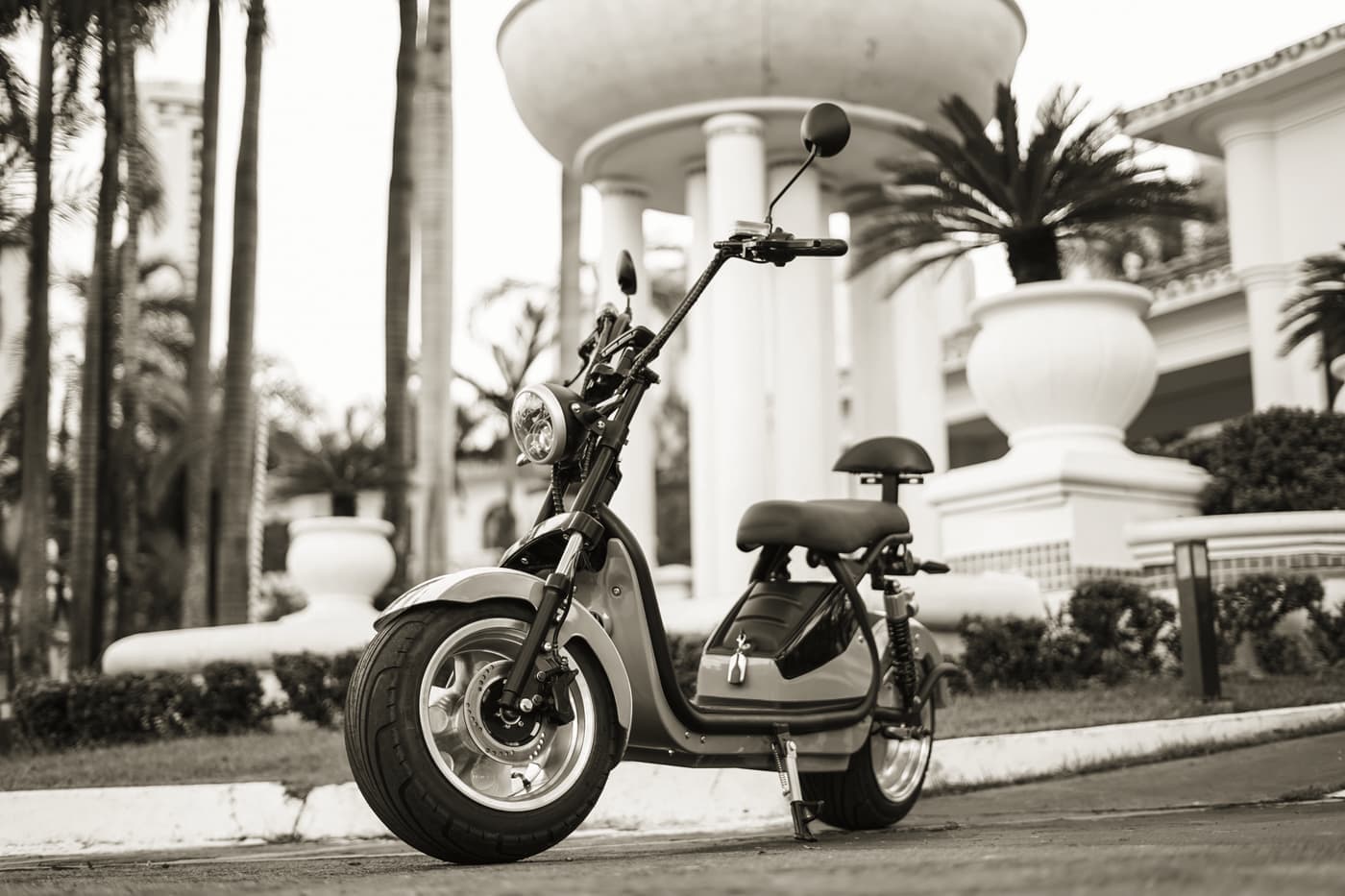
EMOVE RoadRunner Pro V2
A full-size seated machine with DOT hydraulic brakes and 203 mm rotors — and two sources that disagree about its weight.
What this means for shopping
| Model | Range | Top speed | Weight | Max rider | Motor | Brakes | IP | Price |
|---|---|---|---|---|---|---|---|---|
| Apollo Go | 19.8 milesMeasured | 26.7 mphMeasured | 46 lbMeasured | 265 lbMeasured | 700 WMeasured | Drum + regenMeasured | IP66Claim | |
| Varla Eagle One V2 | 24.4 milesMeasuredLogged at 37.8 F with 1,063 ft of climbing — hard conditions, so treat it as a floor | 36.1 mphMeasured197 lb rider | 82 lbClaim | 330 lbClaimVarla's own recommendation is 265 lb or under | Dual 1,000 W (3,200 W peak)Claim | Dual hydraulic calipers, 160 mm rotors, plus electronicClaim | IP54Claim | |
| INMOTION Climber | 24.7 milesMeasured | 23.4 mphMeasured | 45.8 lbMeasured | 286 lbMeasured | Dual-driven, 900 W continuous (1,500 W peak)Claim | DrumClaimRetailer listings describe a rear disc plus electronic braking on both wheels, so treat the exact hardware as unsettled | IPX6Claim | |
| EMOVE RoadRunner Pro V2 | ~55 milesMeasured | 55 mphMeasured | 153.7 lbMeasured | 352 lbClaim | 4000 W nominal / 8.4 kW peakClaim | Full hydraulic DOT, 203 mm rotorsClaim | IPX5Claim |
Measured figures come from a named third-party test; Claim figures come from the manufacturer. Sources are listed under each model below. Price links are paid affiliate links. Empty specifications read “Not published” rather than being estimated.
Three practical consequences.
- Treat a top-speed claim as roughly accurate, minus about 5-10%. A 25 mph claim probably means 22 to 24 mph with a real rider. That is close enough to shop on, which is not something we say about any other figure on a scooter listing.
- Treat a range claim as about 71% of the printed number, before your own conditions. Then take more off for cold, hills and rider weight. Real-world range against claimed has the full twelve-model table, and how far you can actually commute turns it into a planning figure.
- Be most suspicious where the claim is highest. The shortfall widened with the claim across all four pairs, and the extreme case is a claim nobody has checked at all — the isinwheel H7 advertises 35 mph at a listed $699, and no independent test of it had been published as of September 2026 (Rider Guide, Sep 2026). An unverified 35 mph cannot be ranked against a measured 25 mph.
Top speed is not sustained speed
One caveat that matters more than the 5-10% haircut. A top-speed figure, measured or claimed, is a peak on a flat road with a charged battery. It is not a cruising speed, and three things pull you below it constantly: battery charge state (most scooters are slower at 20% than at 100%), gradient, and rider weight.
Which is why buying a scooter for its headline speed usually disappoints, and buying one for its reserve does not. A machine that measures 28 mph holds 20 mph up a slope and into a headwind; a machine that measures 20 mph holds 20 mph on a good day only. How fast electric scooters go sets out the bands, and the 30 mph round-up covers what crossing into that band actually costs.
And the obvious point the specification does not raise: in many US jurisdictions e-scooters are capped at 20 mph on public roads and paths regardless of what the machine will do. Where scooters are legal covers the thresholds.
The limits of four data points
We would rather state this plainly than bury it. Four claimed-versus-measured speed pairs is every pair in our registry and it is a small sample. They come from four different publications, which means four protocols, four rider weights and four sets of conditions. One of the four measurements was taken with a stated 197 lb rider (Electric Scooter Insider, Oct 2026); the others do not state a rider weight at all.
So the claim on this page is deliberately narrow: in the four cases where both figures exist, measured top speed landed within 10% of the claim, while measured range on the same machines landed as low as 55%. That is an observation about four scooters, not a law about the category. If a twelve-model speed study of the kind Rider Guide did for range ever gets published, we will replace this page’s arithmetic with it.
What we do not know
Frequently asked questions
▸Do electric scooters reach their advertised top speed?
Close to it. Across the four models in our registry with both a claim and an independent measurement, scooters delivered 90% to 99% of the advertised top speed. Advertised range, on the same kind of comparison, averages 71% of the claim.
▸Why is advertised range so much less accurate than advertised speed?
Top speed is set by the motor and controller and moves only a few percent with rider weight or wind. Range depends on weight, speed, temperature, gradient, stop-start riding and battery age, and the lab conditions behind an advertised figure inflate it heavily.
▸How fast will my scooter actually go?
Expect roughly 5-10% under the claim with a real rider, less on a hill, less with a low battery. Treat the number as reserve rather than as a cruising speed.
▸Does rider weight change a scooter's top speed?
Somewhat, and far less than it changes range. A heavier rider loses a little top speed on the flat and a lot of range, and the gap widens on any gradient.
Read next
Kick & Volt does not ride or bench-test scooters. Every real-world figure on this page is attributed to the third party that measured it — how we research this.