
How does a Segway work?
Two machines, one name, two unrelated answers. The original balanced itself and you steered it by leaning. The scooters sold today are hub-motor kick scooters with a thumb throttle, and they are what people now mean.
By Ryder M. · Published October 17, 2026
Kick & Volt earns a commission when you buy through our Amazon links, at no extra cost to you. It never changes what we recommend or how we rank it — read the full disclosure.
The short answer
A Segway Ninebot kick scooter works like any other electric scooter: a brushless hub motor built into a wheel, a controller that converts thumb-throttle input into current, and a battery pack with its own management board. You push off, squeeze the throttle and brake with a lever. The original Segway — the self-balancing Personal Transporter launched in December 2001 — worked nothing like that: it balanced itself on two side-by-side wheels and you steered by leaning. Its production ended in July 2020, so if you are buying, you are buying the kick scooter.
How the self-balancing Segway worked
The Segway PT was an inverted pendulum that drove itself upright. You stood on a platform between two side-by-side wheels, with nothing holding the machine vertical except the motors. Lean forward and the platform tips forward; the machine detects the tip and drives the wheels forward to get back underneath you. Lean back and it reverses. There was no throttle at all — your body position was the throttle, and steering came from a lean or a handlebar tilt rather than from turning a front wheel.
That control loop was the whole product, and it came out of Dean Kamen’s earlier iBOT wheelchair work, which had to solve the same problem of keeping a two-wheeled platform upright under a person. It is also why the PT was heavy and expensive relative to what it did: a machine that has to run a balancing loop continuously cannot ever be switched off underneath you, so the batteries, motors and redundancy all had to be sized for that.
Nothing sold under the Segway name today works this way. Ninebot ceased PT production on 15 July 2020, and the closest current products are electric unicycles — a different skill and a different risk profile from anything this site covers. What is a Segway scooter works through how one name ended up on both machines.
How a Segway kick scooter works
Here is the whole drivetrain of a modern Segway Ninebot KickScooter, in order.
- The battery pack. Lithium cells plus a battery management system — a small board that balances the cells, cuts output when a cell drops too low and stops charging when they are full. The BMS is why you cannot simply overcharge a scooter, and its gradual decline is why range drops over years rather than failing suddenly. See battery life and replacement.
- The controller. Reads the throttle, reads the wheel speed, and switches current to the motor coils in the right sequence hundreds of times a second. It is also what enforces the speed modes, the start-from-standstill behavior (most require a kick, which is where “kick scooter” comes from) and the regenerative braking.
- The hub motor. A brushless motor whose stator is bolted to the axle and whose rotor is the wheel. No chain, no belt, no gearbox, almost nothing to service — and the reason an electric scooter is quiet. Output is quoted in watts; watts and torque explained covers what that figure predicts and what it does not.
- The brakes. Two independent systems on a good scooter: a friction brake you operate with a lever, plus regenerative braking that runs the motor backwards into the battery. Regen is an assist, not a stopping system. The Max G3 runs dual discs (eRideHero, Sep 2026); cheaper models in the line use a disc plus regen.
That is it. There is no transmission, no clutch, no self-balancing loop and nothing that needs to be running for the machine to stay upright — a Segway kick scooter with a flat battery is a push scooter, which is not true of the PT.
The four parts that decide the ride
Once you know how it works, the buying question narrows to four components, and they are the same four across every brand:
- Battery capacity against weight. Range is bought with cells and cells weigh. Segway builds substantial scooters rather than efficient ones — the Max G3 returns 0.46 measured miles per pound against the NIU KQi Air’s 0.92 (eRideHero, Sep 2026).
- Motor output against your gradient. The Max G3’s 850 W is the largest single hub motor in our mainstream set and clears the published 500 W threshold for residential slopes with room to spare (Hiboy, Sep 2026).
- Brake hardware. Dual friction brakes rather than one plus regen. The ranking is in brakes explained.
- Sealing. The controller and the BMS are the parts water kills. The Max G3 publishes IPX6 and the budget E3 Pro publishes IPX5 (eRideHero, Sep 2026), which is unusual at its price. IP ratings and wet weather explains what each digit covers.
The models we hold data for
Four Segway scooters covering the current line-up: the most complete mainstream commuter, the budget pick, the all-terrain model and the high-payload machine. Every range and speed figure below was measured by a named third party, not copied off a spec sheet.
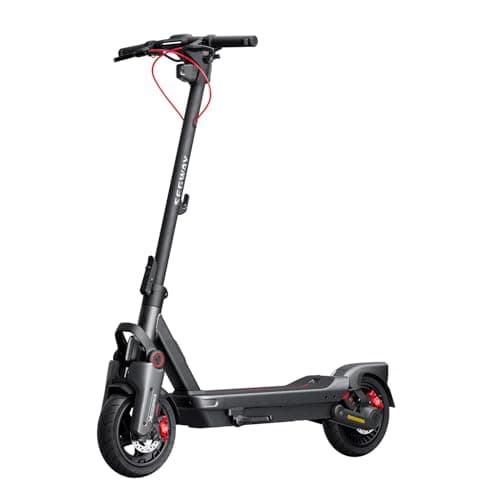
28 mph measured, IPX6, dual disc brakes and 286 lb of payload — the most complete mainstream commuter in the data.
#ad How we are funded · Price as of November 14, 2026
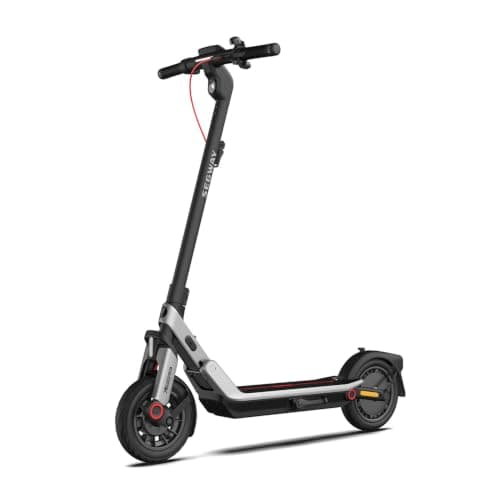
The conservative budget pick: 17.2 measured miles, IPX5, and the largest service network in the category behind it.
#ad How we are funded · Price as of November 14, 2026
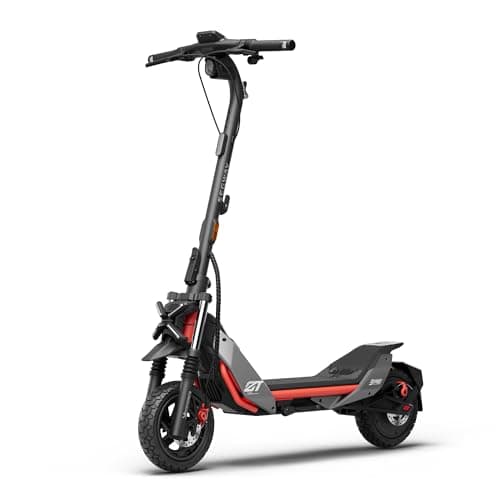
24.7 mph and 22.7 measured miles with the best ride quality in its payload bracket — the comfortable all-terrain option.
#ad How we are funded · Price as of November 14, 2026
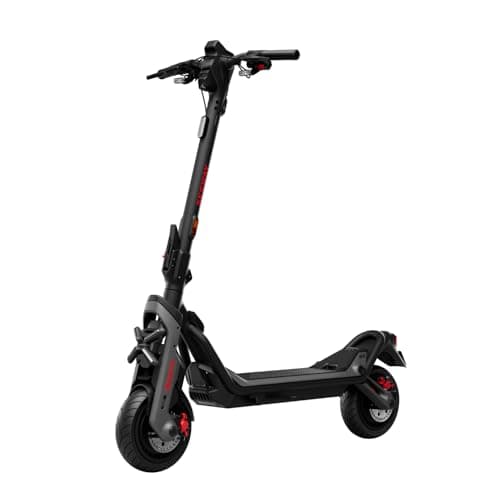
Segway GT3
330 lb rated, 33.5 measured miles and 31.3 mph — the refined option in the heavy-payload bracket.
#ad How we are funded · Price as of November 14, 2026
What actually goes wrong
A drivetrain with four components fails in four places, and knowing which is which saves a lot of guesswork.
- The battery degrades. Gradual range loss over hundreds of charge cycles is normal and is not a fault. Sudden range collapse, or a scooter that cuts out under load, is usually a single failing cell group — battery life and replacement covers what is serviceable.
- The controller or display takes water. This is the failure the IP rating is about, and it is why a scooter with no published rating has to be treated as fair-weather. The IP66 round-up is the page for a wet climate.
- The brakes go out of adjustment. Cables stretch, pads glaze, rotors bend. Almost all of it is adjustable rather than terminal — brake troubleshooting walks through each symptom.
- The folding joint develops play. The one structural wear point on a folding scooter, and the one worth checking monthly. It is on the maintenance checklist.
Hub motors themselves rarely fail, which is the quiet advantage of the whole architecture: the part doing the work has no wearing contact surfaces in it. What we do not have is failure-rate data for any of this. No publication we cite publishes reliability statistics, so everything above is a description of the mechanism rather than a frequency claim.
Which one to buy
| Model | Range | Top speed | Weight | Max rider | Motor | Brakes | IP | Price |
|---|---|---|---|---|---|---|---|---|
| Segway Ninebot Max G3 | 24.9 milesMeasured | 28 mphMeasured | 54.2 lbMeasured | 286 lbMeasured | 850 WMeasured | Dual discMeasured | IPX6Claim | $999.00 · View on Amazon #ad How we are funded · Price as of November 14, 2026 |
| Segway Ninebot E3 Pro | 17.2 milesMeasured | 19.3 mphMeasured | 40.1 lbMeasured | 265 lbMeasured | 400 WMeasured | Not published | IPX5Claim | $549.99 · View on Amazon #ad How we are funded · Price as of November 14, 2026 |
| Segway ZT3 Pro | 22.7 milesMeasured | 24.7 mphMeasured | 65.5 lbMeasured | 265 lbMeasured | Not published | Not published | Not published | $789.98 · View on Amazon #ad How we are funded · Price as of November 14, 2026 |
| Segway GT3 | 33.5 milesMeasured | 31.3 mphMeasured | Not published | 330 lbMeasured | Not published | Not published | Not published | $1,511.00 · View on Amazon #ad How we are funded · Price as of November 14, 2026 |
Measured figures come from a named third-party test; Claim figures come from the manufacturer. Sources are listed under each model below. Price links are paid affiliate links. Empty specifications read “Not published” rather than being estimated.
On the measured data, the Segway Ninebot Max G3 is the one to buy for most riders: 24.9 measured miles, 28 mph measured, 286 lb of payload, IPX6 sealing and dual adjustable hydraulic suspension (eRideHero, Sep 2026). It is the only mainstream commuter in our registry whose row has no missing cells at all. Its two head-to-heads are against the Max G3 Plus and against the NIU KQi 300X.
The E3 Pro is the budget entry at 17.2 measured miles with a published IPX5 rating; the ZT3 Pro runs 12-inch tires on long-travel suspension for mixed surfaces; the GT3 measured 31.3 mph with a 330 lb payload rating (eRideHero, Sep 2026). The whole line-up on measured data is on the Segway brand page.
What we do not know
Frequently asked questions
▸How does a Segway balance itself?
The original self-balancing Segway PT worked as a driven inverted pendulum: lean forward and the platform tips, the machine detects the tip and drives the wheels forward to get back underneath you. There was no throttle — body position was the control. Production ended in July 2020, and no scooter sold under the Segway name today works this way.
▸Do Segway scooters balance themselves?
No. A Segway Ninebot KickScooter is a conventional stand-up electric scooter: two wheels in line, a folding stem, a thumb throttle and a brake lever. With a flat battery it is simply a push scooter.
▸Do you have to kick-start an electric scooter?
On most models, yes — the controller will not engage the motor from a standstill until the scooter is already rolling at a walking pace. It is a deliberate safety behavior, and it is where the name “kick scooter” comes from.
▸What is regenerative braking on a scooter?
The controller runs the hub motor as a generator, which slows the wheel and returns a small amount of charge to the battery. It adds bite alongside a friction brake and cannot be relied on as a primary stop.
Read next
Kick & Volt does not ride or bench-test scooters. Every real-world figure on this page is attributed to the third party that measured it — how we research this.