
Electric scooter vs moped
A moped is a registered vehicle you park. A stand-up electric scooter is a 50 lb object you carry indoors. That one difference decides this for most people long before top speed enters the conversation.
By Ryder M. · Published October 17, 2026
Kick & Volt earns a commission when you buy through our Amazon links, at no extra cost to you. It never changes what we recommend or how we rank it — read the full disclosure.
The short answer
Buy the electric scooter if your trip has a building at the end of it; buy the moped if it has a parking space. A stand-up scooter weighs 26 to 55 lb, folds, charges from a wall socket and in most US jurisdictions needs no registration, license or insurance. A moped is a registered road vehicle with plates, insurance and a parking problem. Range and speed matter far less than that, because both will cover a normal commute.
The difference that decides it
Almost every comparison of these two leads with top speed, and top speed is the least useful axis. Here is the one that actually settles it: where the vehicle sleeps.
A NIU KQi 300X is 48.7 lb and folds (eRideHero, Sep 2026). It goes into an apartment, under a desk, into a car trunk, up one flight of stairs. It charges from any wall socket. Nobody steals it off the street overnight because it is not on the street overnight. A moped does none of that: it needs a legal parking space, outdoor security, and in a lot of cities a permit.
That is why the fold weight is the specification to look at first, and why weight and fold size is one of the most-read pages on this site. If you have secure off-street parking, most of the scooter’s advantage evaporates and the comparison becomes a normal vehicle decision. If you do not, the moped is a much bigger commitment than its sticker suggests.
Six axes, compared
- Weight and storage. 26.4 lb (NIU KQi Air) to 55 lb (NAVEE ST3 Pro) for a folding stand-up scooter (eRideHero, Sep 2026), against a moped you will never lift. No contest, in whichever direction your living situation points.
- Licensing and registration. Mopeds are registered motor vehicles in US states and generally require a license, plates and insurance. Stand-up e-scooters are usually regulated as their own class with no registration — but the rules are local and the thresholds that change your status are real. Where scooters are legal and whether you need a license set those out. Nothing here is legal advice about where you ride.
- Speed. A moped is faster and legally allowed to use that speed. Mainstream stand-up scooters measure 20 to 28 mph, and many jurisdictions cap e-scooters at 20 mph anyway. If your route is a 45 mph arterial, the scooter is the wrong tool — the 30 mph round-up is as far as this site goes for a machine you can still treat as a scooter.
- Range. Both cover a commute. Measured scooter range in our registry runs from 11.4 to 59.8 miles, and the practical planning figure for a good commuter is 20 to 25 real miles. A moped has more, and refuels or recharges differently. The long-range hub has the measured figures.
- Weather and safety. A moped puts you in traffic at traffic speed, with better lights, bigger wheels and often a windscreen. A scooter has small wheels, which is the specification that matters most on bad pavement, and an IP rating that is a design envelope rather than a promise. Our safety page works through the federal injury data rather than our opinion.
- Running cost. A scooter charges from a socket and has four serviceable parts. A moped has registration, insurance, and either fuel and servicing or a much larger battery to eventually replace.
What a scooter can actually do
Four machines spanning the honest range of the format: a complete 28 mph folding commuter, the efficiency pick, a seated moped-style scooter, and the high-payload long-range machine. Every range and speed figure below is measured except the RoadRunner V3’s, which is EMOVE’s own.
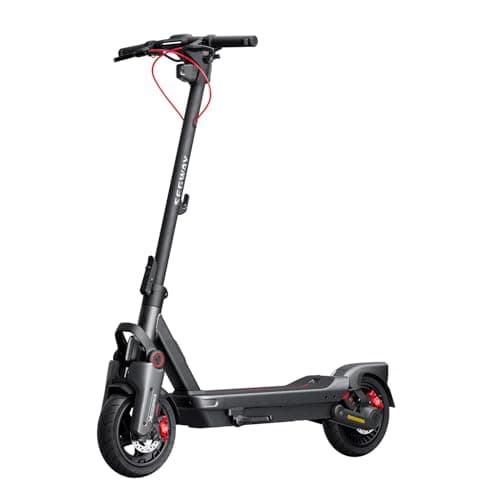
28 mph measured, IPX6, dual disc brakes and 286 lb of payload — the most complete mainstream commuter in the data.
#ad How we are funded · Price as of November 14, 2026
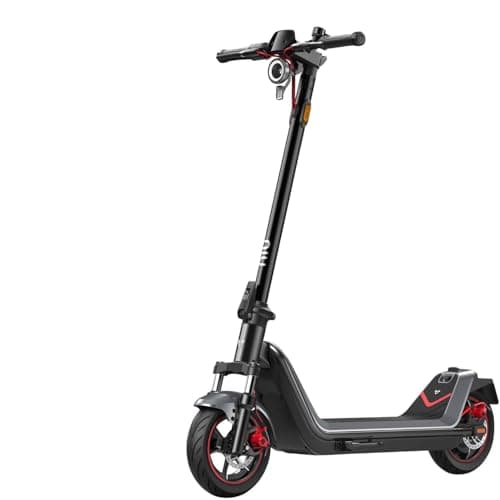
The balanced answer: 26.8 measured miles, 23.6 mph and dual disc brakes at a weight you can still fold into a trunk.
#ad How we are funded · Price as of November 14, 2026
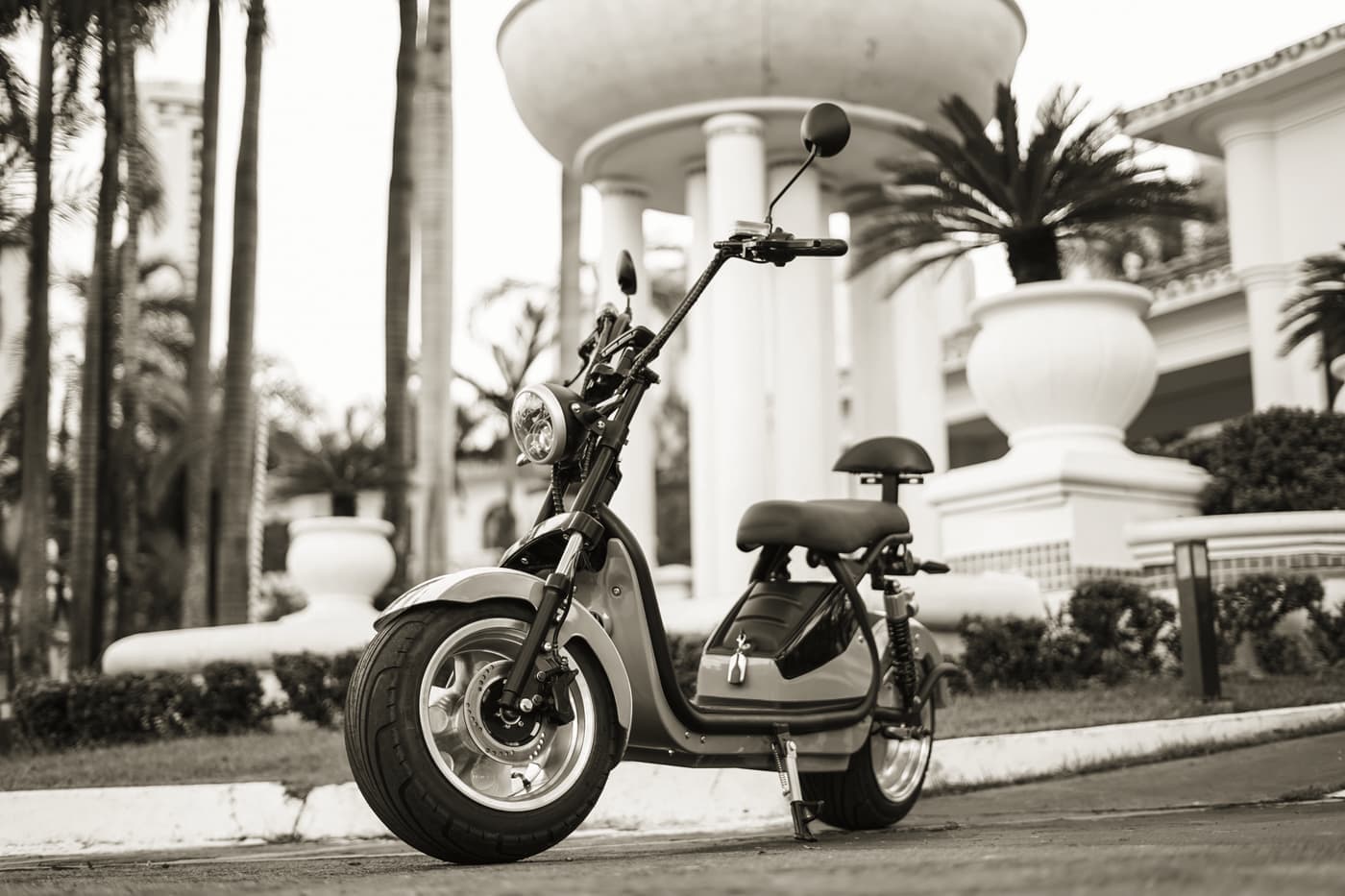
The moped-style seated scooter most people actually mean: dual 500 W motors and XTECH hydraulics.

352 lb of payload and 46.3 measured miles with XTECH hydraulics — the heavy-rider scooter with nothing missing.
When the moped wins
Four situations where we would tell you to stop reading this site:
- Your route needs sustained 35 mph or more. Nothing we would describe as a scooter belongs on a fast arterial. The machines in the 50 mph round-up have the speed and are not road-legal e-scooters in most places.
- You carry a passenger. No scooter in our registry is rated for two people, and the payload figures are for one rider plus cargo.
- You ride long distances every day in bad weather. The best-sealed scooter in our data carries a claimed IP66 (Apollo Scooters, Oct 2026), which is a rating, not a roof.
- You have secure parking and no stairs. The scooter’s core advantage is portability. Without the problem, you do not need the solution.
If none of those applies, the scooter is usually the better answer — and if one of them nearly applies, read the next section before you buy a moped.
The seated middle ground
There is a whole class between these two, and it is where a lot of moped shoppers should actually land: the moped-style seated electric scooter. The EMOVE RoadRunner V3 has a built-in saddle, dual 500 W motors and XTECH hybrid hydraulic brakes at 77 lb and a listed $1,695 — every figure EMOVE’s own, with no independent test published as of September 2026 (Rider Guide, Sep 2026). It looks like a moped, rides seated, and is still legally a scooter in many places.
The trade is that it is 77 lb and does not fold, so you have given up the portability that made the stand-up scooter interesting without acquiring a moped’s road presence. Seated scooter against moped is the page that argues that specific comparison properly, and seated against standing covers the format choice. For a stand-up scooter with a seat added instead, see detachable against built-in seats.
What each one costs to run
We hold dated purchase prices for some models and no running-cost data for any, so this section is about structure rather than numbers.
A stand-up scooter has four things that cost money after purchase: tires, brake pads, the battery eventually, and nothing else of consequence. There is no chain, no oil, no transmission and no annual registration. A moped adds plates, insurance and either fuel and servicing or a far larger battery pack. That structural difference is usually larger than the purchase-price difference, and it compounds annually.
On purchase price, the honest shape of the scooter market is in what an electric scooter costs — and what each band buys is in budget ideas band by band. We never print a current price on this site; every buy control checks Amazon rather than asserting one.
What we do not know
Frequently asked questions
▸Is an electric scooter better than a moped?
For a short urban commute that ends inside a building, usually yes: it folds, weighs 26 to 55 lb, charges from a socket and in most US jurisdictions needs no registration or insurance. For sustained speeds above about 30 mph, a passenger, or daily long-distance riding, the moped is the right vehicle.
▸Do you need a license to ride an electric scooter?
Usually not for a stand-up e-scooter, but the rules are set locally and crossing a speed or power threshold can reclassify the machine. A moped is a registered motor vehicle and generally does require a license, plates and insurance. Check your own state before buying either.
▸Is an electric scooter cheaper to run than a moped?
Structurally, yes — it charges from a wall socket and has very few wearing parts, with no registration, insurance or servicing schedule in most places. We hold no dollar figures for either, so we are describing the structure rather than quoting a saving.
▸What is a moped-style electric scooter?
A seated electric scooter with a built-in saddle, like the EMOVE RoadRunner V3 — it looks like a moped and is still regulated as a scooter in many places. The trade is weight: 77 lb and no fold, so you lose the portability that makes a stand-up scooter worth having.
Read next
Kick & Volt does not ride or bench-test scooters. Every real-world figure on this page is attributed to the third party that measured it — how we research this.