
NIU KQi Air vs Segway Ninebot Max G3
One weighs half what the other does and measured only 0.7 fewer miles. The other does everything the first one cannot. This is the clearest either-or in the commuter market, and the answer depends entirely on your stairs.
By Ryder M. · Published October 17, 2026
Kick & Volt earns a commission when you buy through our Amazon links, at no extra cost to you. It never changes what we recommend or how we rank it — read the full disclosure.
The short answer
Buy the NIU KQi Air if you carry your scooter; buy the Segway Ninebot Max G3 if you do not. The KQi Air measured 24.2 miles at 26.4 lb; the Max G3 measured 24.9 miles at 54.2 lb (eRideHero, Sep 2026). The range difference is 0.7 miles and the weight difference is 27.8 lb — so for most buyers this is not a performance comparison at all. It is a question about stairs, trains and trunk space.
Both measured by the same tester
Every figure on this page for both scooters is eRideHero’s, recorded on its own protocol with the scooters it buys (eRideHero, Sep 2026). That is the only reason the comparison is worth publishing: a 0.7-mile range gap between two different publications would be noise, while a 0.7-mile gap inside one protocol is a real finding — and the finding is that these two scooters have effectively the same range.
What is not comparable, and what we will not score: reliability, warranty performance, parts availability and ride feel. We hold no data on any of them. The one widely observable fact — that Segway runs the largest service and parts network in the category — is reported as exactly that on the Segway brand page, and NIU’s efficiency record is reported the same way on the NIU page.
What each one is
The NIU KQi Air is an engineering outlier. 26.4 lb, a 350 W motor, 9.5-inch self-healing tubeless tires, no suspension, a manufacturer IP55 rating, a 265 lb payload rating, and 24.2 measured miles at a measured 20.1 mph (eRideHero, Sep 2026). 24.2 miles out of 26.4 lb is 0.92 miles per pound, the best range-per-pound figure in our entire registry. The full write-up is in the NIU KQi Air review.
The Segway Ninebot Max G3 is the completeness play: 54.2 lb, an 850 W motor, 11-inch self-healing tubeless tires, dual disc brakes, dual adjustable hydraulic suspension, a published IPX6 rating, a 286 lb payload rating, and 24.9 measured miles at a measured 28 mph (eRideHero, Sep 2026). Its row in our registry is the only mainstream commuter row with no gaps at all. The detail is in the Segway Ninebot Max G3 review.
| # | Product | Best for | Score | Price |
|---|---|---|---|---|
| 1 | 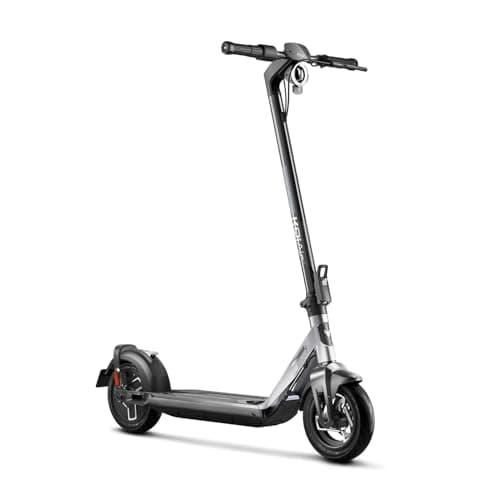 NIU KQi Air26.4 lb and 24.2 measured miles — the most range per pound in the registry, and no suspension at all. | Carrying up stairs | 5.9 | $809.10 · View on Amazon #ad How we are funded · Price as of November 14, 2026 |
| 2 | 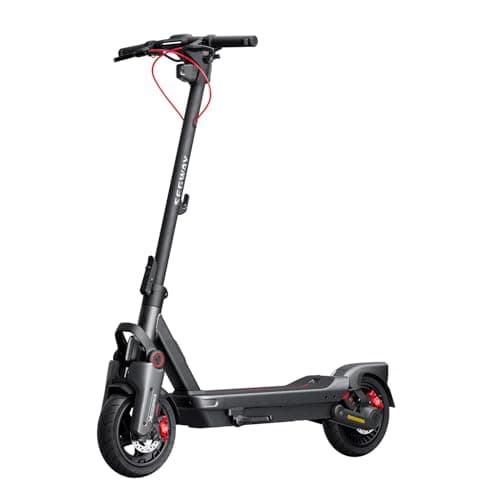 Segway Ninebot Max G354.2 lb, 24.9 measured miles, 28 mph, IPX6, dual hydraulic suspension and a 286 lb payload rating. | Best ride quality | 6.1 | $999.00 · View on Amazon #ad How we are funded · Price as of November 14, 2026 |
| 3 | 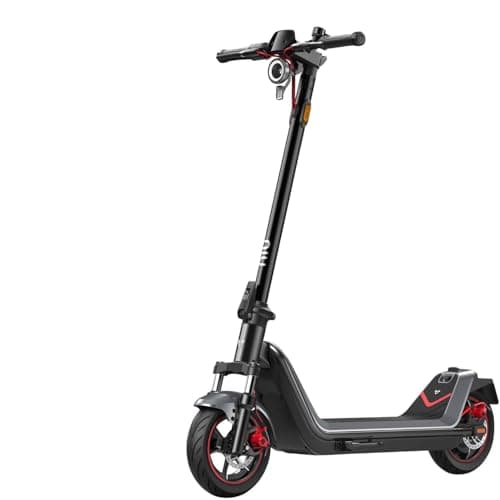 NIU KQi 300X26.8 measured miles and dual disc brakes at 48.7 lb — more range than either, at a weight between them. | Best all-round commuter | 5.2 | $369.99 · View on Amazon #ad How we are funded · Price as of November 14, 2026 |
Scores are computed from published specifications using the rubric on our research methodology page. Tap any row to jump to the full write-up.
Every pick in full
Each model below lists what the maker publishes, what an independent tester measured, and the trade-off you accept by choosing it. Nothing here is perfect.
NIU KQi Air
26.4 lb and 24.2 measured miles — the most range per pound in the registry, and no suspension at all.
- Range:
- 24.2 milesMeasured (eRideHero, Sep 2026)
- Top speed:
- 20.1 mphMeasured (eRideHero, Sep 2026)
- Weight:
- 26.4 lbMeasured (eRideHero, Sep 2026)
- Max rider:
- 265 lbMeasured (eRideHero, Sep 2026)
What is good
- 26.4 lb is roughly half what a typical 24-mph commuter weighs
- 24.2 measured miles from a scooter this light is the outlier figure in our whole dataset
- IP55 covers dust ingress as well as road spray
What you give up
- 350 W is the least hill-capable motor of any scooter we recommend
- 265 lb payload — the standard ceiling, with no headroom for a rider near it
- Featherweight construction is the expensive way to build a scooter
#ad How we are funded · Price as of November 14, 2026
Segway Ninebot Max G3
54.2 lb, 24.9 measured miles, 28 mph, IPX6, dual hydraulic suspension and a 286 lb payload rating.
- Range:
- 24.9 milesMeasured (eRideHero, Sep 2026)
- Top speed:
- 28 mphMeasured (eRideHero, Sep 2026)
- Weight:
- 54.2 lbMeasured (eRideHero, Sep 2026)
- Max rider:
- 286 lbMeasured (eRideHero, Sep 2026)
What is good
- IPX6 is the highest weather rating in our mainstream commuter set
- 850 W handles 10%+ grades with an average adult aboard
- 286 lb payload gives genuine headroom over the usual 265 lb ceiling
What you give up
- 54.2 lb — folding it is easy, lifting it is not
- 24.9 measured miles is mid-pack despite the hardware
- 28 mph is more speed than most brake setups at this weight want
#ad How we are funded · Price as of November 14, 2026
NIU KQi 300X
26.8 measured miles and dual disc brakes at 48.7 lb — more range than either, at a weight between them.
- Range:
- 26.8 milesMeasured (eRideHero, Sep 2026)
- Top speed:
- 23.6 mphMeasured (eRideHero, Sep 2026)
- Weight:
- 48.7 lbMeasured (eRideHero, Sep 2026)
- Max rider:
- 265 lbMeasured (eRideHero, Sep 2026)
What is good
- 26.8 measured miles is more real range than most scooters twice its weight
- Dual disc brakes front and rear rather than a disc-plus-regen compromise
- 500 W is the threshold where 8-10% grades stop being a problem
What you give up
- 48.7 lb is a two-hands-and-a-pause lift, not a one-hand carry
- No IP rating published in the test data we found
- 265 lb payload ceiling rules it out for heavier riders
#ad How we are funded · Price as of November 14, 2026
Side by side
| Model | Range | Top speed | Weight | Max rider | Motor | Brakes | IP | Price |
|---|---|---|---|---|---|---|---|---|
| NIU KQi Air | 24.2 milesMeasured | 20.1 mphMeasured | 26.4 lbMeasured | 265 lbMeasured | 350 WMeasured | Not published | IP55Claim | $809.10 · View on Amazon #ad How we are funded · Price as of November 14, 2026 |
| Segway Ninebot Max G3 | 24.9 milesMeasured | 28 mphMeasured | 54.2 lbMeasured | 286 lbMeasured | 850 WMeasured | Dual discMeasured | IPX6Claim | $999.00 · View on Amazon #ad How we are funded · Price as of November 14, 2026 |
| NIU KQi 300X | 26.8 milesMeasured | 23.6 mphMeasured | 48.7 lbMeasured | 265 lbMeasured | 500 WMeasured | Dual discMeasured | Not published | $369.99 · View on Amazon #ad How we are funded · Price as of November 14, 2026 |
Measured figures come from a named third-party test; Claim figures come from the manufacturer. Sources are listed under each model below. Price links are paid affiliate links. Empty specifications read “Not published” rather than being estimated.
The NIU KQi 300X sits in the table as the third option, because for a large share of buyers it is the right one: 48.7 lb, 26.8 measured miles and dual disc brakes is more range than either of the two headline scooters at a weight between them.
The 27.8 lb that decides it
26.4 lb is a one-hand carry. 54.2 lb is a two-hands-and-a-pause lift. That sounds like a detail and it is the whole decision, because weight is the specification you pay for every single day rather than once at purchase.
Concretely: a 26.4 lb scooter goes up a flight of stairs without you planning for it, onto a commuter train without a second thought, into an overhead luggage rack, and under a desk with one arm. A 54.2 lb scooter does none of those comfortably. If your commute has a staircase at either end, the KQi Air is not the lighter option — it is the only option that works. Weight and fold size works through what each band means in practice, and the lightweight round-up covers the rest of this class.
The usual trade for that weight is range, and here it barely exists. Both figures are measured rather than claimed, which is the distinction that matters: across the twelve-model claimed-versus-tested study this site is built on, scooters delivered an average of 71% of their advertised range and the worst delivered 53% (Rider Guide, Sep 2026). Neither of these numbers is subject to that haircut, and they are 0.7 miles apart — so on distance the two scooters are interchangeable.
What the KQi Air gives up
Four things, and they are real:
- Suspension: none at all. Not a front fork, not a rear spring. On broken pavement that is felt in your hands and heard through the frame; the Segway runs dual adjustable hydraulic suspension. See suspension explained, and the quiet round-up for what that does to noise.
- Speed: 20.1 mph against 28 mph. Both measured. 20 mph holds a bike lane; 28 mph keeps pace with urban traffic and gives you reserve on a hill.
- Hills: 350 W against 850 W. 350 W is the least hill-capable motor of any scooter we recommend. On a 10% grade with a heavier rider it will crawl. How steep a hill it can climb sets out the wattage thresholds.
- Payload: 265 lb against 286 lb. The KQi Air sits on the industry default with no headroom; a rider near 250 lb with a bag is at the ceiling. See the 250 lb round-up.
On weather the two are closer than they look. The KQi Air carries a manufacturer IP55 rating, which covers dust as well as low-pressure jets; the Segway’s IPX6 is a step above on water and untested on dust. IP ratings and wet weather explains what each digit actually covers.
Which one to buy
NIU KQi Air if you lift the scooter as part of the journey, your route is paved and reasonably flat, and you are comfortably inside 265 lb loaded. Nothing else in our data delivers 24 measured miles at 26.4 lb, and the specification it sacrifices for that — suspension — is the one you can route around by choosing where you ride.
Segway Ninebot Max G3 if the scooter lives on the ground: you ride in rain, your route has hills or broken pavement, you want 28 mph, or you are near the payload ceiling. That describes most buyers, which is why it leads the commuter round-up. Its head-to-head with the NIU KQi 300X is at KQi 300X vs Max G3.
Neither if you want the middle: the NIU KQi 300X measured 26.8 miles — more than either — at 48.7 lb with dual disc brakes, and it is the subject of its own comparison with the Air.
What we do not know
Frequently asked questions
▸Is the NIU KQi Air worth it over the Segway Max G3?
If you carry the scooter, yes — 26.4 lb against 54.2 lb for almost the same measured range is a decisive advantage. If the scooter stays on the ground, no: the Segway adds 8 mph, a 500 W larger motor, suspension at both ends, IPX6 sealing and 21 lb more payload headroom.
▸How much does a NIU KQi Air weigh?
eRideHero put it on a scale at 26.4 lb — roughly half what a typical 24 mph commuter weighs, and the lightest scooter in our registry with a usable measured range behind it.
▸Does the NIU KQi Air have suspension?
No. Not a front fork and not a rear spring. It runs 9.5-inch self-healing tubeless tires, which do all the absorbing there is, and that is the main compromise behind the weight figure.
▸Which has more range, the KQi Air or the Max G3?
The Max G3, by 0.7 miles: 24.9 measured against 24.2, both by the same tester. In practice they are the same range, which is what makes the weight difference the deciding factor.
Read next
Kick & Volt does not ride or bench-test scooters. Every real-world figure on this page is attributed to the third party that measured it — how we research this.