
The best electric scooters for tall, heavy adults
A 330 lb rating on a small frame is still a cramped scooter. These five pair the payload headroom with the wheel size and deck scale a bigger rider needs — and we say plainly what nobody publishes.
By Ryder M. · Published November 10, 2026
Kick & Volt earns a commission when you buy through our Amazon links, at no extra cost to you. It never changes what we recommend or how we rank it — read the full disclosure.
The short answer
For a rider who is both tall and heavy the pick is the EMOVE Cruiser V2: rated to 352 lb with 46.3 independently measured miles, 32.2 measured mph and hydraulic XTECH brakes, on a 74 lb frame (eRideHero, Sep 2026). The budget pick is the Segway Ninebot Max G3, which drops to a 286 lb rating but brings 11-inch tires, IPX6 sealing and adjustable hydraulic suspension at the lowest live price here (eRideHero, Sep 2026). Live prices as of November 14, 2026.
Two problems, not one
Payload is the first and it is straightforward: the rating is a structural limit, and you want headroom under it rather than a number you approach. What a payload rating actually means works through what the figure protects — stem clamp, folding hinge, deck welds, brakes.
Frame scale is the second and it gets ignored. A tall rider on a short deck stands with their feet stacked rather than staggered, which costs stability under braking; a tall rider on a low bar rides with locked elbows, which puts road shock straight into their shoulders. Those are geometry problems, and a payload rating says nothing about either. Scooters for tall riders is the commuter-end version of this page, and scooters rated for 300 lb is the pure payload page.
What nobody publishes
Deck length, deck width, bar height, bar width and stem adjustability are not published for a single model on this page in our source set. We are not going to estimate them — a geometry table invented to fill a page is exactly the thing this site exists to argue against.
What we use instead are three proxies that are published: rated payload, wheel diameter, and scooter weight. Heavier machines are heavier because of frame, tire and suspension mass, and in this bracket that correlates with physical scale. It is a proxy, stated as one.
How these were ranked
Rated payload first, then measured range, then brake hardware, then frame-scale proxies (scooter weight and wheel diameter). Claimed range does not rank: the twelve-model study behind this site measured advertised figures at an average of 71% of the printed number (Rider Guide, Sep 2026), and a rider near a payload ceiling should expect the bottom of that spread.
| # | Product | Best for | Score | Price |
|---|---|---|---|---|
| 1 | EMOVE Cruiser V2The pick: a 352 lb rating with 46.3 measured miles and hydraulic XTECH brakes, on the largest frame here at 74 lb. | Best for heavy riders | 7.8 | |
| 2 | 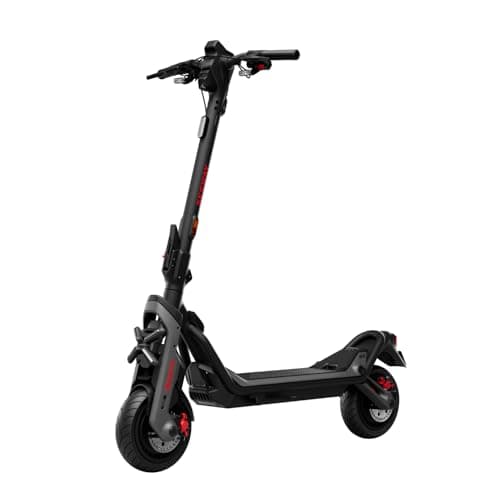 Segway GT3The supported option: 330 lb rated with 33.5 measured miles and 31.3 measured mph, with Segway's parts network behind it. | Most refined at 330 lb | 6.6 | $1,511.00 · View on Amazon #ad How we are funded · Price as of November 14, 2026 |
| 3 |  VMAX VX4 GTThe range pick: 330 lb rated with 42.5 measured miles at 63.9 lb — the best range-to-weight ratio in this bracket. | 330 lb payload with real range | 6.9 | |
| 4 | 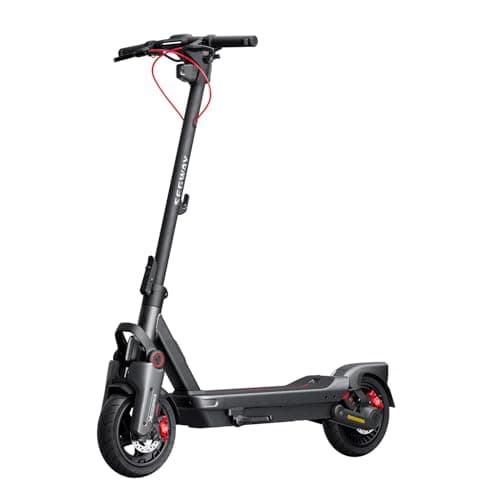 Segway Ninebot Max G3The budget pick: 286 lb rather than 330, but 11-inch tires, IPX6 sealing, adjustable hydraulic suspension and the lowest live price here. | Best ride quality | 5.8 | $999.00 · View on Amazon #ad How we are funded · Price as of November 14, 2026 |
| 5 |  INMOTION Climber286 lb at 45.8 lb of scooter with a claimed 900 W continuous — the one to look at if you also have hills. | Best on hills | 6.1 |
Scores are computed from published specifications using the rubric on our research methodology page. Tap any row to jump to the full write-up.
Every pick in full
Each model below lists what the maker publishes, what an independent tester measured, and the trade-off you accept by choosing it. Nothing here is perfect.
EMOVE Cruiser V2
The pick: a 352 lb rating with 46.3 measured miles and hydraulic XTECH brakes, on the largest frame here at 74 lb.
- Range:
- 46.3 milesMeasured (eRideHero, Sep 2026)
- Top speed:
- 32.2 mphMeasured (eRideHero, Sep 2026)
- Weight:
- 74 lbMeasured (eRideHero, Sep 2026)
- Max rider:
- 352 lbMeasured (eRideHero, Sep 2026)
What is good
- 352 lb payload with 46.3 miles independently measured — not a claim, a test result
- Hydraulic XTECH brakes, which is what 32 mph and a heavy rider need
- The best combination of payload, range and braking in our whole dataset
What you give up
- 74 lb
- No IP rating published in the test data we sourced
- 32.2 mph is fast enough that a helmet stops being optional
Segway GT3
The supported option: 330 lb rated with 33.5 measured miles and 31.3 measured mph, with Segway's parts network behind it.
- Range:
- 33.5 milesMeasured (eRideHero, Sep 2026)
- Top speed:
- 31.3 mphMeasured (eRideHero, Sep 2026)
- Max rider:
- 330 lbMeasured (eRideHero, Sep 2026)
What is good
- 330 lb rated with 33.5 measured miles behind it
- Segway's suspension and deck quality is the reason to pay the premium
- Parts and service availability is the best in the category
What you give up
- No scooter weight published in the data we sourced
- No brake type or IP rating published either
- You pay for the badge as well as the hardware
#ad How we are funded · Price as of November 14, 2026
VMAX VX4 GT
The range pick: 330 lb rated with 42.5 measured miles at 63.9 lb — the best range-to-weight ratio in this bracket.
- Range:
- 42.5 milesMeasured (eRideHero, Sep 2026)
- Top speed:
- 25 mphMeasured (eRideHero, Sep 2026)
- Weight:
- 63.9 lbMeasured (eRideHero, Sep 2026)
- Max rider:
- 330 lbMeasured (eRideHero, Sep 2026)
What is good
- 42.5 measured miles at a 330 lb rating — the combination heavier riders normally cannot get
- 25 mph is enough for any bike lane and most surface streets
- 63.9 lb is heavy but still a two-person car load
What you give up
- Not a scooter you carry anywhere
- No IP rating or brake spec published in the source we used
- 25 mph will feel slow if you have ridden anything faster
Segway Ninebot Max G3
The budget pick: 286 lb rather than 330, but 11-inch tires, IPX6 sealing, adjustable hydraulic suspension and the lowest live price here.
- Range:
- 24.9 milesMeasured (eRideHero, Sep 2026)
- Top speed:
- 28 mphMeasured (eRideHero, Sep 2026)
- Weight:
- 54.2 lbMeasured (eRideHero, Sep 2026)
- Max rider:
- 286 lbMeasured (eRideHero, Sep 2026)
What is good
- IPX6 is the highest weather rating in our mainstream commuter set
- 850 W handles 10%+ grades with an average adult aboard
- 286 lb payload gives genuine headroom over the usual 265 lb ceiling
What you give up
- 54.2 lb — folding it is easy, lifting it is not
- 24.9 measured miles is mid-pack despite the hardware
- 28 mph is more speed than most brake setups at this weight want
#ad How we are funded · Price as of November 14, 2026
INMOTION Climber
286 lb at 45.8 lb of scooter with a claimed 900 W continuous — the one to look at if you also have hills.
- Range:
- 24.7 milesMeasured (eRideHero, Sep 2026)
- Top speed:
- 23.4 mphMeasured (eRideHero, Sep 2026)
- Weight:
- 45.8 lbMeasured (eRideHero, Sep 2026)
- Max rider:
- 286 lbMeasured (eRideHero, Sep 2026)
What is good
- Singled out for hill performance by a publication that tests on real gradients
- 45.8 lb is unusually light for a scooter built to climb
- 286 lb payload gives climbing headroom for a heavier rider
What you give up
- A 20-degree gradeability claim is the maker's, and nobody has published a hill test of it
- 23.4 mph is modest — climbing hardware is geared, not fast
- 24.7 measured miles against a 35-mile claim is 71% delivered, and shrinks further on hills
Listed at $599Claim (Rider Guide, Oct 2026)MSRP, not a street price; retailer listings sit higher when we read that page. That is a dated figure, not a live one — check the current price before you buy.
Side by side
| Model | Range | Top speed | Weight | Max rider | Motor | Brakes | IP | Price |
|---|---|---|---|---|---|---|---|---|
| EMOVE Cruiser V2 | 46.3 milesMeasured | 32.2 mphMeasured | 74 lbMeasured | 352 lbMeasured | Not published | Hydraulic XTECHMeasured | Not published | |
| Segway GT3 | 33.5 milesMeasured | 31.3 mphMeasured | Not published | 330 lbMeasured | Not published | Not published | Not published | $1,511.00 · View on Amazon #ad How we are funded · Price as of November 14, 2026 |
| VMAX VX4 GT | 42.5 milesMeasured | 25 mphMeasured | 63.9 lbMeasured | 330 lbMeasured | Not published | Not published | Not published | |
| Segway Ninebot Max G3 | 24.9 milesMeasured | 28 mphMeasured | 54.2 lbMeasured | 286 lbMeasured | 850 WMeasured | Dual discMeasured | IPX6Claim | $999.00 · View on Amazon #ad How we are funded · Price as of November 14, 2026 |
| INMOTION Climber | 24.7 milesMeasured | 23.4 mphMeasured | 45.8 lbMeasured | 286 lbMeasured | Dual-driven, 900 W continuous (1,500 W peak)Claim | DrumClaimRetailer listings describe a rear disc plus electronic braking on both wheels, so treat the exact hardware as unsettled | IPX6Claim |
Measured figures come from a named third-party test; Claim figures come from the manufacturer. Sources are listed under each model below. Price links are paid affiliate links. Empty specifications read “Not published” rather than being estimated.
Read the max-rider column, then the weight column. In this bracket those two move together, and the second one is the proxy for whether the scooter is physically big enough as well as strong enough.
Frame scale: the proxies that work
Scooter weight. The EMOVE Cruiser V2 at 74 lb and the VMAX VX4 GT at 63.9 lb are substantially larger objects than a 48 lb commuter (eRideHero, Sep 2026), and that mass is deck, fork and suspension rather than battery alone. In this bracket, heavier generally means roomier.
Wheel diameter. A bigger wheel raises the deck and lengthens the wheelbase, which is what stops a tall rider feeling perched. The Max G3’s 11-inch tires are the largest in our mainstream set (eRideHero, Sep 2026), and scooters with big tires ranks on diameter specifically.
Suspension type. A heavier, taller rider loads suspension harder, so adjustable preload matters more than it does for a light rider — suspension explained covers which types can actually be adjusted.
Brakes carry total mass
A 320 lb rider-plus-cargo load arriving at a junction at 25 mph is asking roughly 1.8 times as much of the same brake hardware as a 180 lb rider at the same speed. That is the argument for the Cruiser V2’s hydraulic XTECH set at the top of this page (eRideHero, Sep 2026), and it is why we rank brake hardware above frame-scale proxies.
Two of these five publish no brake type at all in our sources — the Segway GT3 and the VMAX VX4 GT — which in this bracket is the specification we would most want to see before buying. Brakes explained ranks the tiers, and frame and brake checks is the monthly inspection routine for riders near a payload limit.
What the budget pick gives up
The Max G3’s 286 lb rating is the compromise, and whether it is acceptable is arithmetic rather than opinion: under about 240 lb with a backpack you have honest headroom, between 265 and 286 lb you are riding near the limit, and above 286 lb it is the wrong scooter. What you get for the compromise is the best-sealed, best-suspended, largest-wheeled mainstream commuter in our data (eRideHero, Sep 2026).
If you are over 286 lb, the honest ladder runs Segway GT3 at 330 lb, EMOVE Cruiser V2 at 352 lb, and the EMOVE Roadster at 500 lb (eRideHero, Sep 2026). Scooters rated for 400 lb and heavy-rider picks under $1,000 are the two pages that bracket the decision, and seated scooters for heavy riders is the option if standing for the whole commute is the real problem.
What we do not know
Frequently asked questions
▸What is the best electric scooter for a tall, heavy adult?
The EMOVE Cruiser V2: rated to 352 lb with 46.3 measured miles, 32.2 measured mph and hydraulic XTECH brakes, on the largest frame here at 74 lb. It is sold direct rather than through Amazon.
▸Does a tall rider need a bigger scooter or just a stronger one?
Both, and only one of them is published. Payload rating covers strength; deck length and bar height cover fit, and nobody publishes those. Scooter weight and wheel diameter are the usable proxies for frame scale.
▸Is the Segway Max G3 enough scooter for a big rider?
Up to its 286 lb rating, with headroom under about 240 lb. It brings the largest mainstream wheel, IPX6 sealing and adjustable hydraulic suspension — above 286 lb you need the GT3 at 330 lb or the Cruiser V2 at 352.
▸How do I check a scooter fits before buying?
Stand on the deck in your riding stance: elbows should bend, your rear foot should sit behind the front one without your knee hitting the stem, and your knuckles should clear your thighs at full lock. None of that is a published number.
Read next
Kick & Volt does not ride or bench-test scooters. Every real-world figure on this page is attributed to the third party that measured it — how we research this.